Brands
“The biggest marketing challenge today is clutter”: Wow! Momo’s Shiv Bhasin on breaking through
From reality shows and Gen Z to AI, Wow! Momo’s Shiv Bhasin talks about staying relevant in a cluttered market


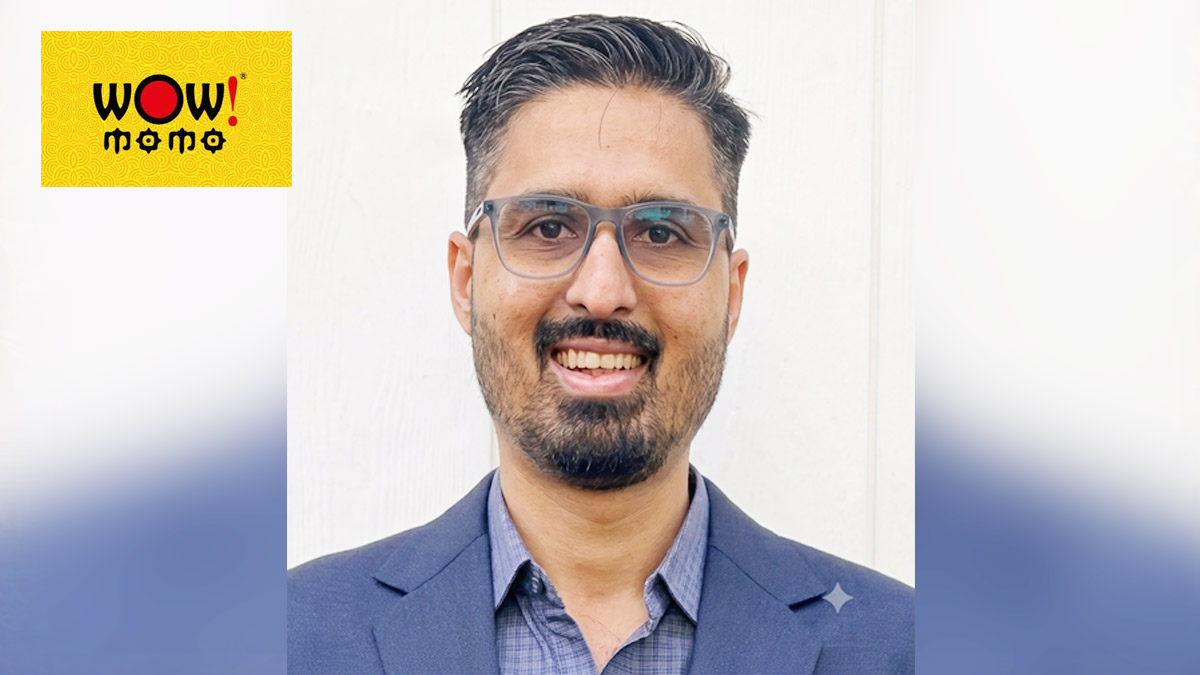
MUMBAI: In a market where consumers are surrounded by brands, platforms, creators and an endless stream of content, the biggest marketing challenge may no longer be reaching the consumer. It is getting them to notice.
For Shiv Bhasin, Sr. General Manager, Marketing, West & South India, Wow! Momo, that challenge boils down to one word: clutter.
“Everything is accessible to everyone these days, and it is becoming more and more accessible,” Bhasin says. With AI further lowering the barriers to content creation and advertising, marketers now have more tools than ever to put messages in front of consumers. But more content does not necessarily mean more attention.
“The biggest challenge is to break that clutter,” he says. “You need to constantly keep working on it.”
With more than 14 years of experience across marketing, F&B and QSR, Bhasin has worked across ATL, BTL, local-store marketing, media buying, in-store branding and campaign execution. At Wow! Momo, his mandate spans brand strategy and marketing operations across West and South India, with a strong focus on regional relevance, store-level marketing and driving footfalls.
His approach to marketing is therefore rooted in a balance between brand building and conversion, creating enough affinity for consumers to remember the brand while ensuring that marketing ultimately translates into business.
Reality shows are an opportunity, but integration is everything
Reality television has become an increasingly attractive environment for brands looking to tap into high-attention content. But Bhasin does not believe reality shows should automatically be treated as more valuable than every other form of content.
Instead, he sees the opportunity in how naturally a brand can become part of the consumer experience.
“I don’t think reality shows are any more important than any other content that has gathered enough eyeballs and attention of the people,” he says. “At the end of the day, it’s not just the particular piece of content. It’s also how you interact with that content and how relevant it is for your product.”
For a QSR brand such as Wow! Momo, that can mean moving beyond conventional logo placements or advertising spots and actually becoming part of the narrative.
Bhasin points to the brand’s approach to reality-show integrations, where contestants could be seen cooking, ordering or eating momos. If contestants are having a party, for instance, the brand can make Wow! Momo part of that consumption occasion.
The objective is simple: make the brand feel like it belongs there.
“It’s about how you are seamlessly weaving it in,” Bhasin says. “And that applies to any brand trying to fit itself into any piece of content.”
That distinction could become increasingly important as brands look beyond traditional media placements towards integrations that can generate both attention and cultural relevance.
‘You can love Gen Z, you can hate Gen Z, but you cannot ignore them’
For marketers, one audience that has made itself impossible to ignore is Gen Z.
Bhasin’s view is straightforward: “You can love them, you can hate them, but you cannot ignore them.”
For a QSR brand operating in a highly competitive category, the generation’s influence goes beyond social-media behaviour. Young consumers are shaping food trends, discovery patterns, consumption occasions and expectations around brands.
That makes cultural relevance an important part of staying connected with the audience.
Bhasin points to the popularity of trends such as Korean food as an example. Food brands have had to respond to emerging consumer interests, with Wow! Momo itself retaining a Korean menu.
But for Bhasin, chasing trends cannot become a substitute for getting the fundamentals right.
‘At the end of the day, the product is going to do the talking’
For all the conversations around campaigns, influencers, trends and platforms, Bhasin believes the most important growth driver for a food brand remains considerably more basic: the food itself.
“You launch something, you create some buzz around it and it gets people’s attention. But after a certain point, those layers tend to peel off,” he says. “It is actually the product at the bottom of it which is going to do the talking.”
That becomes particularly critical in F&B, where consumers can immediately experience whether a brand’s promise matches reality.
“Especially with food, it’s very critical that at the end of the day, the taste is what matters,” he says.
According to Bhasin, ambience and novelty may bring customers through the door, but poor food quality can quickly undo that initial attraction.
“Your quality of food and what you’re serving has to be hygienic, tasty and of good quality,” he says. “People, when they’re eating, need to feel rich.”
For Wow! Momo, this means continuing to innovate while keeping the core product experience intact. Trends can create excitement, but they cannot compensate for a weak consumer experience.
AI can take care of the ‘less significant’ jobs. Humans still create the depth
Artificial intelligence is rapidly changing the way marketers create content, but Bhasin does not see it as the replacement for marketing teams.
Instead, he sees AI as a tool that can take care of repetitive or lower-value tasks and free marketers to concentrate on work that requires greater creative and strategic input.
“I think people have this conception that AI is going to replace this, replace that,” he says. “I feel AI is just helping you do jobs which are not very significant.”
He uses social media as an example.
Brands need a steady stream of regular posts to maintain engagement, alongside larger campaigns that require considerably more thought, production and scale. AI, according to Bhasin, can help marketers handle the former more efficiently.
“You don’t need a separate designer, you don’t need a separate content creator, you don’t need a separate cameraman or something to create” every routine piece of content, he says.
But when it comes to larger campaigns, AI can contribute ideas and accelerate the process, without replacing human intervention.
“At the end of the day, you still need that human intervention to give that content some depth,” Bhasin says. “And then that is what is going to create the impact.”
For marketers, therefore, the AI opportunity may lie less in replacing people and more in redirecting human resources towards higher-value creative and strategic work.
Brand building versus conversion: marketers have to fight on two fronts
When it comes to where marketing budgets are going in 2026, Bhasin rejects a one-size-fits-all answer.
“It varies from brand to brand, more than brand to brand, product to product and the category you’re operating in,” he says.
However, he believes there is a common framework behind most marketing strategies: brands are fighting on two fronts.
The first is brand building, developing equity, affinity and “brand love” even when the activity may not immediately translate into a sale.
“The customer starts developing some sort of love and liking for the brand,” he says.
Social media plays a major role here, with content becoming critical to building that relationship. For Wow! Momo, this means campaigns and social activity designed to keep the brand relevant and engaged with consumers.
The second front is much closer to the point of purchase.
For consumer brands, this could mean influencing a consumer inside a retail store. For a QSR brand, it could mean making sure the brand stands out within a mall or in the vicinity of a store.
At Wow! Momo, Bhasin says this translates into a combination of social media, media buying and BTL activity.
“If a store is present in a mall, we make sure we are sufficiently present in the mall in terms of branding,” he says. “So that the customer gets that recall when they’re walking in. And then they hit our stores.”
It is a distinctly local approach to a national QSR challenge, building the brand at scale while ensuring that marketing remains relevant to the individual city, neighbourhood and store.
The final filter: can you break through the clutter?
The explosion of content has fundamentally changed the attention economy.
Consumers have more platforms, more creators, more brands and more choices. At the same time, AI has made content creation accessible to almost anyone.
“You can just sit on a computer and then maybe create something out of AI and start pushing ads out of it,” Bhasin says.
That makes differentiation harder and potentially makes quality and relevance more valuable, not less.
Influencers can help brands cut through, he says, but simply working with an influencer is not enough. What matters is what the brand creates with that influencer.
“It’s not just about the influencer,” Bhasin says. “With that influencer, what type of content you create, all that matters now.”
Ultimately, his answer to the clutter problem is deceptively simple: create good content.
But behind that simplicity is a broader marketing philosophy, one where reach without relevance has limited value, trends without product quality have a short shelf life, AI without human judgment lacks depth, and visibility without a path to consumer action may not deliver business results.
For Bhasin, the future of QSR marketing is therefore not about choosing between brand and performance, digital and physical, AI and humans, or content and product.
It is about making all of them work together, while ensuring the consumer has a reason to care.