Brands
The attention grabbing gimmick of comparative advertising

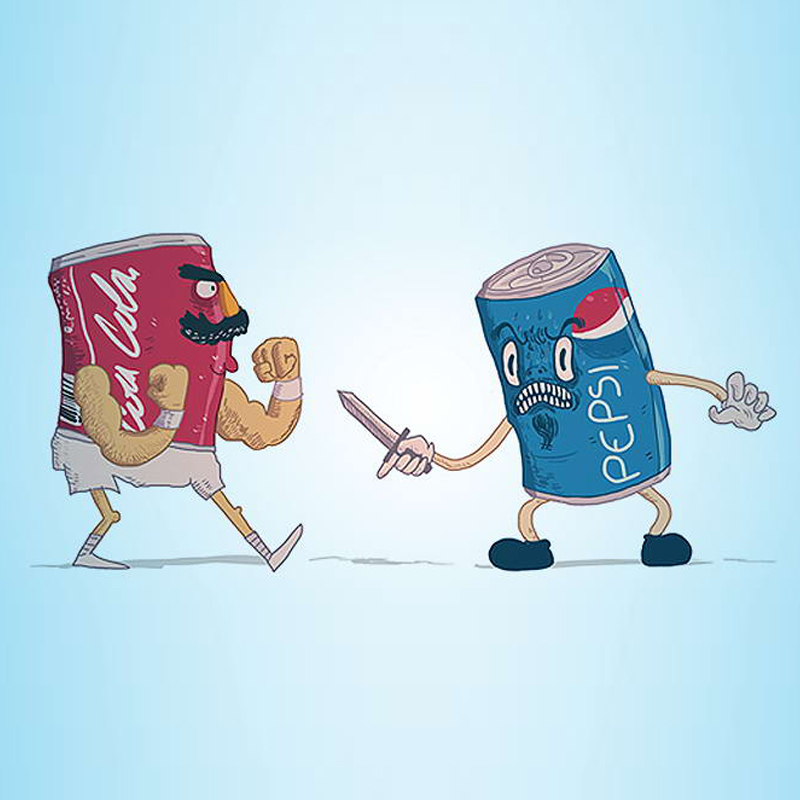
MUMBAI: The advertising world is a fiercely competitive place with brands waiting to pounce on an opportunity to grab as many eyeballs as they can. If you thought it is the survival of the fittest here, you could be wrong. Wit and smartness are needed for success. While some brands stick to creative storytelling, others resort to a more aggressive form of marketing, i.e., comparative advertising.
If you’ve noticed brands taking potshots at rivals through their advertisements, usually alluding that their products are inferior to its own, voila you’ve got yourself a case of comparative advertising or advertising war. Audiences can clearly comprehend the attack since in most cases they tend to name rivals.
Merely showing exaggerated claims of oneself don’t get categorised into comparison. Only when a brand degrades or insults another brand does it cross over to the territory of indulging in an ad war.
Mindshare India chief product officer M A Parthasarathy says that challenger brands tend to adopt the strategy of comparative advertising. “The success of such campaigns often depends on how tastefully or crassly is it executed. It works better when done occasionally or selectively, and not as the main communication from the brand.”
Some brands do that to show the superiority of their product, while others do it pull down their rivals. Glitch planning director Ramya Nagesh points out that brands opt for this kind of advertising solely for attention. “It gives consumers a look into what brands believe in the most about their products and their brand. In this crowded marketplace, it feels like a breath of fresh air when done right but can get stale really soon,” she adds.
The history of comparative advertising dates back to the beginning of the advertising world and ever since, brands have been mocking and taking a dig at each other. The latest incident is an ad created by Samsung Mobile that mocks Apple users. Teasingly titled ‘Growing Up,’ the video follows an Apple fan from his first iPhone in 2007 all the way up to 2017, when he finally decides to make the switch to Samsung Galaxy 8.
The ad has received mixed reviews where some found it funny and have applauded Samsung’s gut to mock Apple users while a certain set thought it was distasteful.
Though such ads are healthy for the marketing industry as long as they are done right, Publicis India managing director and chief creative officer Bobby Pawar notes that at times it is interesting to see such a face-off which is a tactic to get your name plastered in the news. With the right narrative, it can create a controlled controversy that gets people talking and even taking it in the right stride at times. “In the latest Samsung-Apple face-off, Apple is perceived as a thought leader brand whereas Samsung is trying to be the cheeky challenger,” he adds.
Though comparative advertising isn’t the norm of Indian advertising, some brands had the courage to take on their opponents. Indiantelevision.com brings to you a couple of comparative ads that may or not have resulted in higher sales but definitely created a higher brand-recall.
Rin v/s Tide:
Hindustan Unilever Ltd (HUL) launched its much controversial commercial for Rin in 2010, which made a direct jibe at P&G’s Tide detergent, and raised many eyebrows. The TVC made a no holds barred comparison between Rin and Tide, going on to claim that Tide is incompetent of fighting stains and providing whiteness like Rin.
Colgate v/s Pepsodent:
In this commercial, Pepsodent blatantly used Colgate’s name claiming 130 per cent better protection. Colgate took offence and filed a petition in the Delhi High Court, which was later rejected. The brands have ever since been taking a dig at each other time and again.
Amul ice-cream v/s Vadilal ice-cream:
Early this year, Gujarat Milk Marketing Federation Limited, which sells its products under the Amul brand created a campaign where it insinuated that others ice creams were made out of Vanaspati. HUL and Vadilal took Amul to court as the latter suggested its rivals are actually selling ‘frozen dessert’ in the name of ice-cream.
Times of India v/s The Hindu:
In the year 2012, Times of India launched its ‘Wake Up to The Times of India’ campaign to show Chennai how readers are being put to sleep by a boring news daily, which is also its main competitor in the southern market, The Hindu. The latter wasn’t easy on Times Of India either and came up with a brilliant advertisement to get back at it.
Patanjali v/s HUL and RB:
On 2 September this year, Patanjali launched its campaign that directly targetted HUL’s products like Lux, Lifebuoy and Pears along with Reckitt Benckiser’s (RB) Dettol. In the ad, Baba Ramdev was seen asking consumers to reject chemical based soaps and adopt natural and herbal soaps instead. HUL and RB took Patanjali to the High Court filing a defamation case and the ad was pulled out of TV channels and the internet after the court’s order.