AD Agencies
‘The ad market will grow by 13-15% this year’ : Lodestar Universal CEO Shashi Sinha

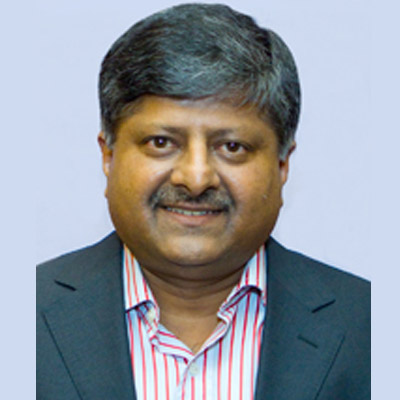
Cricket is expected to earn an advertising revenue of Rs 18 billion from its television telecast this year, up from Rs 15 billion in 2010, as it showcases the World Cup and the Indian Premier League (IPL) in back-to-back events.
The World Cup will be bigger for ESPN Star Sports than it was for Sony in 2007. Digging into the game are a lot more advertisers, offering the telecast rights owner a wider plate to bargain from. The telecom and auto categories, which are the two big cricket spenders, have also grown.
Ad monies will not shift dramatically from other genres to the World Cup. There is no real worry for the Hindi general entertainment channels (GECs) as the ad market is expected to grow between 13-15 per cent. Cricket will get its share of ad revenue growth, but it will not substitute the Hindi GECs.

In an interview with Indiantelevision.com‘s Ashwin Pinto, Lodestar Universal CEO Shashi Sinha talks about the advertising opportunities cricket throws up and the impact it could have on the other genres of television content.
Excerpts:
The cricket genre is expected to get a big boost with the World Cup and the IPL happening in the same year. Will we see a big ad shift to cricket this year?
Our estimate is that this year cricket will earn Rs 17-18 billion from television telecast. The World Cup and the IPL will each get around Rs 6-7 billion.
How much will ESPN Star Sports make from the World Cup?
Eighty per cent of the figure I earlier mentioned will go to them. The balance will be shared between Doordarshan and news channels.
The World Cup this year will be far bigger than in 2007. There is an 80 -100 per cent increase in rates compared to what was paid in 2007.
The logic is that today there are more advertisers. In 2007, there were three telecom companies; today, there are 15. There were five auto companies then; today there are 15. Reach has also gone up. There are at least 60 per cent more TV homes today compared to 2007. I expect ESPN Star Sports to make at least double of what Sony managed to garner in 2007.
Cricket is pre-sold. Eighty per cent of the ad inventory has been pre-sold for this World Cup, which is what also happened in 2007. It is the client and agency‘s gamble on the property when it is pre-sold.
Was there hesitation on the part of advertisers after the disaster of 2007?
It is a question of demand and supply. Also, the issue of India going out after two games does not arise this time (Last time in seven days India was out and people lost interest in the remaining games). Now the schedule has been done smartly. If India goes out, it will be in the third week of March. You are not just sustaining India but also the other teams around India. People, for instance, will follow Australia in anticipation of India meeting them later on, though they are not in our group. Advertisers see a great opportunity in the World Cup. They look at what the scene is today.
The advantage of the World Cup is that there is more inventory for clients to get on-board. It is not like the 20:20 format; there are more secondages here.
When people talk about how so much inventory will be sold, they have to keep in mind the fact that the advertising landscape has changed. Advertising was a Rs 160 billion business industry in 2007. Today, it is sized at Rs 280-290 billion. The male dominated categories have grown faster than the female categories. The telecom and auto categories, which are the two big cricket spenders, have also grown.
Is there any performance guarantee in deals done with ESS?
There isn‘t any in cricket. It is easy to say that there should be. If supply outstrips demand, then a broadcaster will ensure that there is performance guarantee. If 10 companies are waiting to take sponsorship, why would there be a performance guarantee? Some Indian advertisers don‘t understand that the dynamics of advertising has changed. It is about the supply and demand ratio.
Are we going to see ad monies shifting from other genres to the World Cup?
I don‘t think that the shift will be dramatic. There will be a temporary blip, but overall the ad market will grow by 13-15 per cent this year. That makes a big difference. If it was static, I would worry. Around Rs 35 billion will be added this year. It is not like it is not growing like the US – or is shrinking. Cricket is getting its share of ad revenue growth; it is not that it is substituting the Hindi GECs.
‘Our estimate is that this year cricket will earn Rs 17-18 billion from television telecast. The World Cup and the IPL will each get around Rs 6-7 billion‘
How will news channels fare during the World Cup?
They have built specials around it. CNN-IBN, for instance, is doing programming that is different.
The news channels will make some money, but the genre is a small part of the overall television advertising expenditure; they earn Rs 8 billion of ad revenue in combine. They will gain but in the larger scheme of things, the gain will be small.
News channels will make around 10 per cent of what the live World Cup broadcast earns. It is a complementary activity for some clients; others take it as it is less expensive.
Hindi GECs say that they will hold on due to the women audience. What do you see happening?
There will be a problem as 75-80 per cent of the Indian homes are single TV. But it depends on who controls the remote. If it is the woman, then the Hindi GECs will be watched. If it is the man, then cricket will gain.
From an ad revenue perspective, due to competitive pressures people are advertising more; there are more companies coming in. There is no problem in the larger scheme of things. If this was 2009 or five years back, I would have spoken differently.
How does the World Cup compare to the IPL?
They are different properties and they do not happen simultaneously. I don‘t know why people compare them. If extra money is coming into cricket advertising, then how are they competing?
Both properties have relative strengths. If a company is in one property, then its rival will be in the other. IPL gives sustained viewership. In the World Cup, you have to factor in the non India viewership. If India wins, the hype will be much bigger and there will be more eyeballs.
What difference will there be between India and non India games?
There will be a dramatic difference. When India plays, there will be an expectation of a national rating of six to seven. If the hype is generated to ensure that non India games deliver a rating of two, then we will be alright. It should not be that non India games give a rating of just 0.5 or 1.
How do you see this event faring vis-?-vis 2003 and 2007?
2003 was very good as India reached the final and the tournament was held in South Africa; the telecast timings were very good. 2007 was a disaster and we went out in the first round after two games. This time India would have to be unlucky not to reach the quarter-finals. We play six to seven matches.
The problem is that with the World cup taking place in India, the hopes are higher. In South Africa, the ratings built up slowly and picked up when India played Pakistan and England. With the event being in India, there is more hype. You are seeing different commercials being created. The bad news is that India has to perform. That is the issue.
How important will the audience delivery of World Cup be for the ODI format?
I feel that ODIs are here to stay. People earlier said that Tests would disappear. But it remains healthy, if you look at the India versus South Africa ratings. All depends on the contest and the performance of the teams. In 2009 when Australia came here, people wondered what would happen. Each game was thrilling.
Your client Amul has sponsored the Holland team. Could you talk more about this?
It was a bit of a punt taken, but at this point of time the sponsorship is paying off. Holland is a milk producing country. And this is a low cost sponsorship that has been done.
What kind of activation is being done by companies?
The ICC should be better organised from an activation standpoint. A key component of activation is tickets. Castrol and other companies are running competitions where people can get tickets. Then you go to the stadium and make a noise, generate excitement.
The fact, though, is that there are not enough tickets available. I have sat in meetings where ICC sponsors have jumped around and said that tickets are not available. Activation is a weak area in this World Cup.
Sony is using Dhoni in a campaign while Coca-Cola is doing gully cricket. Can this be construed as ambush marketing?
No! Coca-Cola did the initiative in the past also and it is for the IPL. Ambush marketing is when you are doing activities in a stadium. While Reliance is an ICC sponsor, if a competitor does something in the stadium that is ambush marketing. It is very direct. These examples that you have given do not constitute ambush marketing.
There was ambush marketing done in the past. Now the rules are very tight and corporates realise that it is not worth the risk. Big corporates are careful about their reputations. For brands that want recall, it boils down to how good the commercial is. Does it have a good story to tell? That is what consumers will react to rather than anything else.
Didn‘t LG make a mistake by not taking on-air sponsorship for the World Cup?
I am sure that LG would have thought about it. Being an on-ground sponsor, the first right of refusal for on-air would have been theirs. As sport gets more official, ambush marketing is getting difficult. LG would have realised that if they did not take the on-air sponsorship, there would be five other television manufacturers waiting.
In terms of ROI, how is cricket faring?
Cricket gives instant reach, eyeballs and passion. The disadvantage is that the entry cost is high. With cricket you do activities in a four-to-six-week period. If you want to do activities for a sustained period, then you have to look elsewhere. Cricket is too expensive to use across the year.
Has there been a fatigue in cricket viewership?
In India, there is no sport apart from cricket. In the US, you have four games competing; there is an audience for all of them. Here there is a lack of sporting content. The Indian cricket team cannot play for more than 150 days.
Are advertisers looking at other sports?
As sports develop, advertisers will come; they chase eyeballs. In the 15-18 demographics, EPL has become big in Mumbai and Delhi. Clients are looking at it. Tennis and F1 may be very niche, but for certain clients associating with them makes a lot of sense. I expect football to become big here – as it has globally.





AD Agencies
ABBY Awards 2026 names Rajdeepak Das, Khazanchi, Ramaswamy jury chairs
Top creative leaders to steer judging across film and direct categories
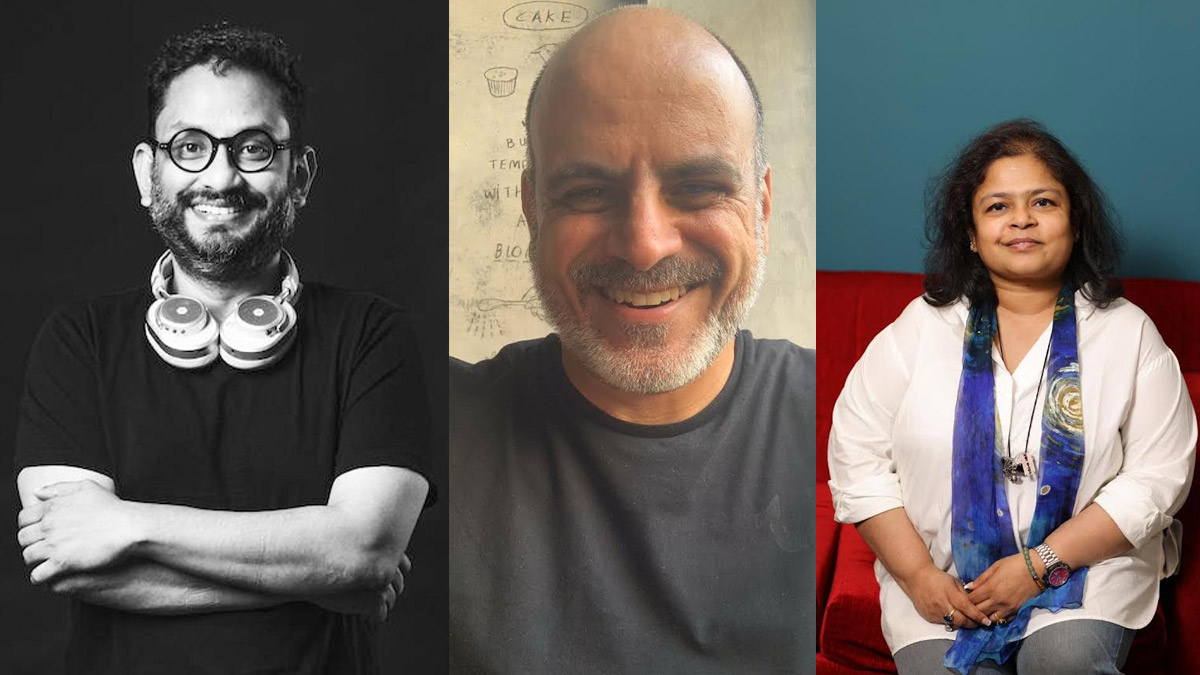
MUMBAI: The Ad Club has announced the appointment of three of India’s most prominent creative leaders as jury chairs for the ABBY Awards 2026, powered by The One Club.
Rajdeepak Das, chief creative officer, South Asia, Publicis Groupe and chairman, South Asia, Leo Burnett, will chair the AV Film (TV) category. Ashish Khazanchi, managing partner at Enormous, will lead the AV Film (Digital and OTT) jury, while Anupama Ramaswamy, managing director and chief creative officer at Havas Creative India, takes charge of the Direct category.
The trio brings a mix of creative firepower and industry experience to the judging table. Das is known for blending creativity with technology to solve real-world problems, with landmark campaigns such as Whisper’s “Touch the Pickle” and “Missing Chapter” helping reshape conversations around menstrual health. His work has earned top honours at global platforms including Cannes Lions and The One Show.
Khazanchi, meanwhile, has built Enormous into one of India’s leading independent agencies. Best known for creating Tata Sky’s “Jingalala” campaign, he has played a key role in shaping brand narratives for both legacy companies and startups, picking up hundreds of awards along the way.
Ramaswamy’s appointment rounds off the leadership trio with a strong focus on culturally resonant creativity. Her campaign “Ink of Democracy” became one of the most awarded works globally in 2025, earning multiple honours across Cannes Lions, Clio and Spikes Asia. Over the years, she has built a reputation for work that not only wins awards but also shapes public discourse.
The appointments come as the ABBY Awards continue to sharpen their global positioning, with backing from The One Club adding international heft to the platform.
The awards will be held during Goafest 2026 from May 20 to 22 at Taj Cidade de Goa Horizon, bringing together the industry’s top creative minds for what promises to be a closely watched showcase of ideas.
With heavyweight jury chairs in place, the stage is set for a high-stakes celebration of creativity where craft, culture and commerce collide.






