Brands
TAM AdEx reveals print, radio reducing spend on TV



MUMBAI: A recent report created by AdEx, a part of TAM Media Research, has revealed how television medium uses others mediums i.e. print and radio for its own advertising and vice versa.
As per the report, television has been increasing ad-spends on the print medium for the past three years—it spent 85 per cent of its ad revenue on print in January-September 2016, followed by 94 per cent and 95 per cent during the same period in 2017, and 2018 respectively. The subsequent ad-spends on radio dipped from 15 per cent in 2016 to 6 per cent in 2017, and 5 per cent in the current year.
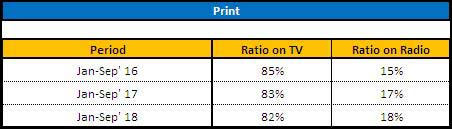
On the other hand, print has been deducing its ad-spend ratio on TV to radio. In January-September 2016, it spent 85 per cent on TV and 15 per cent on the radio. In the following year, the ratio was 83 per cent and 17 per cent respectively, while it further changed to 82 per cent and 18 per cent in 2018.

Radio also has been reducing its ad expenditure on TV. As per the report, radio medium spent 91 per cent share of its ad expenditure on TV in January-September 2016 and decreased it to 83 per cent in 2017. There had been a slight increase in the expenditure in 2018 as compared to the previous year, but the share remained much less than 2016, at 85 per cent. The subsequent expenditure on print medium was 9 per cent, 17 per cent, and 15 per cent, respectively.
On a related note, India is one of the top countries when it comes to investing money in ad-expenditures. As per the latest report revealed by GroupM, the media investment arm of WPP group, India will rank third globally in terms of ad-expenditures in the coming year, contributing $ 1.35 billion to worldwide spends.

An Indian Brand Equity Foundation (IBEF) report of March 2017 highlighted the market size of various media terming print as the biggest contributor to the sector, accounting for almost 41.2 per cent of the total advertising revenue, followed by TV (38.2 per cent) and other modes including radio, outdoor, and cinema collectively contributing 10 per cent. The share of digital stood at 11 per cent.