Digital Agencies
Taboola and Outbrain to Merge to Create Meaningful Advertising Competitor to Facebook and Google

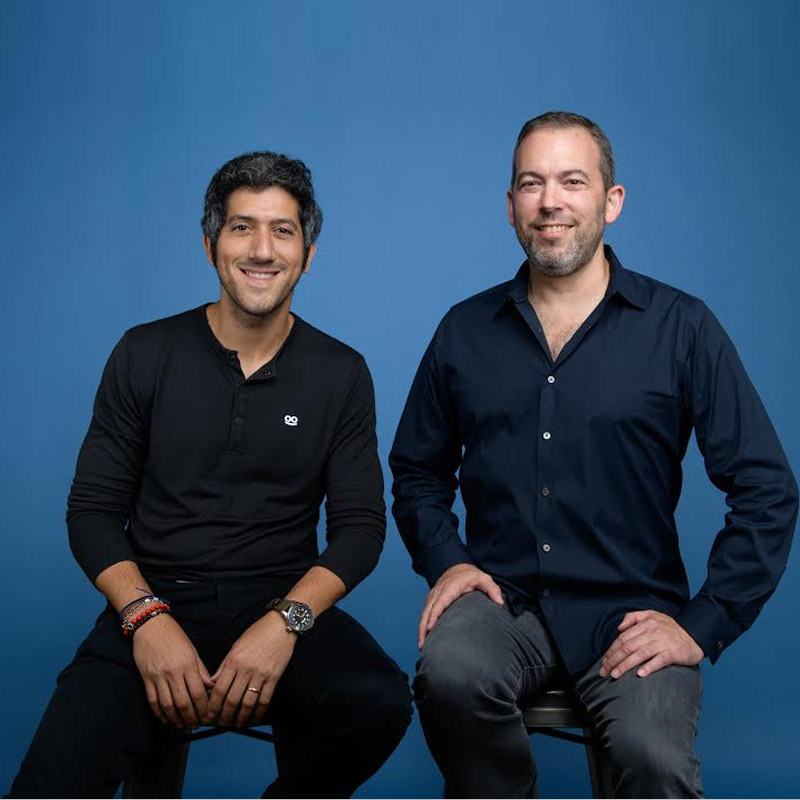
NEW YORK: Taboola and Outbrain, two digital advertising platforms, today announced that they have entered into an agreement to merge, subject to customary closing conditions. Both companies’ Boards of Directors have approved the transaction. The combined company will provide enhanced advertising efficacy and reach to marketers worldwide, while helping news organizations and other digital properties more effectively find growth in the years to come.
“Over the past decade, I’ve admired Outbrain and the innovation that Yaron Galai, Ori Lahav and the rest of the Outbrain team have brought to the marketplace. By joining forces, we’ll be able to create a more robust competitor to Facebook and Google, giving advertisers a more meaningful choice,” said Adam Singolda, Founder & CEO of Taboola. According to eMarketer, almost 70% of total U.S. digital advertising revenue in 2019 is controlled by only three companies-Google, Facebook and Amazon. “We’re passionate about driving growth for our customers and supporting the open web, which we consider critical in a world where walled gardens are strong, and perhaps too strong. Working together, we will continue investing to better connect advertising dollars with local and national news organizations, strengthening journalism over the next decade. This is why we’re merging; this is our mission.”
“We are excited to partner with Taboola. Both Outbrain and Taboola have a shared mission and vision of supporting quality journalism globally and delivering meaningful value to the open web marketplace,” said Yaron Galai, co-Founder and co-CEO of Outbrain. “Ori and I had a vision of helping people discover quality content online, and we see a tremendous opportunity in joining forces in order to bring the next wave of innovation to our publisher partners and advertisers. I’m confident that together, we will be able to further our mission, which we call our Lighthouse, of bringing the best, most trustworthy content discovery capabilities to users around the world.”

Upon closing, Adam Singolda, the Founder and current CEO of Taboola, will assume the CEO position of the combined company, which will operate under the Taboola brand name, with branding to be determined and to reflect the merger of the two companies. Under the terms of the merger agreement Outbrain shareholders will receive shares representing 30% of the combined company plus $250 million of cash. The Board of Directors of the combined company will consist of current Taboola and Outbrain Management and Board members. Eldad Maniv, President & COO of Taboola and David Kostman, co-CEO of Outbrain will work closely together on managing all aspects of the post-merger integration. Yaron Galai will remain committed to the success of the combined company, and actively assist with the transition for the 12 months following the closing.
“We are fortunate to have great talent at both Outbrain and Taboola,” said Eldad Maniv. “As soon as the merger closes, we will work to integrate teams, technologies and infrastructures so we can quickly accelerate growth across all dimensions. We have set aggressive goals for bringing value to our customers, driving technology innovation and delivering financial results to our shareholders through increased efficacy and innovation. By working with David and the Outbrain team, I’m confident we can achieve them.”
“For over 10 years, each company has built incredibly powerful solutions that have helped tens of thousands of publishers and advertisers thrive,” said David Kostman. “I look forward to working together with Eldad and his team to bring together the best of each company’s technology, product and business expertise to build a compelling global open web alternative to Google and Facebook.”
The combined company will have over 2,000 employees across 23 offices, serving over 20,000 clients in more than 50 countries across the North America, Latin America, Europe, Middle East and Asia-Pacific regions.
Compelling Strategic and Financial Rationale for the Merger Key strategic benefits of the merger include:
1. Increased Advertiser Choice: The combined company will be able to provide advertisers, from small businesses to global brands, with a meaningful competitive alternative to Google and Facebook-the companies currently known as the “Duopoly” that command the vast majority of digital ad spend.
2. Greater Advertising Efficiency: A unified and consolidated buying platform will provide advertisers with greater efficiencies, helping them reach their awareness, consideration and conversion goals.
3. Higher Revenue and User Engagement to Publishers, Mobile Carriers and Mobile OEMs: Through increased investment in technology and expanded reach, the combined platform will be able to increase revenue to publishers, mobile carriers and device manufacturers, and drive better user engagement.
4. Accelerated Innovation: By combining two of the strongest data science and AI teams in the industry, and by accelerating investment in R&D, the company will be able to better address the evolving needs of its partners and customers.
5. Better Consumer Experience: Increasingly, Taboola’s and Outbrain’s solutions are embraced directly by consumers to help them discover what’s interesting and new, at moments when they’re ready to explore. For example, Taboola News is now embedded in over 60 million Android devices worldwide. The combined company will be able to accelerate the development of such innovative solutions, improving people’s ability to enjoy quality journalism.
Representation J.P. Morgan Securities LLC acted as a financial advisor to Taboola. Goldman, Sachs & Co. acted as a financial advisor to Outbrain. Meitar Liquornik Geva Leshem Tal Law Offices and Davis Polk & Wardwell LLP acted as legal counsel to Taboola, and Meitar Liquornik Geva Leshem Tal Law Offices, White & Case LLP and Wilson Sonsini Goodrich & Rosati acted as legal counsel to Outbrain.
About Taboola Taboola helps people discover what’s interesting and new. The company’s platform and suite of products, powered by deep learning and the largest dataset of content consumption patterns on the open web, is used by over 20,000 companies to reach over 1.4 billion people each month. Advertisers use Taboola to reach their target audience when they’re most receptive to new messages, products and services. Digital properties, including publishers, mobile carriers and handset manufacturers, use Taboola to drive audience monetization and engagement. Some of the most innovative digital properties in the world have strong relationships with Taboola, including CNBC, NBC News, USA TODAY, BILD, Sankei, Huffington Post, Microsoft, Business Insider, The Independent, El Mundo, and Le Figaro. The company is headquartered in New York City with offices in 15 cities worldwide.




BENGALURU: For years, creative teams have learned to live with ambiguity. Vague comments, last-minute changes, feedback that arrives without context, clarity, or conviction. It became part of the job – something teams worked around rather than getting it solved.
But as we head into 2026, that tolerance is wearing thin.
Creative work today moves faster, scales wider, and involves more stakeholders than before. Teams are producing more content across more formats, often with distributed collaborators and tighter timelines. In this environment, guesswork is no longer a harmless inconvenience. It’s a cost – to time, to budgets, and to creative mindspace.
The real problem isn’t feedback, it’s how it’s given
Most creative professionals you see today will tell you they’re not against feedback. In fact, they rely on it. Good feedback sharpens ideas, strengthens execution, and pushes work forward. The problem is ‘unclear’ feedback. When someone says “this doesn’t feel right” without context, they aren’t just revising – they’re basically decoding. They’re guessing what the problem might be, trying different directions, and burning time in the process. Multiply that by a few stakeholders and a few rounds, and suddenly days disappear.
In 2026, when teams are expected to deliver faster without compromising quality, interpretation is a luxury most can’t afford.
Scale has changed rverything
Creative projects used to be smaller and simpler. A designer, a manager, maybe one client contact. Feedback loops were short, even if they weren’t perfect.
Today, the same project might involve internal marketing teams, agencies, freelancers, brand reviewers, and regional teams. Everyone has a say. Everyone leaves comments. And often, those comments don’t agree. More people reviewing work means alignment matters more than ever. Clear feedback isn’t just about being nice to creative teams, it’s about keeping projects moving when complexity increases.
Guesswork quietly wears teams down
One of the less talked-about impacts of unclear feedback is what it does to people.
When feedback is vague or contradictory, creatives second-guess their decisions. They hesitate. They overwork. They keep extra time buffers “just in case.” Over time, confidence drops. Ownership fades. Work becomes safer, not stronger. Creative energy gets spent on managing uncertainty instead of pushing ideas forward. And in an industry already grappling with burnout, unclear feedback adds unnecessary mental load.
Actionable feedback is a shared skill
Clear feedback doesn’t mean controlling creative decisions or dictating every detail. It means being specific enough that someone knows what to do next.
Actionable feedback answers three basic questions:
What exactly needs attention?
Why does it matter?
What outcome are we aiming for?
This applies whether you’re reviewing a video frame, a design layout, or a copy draft. The clearer the feedback, the fewer follow-ups it creates. In 2026, teams that treat feedback as a skill and not an afterthought, will move faster with less friction.
Tools shape behaviour (whether we admit it or not)
The way feedback is delivered is often dictated by the tools teams use. Comments buried in long email threads, messages split across chat apps, or notes detached from the actual work all contribute to confusion.
When feedback lives outside the work, context often gets lost. When it’s disconnected from versions and timelines, decisions get questioned. When it’s scattered, accountability disappears. More teams are starting to realise that feedback problems aren’t just communication issues, they’re workflow issues. How work moves between people matters just as much as the work itself.
From Opinions To Alignment
One of the biggest shifts happening in creative teams is a move away from purely opinion-driven feedback. Instead of “I like this” or “I don’t,” teams are asking better questions:
● Does this meet the brief?
● Does this solve the problem?
● Does this align with the goal?
This change reduces unnecessary back-and-forth and helps feedback feel less personal and more productive. It also makes decisions easier to explain and defend. As creative work becomes more strategic, feedback has to support that shift.
2026 Is About Fewer Loops, Not Faster Loops
There’s a misconception that speed means moving through feedback cycles faster. In reality, the most creative teams aren’t just accelerating loops, they’re reducing them. Clear, actionable feedback upfront leads to fewer revisions later. Clear approval stages prevent last-minute surprises. Clear decisions stop work from circling endlessly.
In 2026, efficiency won’t come from working harder or longer. It will come from designing workflows that respect creative time and attention.
Ending guesswork is a mindset change
Ultimately, ending creative guesswork isn’t just about better tools or processes. It’s about mindset. It’s about recognising that clarity is an act of respect – for the work, for the people doing it, for the time invested and for the mindspace used. It’s about moving from “figure it out” to “here’s what we’re aiming for.”
Creative teams that embrace this shift will find themselves not only delivering faster, but also enjoying the process more. And in an industry built on imagination, that might be the most valuable outcome of all.