Brands
Staah names India’s top hotel booking channels of 2025

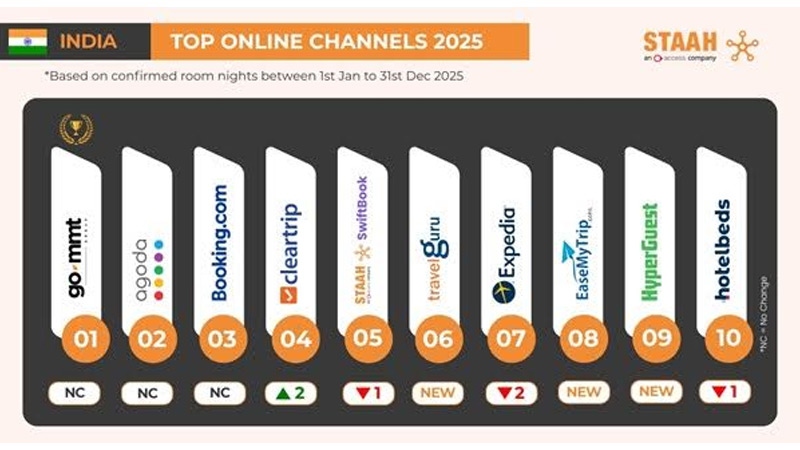
MUMBAI: If hotel bookings were a popularity contest, online travel agencies would still be walking away with the crown. Staah’s latest Top 10 Booking Channels report for 2025 shows familiar giants holding firm, a few nimble climbers gaining ground, and hoteliers quietly sharpening their direct sales game.
Drawing on booking data from thousands of partner properties across India between January and December 2025, the report offers a snapshot of how travellers really book their stays. The picture is lively. Domestic travel is booming, price-conscious consumers are shopping smart, and mobile-first platforms are winning thumbs and taps.
GoMMT continues its long reign at the top, powered by scale, sharp pricing and an ability to appeal to everyone from road-tripping families to midweek business travellers. Close behind, Agoda’s mobile-first approach and loyalty perks have helped it climb confidently into second place. Booking.com holds steady at number three, proving that consistency still counts.
Cleartrip has made one of the more interesting moves this year, jumping two spots as travellers respond to its value-led positioning and strong flight-plus-hotel combinations. Meanwhile, direct bookings through Staah SwiftBook land in fifth place, a clear sign that hotels are nudging guests away from commission-heavy platforms and back to their own digital front doors.
The rest of the top 10 reflects a market in motion. New entrants such as Travelguru, EaseMyTrip and HyperGuest underline the depth and diversity of India’s travel ecosystem, where fresh ideas and niche offerings can still find room to grow.
“2025 has been a big year for travel, with Indian consumers relying on digital platforms at every step of the journey,” said Staah India Ltd national sales head Shoaib Ali. “OTAs remain vital for visibility and demand, but hotels are equally focused on building strong direct channels. The winners are those that balance reach with relationships.”
The wider backdrop is just as upbeat. India continues to rank among the world’s fastest-growing travel markets, fuelled by rising disposable incomes, better connectivity and a growing taste for personalised experiences. Domestic tourism shows no signs of slowing, while international interest in India is gathering pace.
In short, the booking battlefield is busy, competitive and full of opportunity. OTAs may still dominate the skyline, but direct bookings are no longer content to stay in the shadows.