MAM
Sorrell, people and Sorrell speak

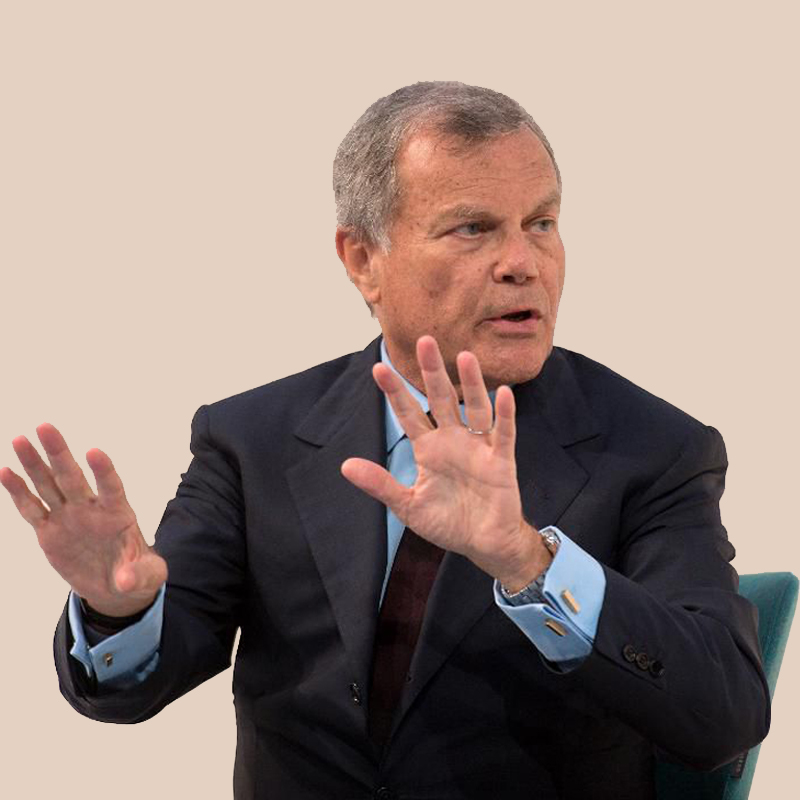
MUMBAI: For many advertising and brand executives – especially the senior ones in India – Sir Martin Sorrell was a pretty familiar face. Sorrell probably visited India more than any other international advertising industry executive did.
He was an indophile, knew many of his senior India professionals by first name. And he believed that the nation had depth of talent – both creative and business – like no other country did. He was so enamoured of the talent that he more often than not welcomed them into the higher executive corridors, giving them postings all over the world. Several benefited: Ashutosh Shrivastas, Gowthaman Ranganathan, Vikram Sakhuja, Ranjan Kapur, Sonal Dabral, Piyush Panday, CVL Srinivas – the list is unending. Amongst the suitors he had wooed for many years was Sam Balsara of Madison Worldwide. But Balsara simply refused to yield to him. Amongst his good friends in India was Ranjan who passed away a couple of months ago.
Over the years, Sorrell has spoken at many events and conferences making some radical statements at that time. Here’s some Sorrell speak over the years:
“Client focus on the short term that is what is keeping me up late at night.…and as a result, they are not investing in innovation and indeed branding for the future. The future is tough…it’s a tough environment..it is a grind. Clients spend more in trade promotion..incentives, slotting allowance and getting visibility in the retail trade rather than on advertising. All this is good for the short term, but not for the long term.”
– B2B conference IBC 2016 in Amsterdam
“To be a good CEO, you have to be totally committed. And that means a 24×7 commitment. You have to be optimistic. Obviously have intelligence. EQ (emotional intelligence) is as important as IQ – a balance between the two. You don’t have to be an Einstein in our business. A deep understanding of all the advertising and marketing and communication services and how they fit together. A global perspective, which means you can’t just have experience of one part of the world, you have to have experience of many parts of the world. Unilingual – we speak one language, need to speak more. Politically aware and also economically aware and how they are having an impact. You have to have a sensible strategy and be able to implement it.”
– In an interview to The Drum
“The rise of Amazon, Alibaba, Flipkart and Airtel have also raised questions on who has control over data and who will influence it. This is where we have a strong position in India and globally, and have tremendous opportunities to grow further. If you look forward to the next 15-25 years, the relative role and importance of India will increase. From WPP’s point of view, our Indian business is half the size of our Chinese business. The relative population is almost the same. In the next 15-25 years, India will become the most populous country on the planet…while China has an ageing issue that is likely to continue. So India, from an economic growth point of view over the next 15-25 years, is going to be an even more significant force. If you look at companies such as Reliance Industries, Tata Group, Mahindra and (Bharti) Airtel — these companies will become even more significant on the world stage.”
– Interaction with the media in October 2017
“Our biggest problem is the enemy within,” Sorrell concedes. “The challenge is to get people to operate as seamlessly as you can. I’m philosophical about it, but I get very upset when people don’t work together because I think the power of what we’ve got is so great when we put it together. You tear your hair out when people sit in their little box and refuse to co-operate or when they fight with one another. I do tend to focus on the bad bits. I have been described as a serial pessimist.”
– To Campaign in 2001
“The dogfight for content rights is going to intensify. You’re talking about some very big players becoming increasingly interested in sports rights. That will drive the price up for everyone and push rights holders to start selling them off piecemeal, fragmenting the market. Packaged goods top-line growth has been under pressure. They are looking much more rigorously at the sponsorship costs and activation costs, and they probably are less willing to invest than five or 10 years ago. The reverse is true of the technology companies. If the pricing of the bigger sports rights is sucked up by competition it means that all the sports with more limited audiences are going to become even more important and significant. There are a number of interesting opportunities for our clients.”
– Speaking at CES 2018 in Las Vegas
“For the past 33 years, I have spent every single day thinking about the future of WPP. Over those decades, our family has grown and prospered. As I look ahead, I see that the current disruption we are experiencing is simply putting too much unnecessary pressure on the business, our over 200,000 people and their 500,000 or so dependents, and the clients we serve in 112 countries. We have weathered difficult storms in the past. And our highly talented people have always won through, always. Nobody, either direct competitors or newly-minted ones can beat the WPP team, as long as you work closely together, whether by client and/or country or digitally. As a founder, I can say that WPP is not just a matter of life or death, it was, is and will be more important than that. Good fortune and Godspeed to all of you…now Back to the Future.”
– His farewell note on quitting WPP
His departure also raised some amount of angst amongst some senior executives who worked with him.
“Martin had faults as do we all but he was entrepreneurial, client focused, knew importance of recruiting/retaining great talent, tireless, always there to help. WPP is a lot more resilient than people think but it’s a tragedy that things ended this way.”
– Kantar CEO Eric Salama
“Landmark story: after three decades Sorrell leaves WPP, the company he built deal by deal into a £15bn global titan; sad end to the story but plenty of people will be celebrating tonight.”
– Campaign Global editor in chief Claire Beale
Also:
Sir Martin Sorrell says ta-ta to WPP, Roberta Quarta becomes exec chairman
WPP board begins investigation of its CEO Sir Martin Sorrel, says WSJ
Martin Sorrell bullish on India