Brands
‘Solution-centric’ and ‘Medium-agnostic’ approach defines White’s success with experiential marketing

Mumbai: Experiential marketing is not just a fleeting trend. According to a media report, Event and Entertainment Management Association (EEMA) forecasts that India’s experiential marketing industry will grow to Rs 10,000 crore by 2025, doubling its worth since 2020. In a similar report, data from the Event Marketing Institute reveals that 74 per cent of consumers have a more favourable view of a brand following an event or experience.
One such “culture-first” experience company is White, specialising in creating immersive and inclusive brand experiences. With a strong commitment to innovation and a deep understanding of diverse cultures, White crafts unique narratives that resonate with audiences worldwide. The company employs an integrated approach, offering services that span branded immersions, intellectual properties, conferences and MICE events, retail installations, and visual theatre. Operating across all scales, White delivers these experiences pan-India and in regions like the Middle East, Asia, Europe, and the United States.
The team, consisting of 80+ “custodians of culture” across creative strategy, design, account management, and operations, collaborates seamlessly to help clients forge meaningful connections with their audiences. Reflecting its commitment to staying at the industry’s forefront, White’s recent rebranding showcases its dedication to creating impactful relationships between brands and their customers.
In a similar vein, White Label focuses on delivering innovative content solutions tailored to the unique needs of its clients. Broadening and crafting high-impact content strategies, White Label drives engagement and ensures that content resonates with target audiences across various platforms.
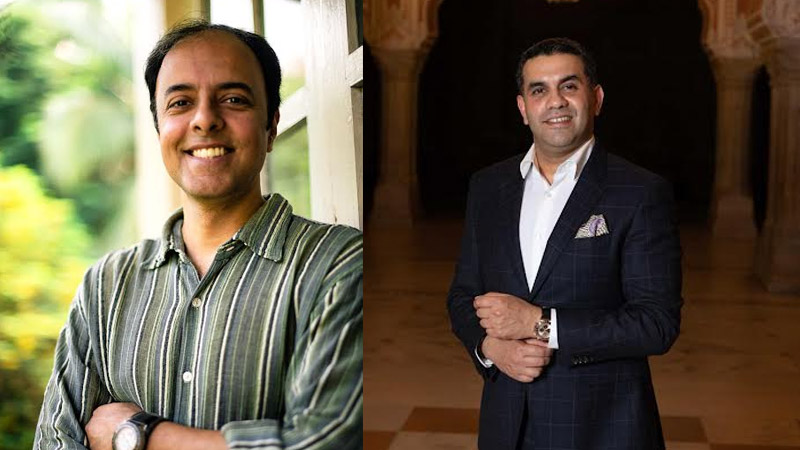
Indiantelevision.com caught up with White founder & CEO Vishesh Sahni and White Label CEO Rohit Tugnait, where they both delved into White’s business strategy, their account wins and innovative campaigns, outlook on content solution market in India and lot more.
Edited excerpts
How does White leverage its unique selling propositions (USP) to attract and retain clients?
Vishesh – Our USP lies in leveraging culture as a medium to connect some of the most innovative brands and exciting organisations in the world with their audiences. We do this by mining human insight and appealing to the most basic instinct of audiences – i.e, evoking a powerful emotional response within them.
Can you discuss any recent changes or enhancements in White’s business strategy that have led to notable successes?
Vishesh – White has rapidly made itself recognised as a company that approaches campaigns and briefs beyond the immediate task with the intent to create long term impact. In order to do this effectively, we have actively pursued a “solution-centric and medium-agnostic” integrated approach in our work.
Rohit – Recently, we have set up a full-fledged content sister company – White Label – in order to provide holistic 360° solutions to clients. The aim of White Label is to provide engaging storytelling via video for brands. This could rest on digital, OTT or socials depending on the audience to reach and format of content.
What innovative campaigns has White executed recently, and what made them stand out?
Vishesh – We recently executed the global launch event of Pernod Ricard India’s first luxury Indian Single Malt – Longitude 77 in Gurgaon, India. The experience brought together some of the most illustrious names from music, cinema and fashion in an exploratory journey; which was paired with multisensory hospitality. The international launch in Dubai also captured the scale, grandeur and core message of “India Reimagined” amidst an illustrious global audience.
Another memorable experience was the launch of Mexico’s most beloved tequila – Don Julio – which brought alive authentic Mexican culture and revelry in an immersive format. The immersive experience – themed around 5 expressions of love, which was inspired by the brand’s global “Por Amor” campaign – witnessed an impromptu parade, authentic cocktail and culinary carts and various bespoke handcrafted expressions.
How do you anticipate consumer behaviour and technological advancements will impact experiential marketing strategies in the future
Vishesh – In a space that vies for constant attention, experiential marketing – across events, activations, launches and conferences – the premise of bespoke hospitality in an experience cannot be overstated. From the first interaction of an invite to a personalised keepsake or immersion at the experience; driving equity and loyalty for a brand comes alive much more effectively when the individual feels actively “seen”; as opposed to passively “talked at”.
Tech advancements and the advent of AI allows us to hyper-personalise experiences even more effectively.
What role do you see White playing in shaping the future of experiential marketing in India?
Vishesh – White has always been a custodian of representing culture – be it the culture of the brand; or harnessing the pulse of global action. Owing to this approach, we have managed to introduce industry-first ideas, exciting innovations and experience formats that have been seen for the time in India. We intend to fortify this capability and further envision experiential marketing with a progressive perspective that eventually becomes an industry benchmark.
How do you perceive the current trends and growth potential in the content solution market in India
Rohit – Content plays a key role for any marketing/ brand manager as part of their campaign executions. While content does not show immediate ROI (as would an ad for example), it helps build saliency with the audience and if orchestrated well could lead to building a community. That is the ultimate holy grail for a marketeer because it leads to earned media as well as a loyal customer base over time.
That said the content should not be produced for the sake of featuring in a brand plan. There needs to be careful crafting of a story around what the brand stands for and marry that with an audience’s affinity. So engaging storytelling + the brand supporting their TG’s beliefs/ philosophies lead to the audience willing to sacrifice their precious time to engage with your message in a more purposeful manner. This is what we help facilitate for our partners.