MAM
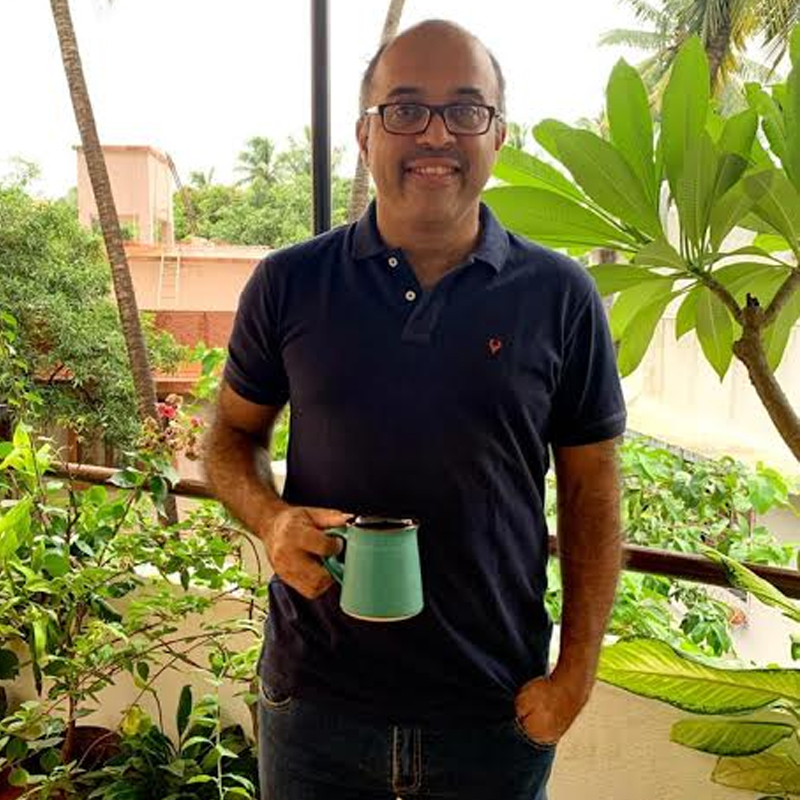
Scarecrow M&C Saatchi’s Raghu Bhatt and his passion for travelling
NEW DELHI: Weekends are fun but as the weekdays have been turned into weekends for the last three months, it has become a routine. Lockdown locked us in our homes and gave time to spend with family. In the last three months, there have been no outing with friends or no late-night dinners. People are now trying new things and binge-watching series apart from working at home. In today’s chat, Indiantelevision.com got candid with Scarecrow M&C Saatchi founder Raghu Bhatt to know about what keeps him going during the lockdown time, his favourite shows and more.
During the lockdown, how are you keeping yourself optimistic?
The kind of person I am, staying optimistic doesn't require any special effort like seeing Art of Living videos or reading 'Think Positive' FB posts put up by my friends with such unfailing regularity. Apart from work, I always had hobbies that kept me engaged. So, I have not felt the need to pick up a new hobby. I am a voracious reader of Indian and Roman history. I follow the stock markets & football. I look after the garden. I am curious to know what kind of content ranks on Google.
Tell us about your favourite coffee moment.
I drink chai. So, I'll replace this with a tea story. I like to have tea with tulsi and lemon-grass in the morning. One day, it was raining heavily. So, I told my younger kid to take a pair of scissors, cut a small lemongrass stalk growing in the garden and put it in the teapot. Somehow the tea was lacking in flavour that day. Later I realised that I was having tulsi and bamboo leaf tea!
What are you binge-watching on OTT?
I miss travelling. I see shows that help me see new places. Shows like Restaurants on the Edge that feature a mountain restaurant in Slovenia or Ekant on Amazon Prime Video that feature places that I want to visit but can't, like Asirgarh or Datia or Tranquebar.
Whenever the lockdown gets over, where do you want to go for a vacation?
When I read a book, I feel like travelling to the place where it happened. Just finished the book "The Conqueror" by Aditya Iyengar based on the life of Rajendra Chola. So right now, have a raging desire to visit his capital, Gangaikonda Cholapuram in Tamil Nadu.

AD Agencies
Fevicol releases its last ad campaign by the late Piyush Pandey
The adhesive brand’s last campaign by the late advertising legend Piyush Pandey turns an everyday Indian obsession into a quietly powerful metaphor
MUMBAI: Fevicol has never needed much of a plot. A sticky bond, a wry observation, a truth that every Indian instantly recognises — that has always been enough. “Kursi Pe Nazar,” the brand’s latest television commercial, is no different. And yet it carries a weight that no previous Fevicol film has had to bear: it is the last one its creator, the advertising legend Piyush Pandey, will ever make.
The film, released on Tuesday by Pidilite Industries, fixes its gaze on the kursi — the chair — and what it means in Indian life. Not just as a piece of furniture, but as a currency of ambition, a vessel of authority, and a source of quiet social drama that plays out in every home, office and institution across the country. Who sits in the chair, who waits for it, and who eyes it hungrily from across the room: the film transforms this sharply observed cultural truth into a narrative that is, in the best Fevicol tradition, funny, warm and instantly familiar.
The campaign was Pandey’s idea. He discussed it in detail with the team before his death, but did not live to see it shot. Prasoon Pandey, director at Corcoise Films who helmed the commercial, said the team needed five months to find its footing before they felt ready to shoot. “This was the toughest film ever for all of us,” he said. “It was Piyush’s idea, magical as always.”
The emotional weight of that responsibility was not lost on the team at Ogilvy India, which created the campaign. Kainaz Karmakar and Harshad Rajadhyaksha, group chief creative officers at Ogilvy India, described the process as “a pilgrimage of sorts, on the path that Piyush created not just for Ogilvy, but for our entire profession.”
Sudhanshu Vats, managing director of Pidilite Industries, said the film was rooted in a distinctly Indian insight. “The ‘kursi’ symbolises aspiration, transition, and ambition,” he said. “Piyush Pandey had an extraordinary ability to elevate such everyday observations into iconic storytelling for Fevicol. This film carries that legacy forward.”
That legacy is considerable. Over several decades, Pandey’s partnership with Fevicol produced some of the most beloved advertising in Indian history, building the brand into something rare: a household name that people actively enjoy watching sell to them.
“Kursi Pe Nazar” does not try to be a tribute. It simply tries to be a great Fevicol film. By most measures, it succeeds — which is, in the end, the most fitting send-off of all.