MAM
Sam Balsara warns marketers not to lose the plot in the age of digital frenzy

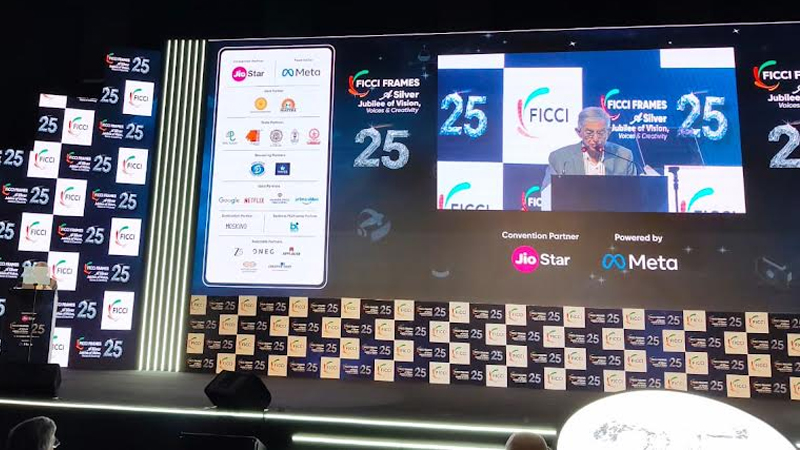
MUMBAI: When the world is scrolling, swiping, and snacking on content, Madison World chairman Sam Balsara reminded marketers at Ficci Frames 2025 that branding remains the heartbeat of advertising. Opening with his talk “A Marketer’s Losing Fame in Branding”, Balsara mixed wit with insight, calling out the obsession with short-term performance media and urging a return to storytelling that builds lasting emotional connections.
Reflecting on a career spanning 8 years in marketing, 8 years in advertising, and 37 years running his own agency, Balsara quipped that in India, “everybody thinks they are an advertising expert.” Yet despite decades of experience, he painted a sobering picture of the current marketing landscape: urban consumption in India has been declining for five consecutive quarters, pushing marketers to channel increasing shares of their budgets into performance media such as search, e-commerce, activation, and sampling. While these tactics are effective for immediate sales, Balsara cautioned that over-reliance is eroding the long-term ROI of advertising investments.
He reminded the audience that the global advertising industry, already worth 270 billion dollars in 1997, is projected to surpass 1 trillion dollars this year, with 70% of the spend now going digital. “Marketers are not wrong to follow consumers online, but we must understand the nature of digital consumption,” he noted. “Most online engagement is short, quick, and snackable. It’s easy to measure, but much harder to emotionally connect.”
Balsara then revisited the fundamentals: “What is branding? It’s more than a logo, a tagline, or a design. It’s about shaping perception, building trust, differentiating from competitors, and establishing a lasting emotional bond.” He emphasised that emotional appeal is twice as effective as rational messaging and that storytelling remains the most powerful tool for brand building. Over 50 years of experience had taught him that ads with strong narratives and emotional content consistently outperform transactional messages.
Supporting this, he cited multiple cross-media studies showing that TV ads excel at creating emotional connections. The rise of connected TV (CTV) in India with 60–65 million homes and counting offers advertisers the chance to combine digital agility with the immersive, story-driven impact traditionally associated with television. CTV delivers a “lean-back” viewing experience that enables 20–30 second emotional ads with a storyline, which are far more effective than brief digital clips for establishing memory and preference.
A US study conducted by Comcast and Media Science reinforced this point. The study compared ad recall and purchase intent across mobile digital platforms versus TV/CTV environments. The findings were striking: new brands saw 3.4x better recall on TV versus mobile digital, while established brands saw 4.3x improvement. Purchase intent was roughly 30 per cent higher when ads ran on TV first, and combining TV with subsequent digital exposure further amplified results. Balsara underscored that these insights are directly applicable in India: launching campaigns on TV or CTV before digital platforms maximises emotional impact and ROI.
He also offered practical guidance on budget allocation. Drawing on research by two contemporary scientists, Balsara advocated a 60-40 split, with 60 per cent of marketing budgets dedicated to branding to recruit new users and build markets, and 40 per cent for performance to drive conversions among consumers already in the market. He highlighted examples from IPL campaigns, where television exposure drives higher search volumes and e-commerce sales, often outperforming purely digital campaigns.
Balsara’s insights weren’t limited to statistics. He emphasised that creative messaging must align with human attention patterns: the large screen, immersive environment, and minimal distractions of TV/CTV are what allow brands to tell stories effectively. Digital publishers, he warned, must evolve to offer advertisers TV-like environments in digital contexts, replicating emotional storytelling and ensuring brand-building outcomes.
Performance media, he admitted, has its role especially for direct-to-consumer (D2C) brands in their early years but as brands scale, performance alone fails to sustain growth or build long-term equity. Branding, by contrast, delivers sustainable profit, loyalty, and market presence. “If you want a brand to last and scale,” he said, “you cannot ignore branding. The first exposure matters, the emotional appeal matters, and repetition matters.”
He concluded by reminding marketers that despite the digital frenzy, brand building is not optional, it’s essential. A carefully calibrated mix of branding and performance, emotionally engaging storytelling, and strategic sequencing across TV, CTV, and digital ensures that marketing budgets deliver both immediate results and enduring brand equity.
In a world dominated by clicks, short videos, and fleeting attention spans, Balsara’s message was clear: don’t lose the plot chasing short-term wins. Stay invested in stories, invest in emotion, and let branding drive both present performance and future growth. After all, in advertising as in life, the brands that tell stories that stick are the ones that endure.