Brands
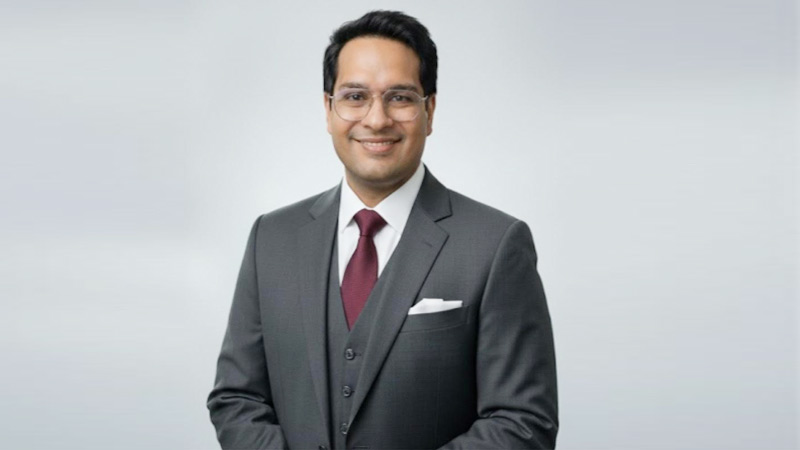
Ramandeep Singh joins Mastercard as director, enterprise strategy
NEW YORK: Ramandeep Singh has stepped into a new chapter of his global career, joining Mastercard as director, enterprise strategy, based at the company’s purchase, New York office.
Sharing the update, Singh said he was “happy to start a new position” at Mastercard, marking a move from consulting into the heart of one of the world’s most influential payments companies. He begins the role in December 2025 and will work in a hybrid capacity.
Singh arrives with a resume that reads like a tour of boardrooms, startups and strategy war rooms. Most recently, he spent over four years at McKinsey & Company, where he rose to junior engagement manager and senior associate. Rated a consistent top performer, he delivered more than 30 projects for Fortune 500 clients, leading teams and working closely with senior executives on growth, digital strategy and organisational transformation.
Before McKinsey, Singh built hands-on experience across consulting, investing and entrepreneurship. He was an early team member at Delhivery during its rapid scale-up phase, contributing to product and strategy initiatives that helped drive efficiency gains and multi-million-dollar cost savings. Earlier, he founded OrderSquare, a B2B grocery technology platform, raising angel funding and serving top-tier restaurants across major Indian cities.
His career path also includes stints at Alvarez and Marsal, Portea, SRL Diagnostics, Gemba Capital and Grameen Bank, blending exposure across healthcare, logistics, finance and social enterprise. Along the way, he helped shape expansion strategies, evaluated investments and even built enduring student institutions, including founding the Finance Club at IIT Bombay.
At Mastercard, Singh is expected to draw on this mix of consulting rigour, startup intuition and global perspective to help shape enterprise-wide strategy. From street-smart entrepreneurship to Fortune 500 playbooks, his journey suggests a strategist comfortable switching gears, and now ready to help steer one of the world’s biggest payments brands into its next phase.

Brands
Godrej clarifies ‘GI’ identifier after logo similarity debate
Says GI is not a logo, will not replace Godrej signature across products.
MUMBAI: In a branding storm where shapes did the talking, Godrej is now spelling things out. Godrej Industries Group (GIG) has issued a clarification on its newly introduced ‘GI’ identifier, addressing questions around its purpose and design following a wave of online criticism. At the centre of the debate were two concerns: whether the new mark replaces the long-standing Godrej logo, and whether its geometric design mirrors other corporate identities.
The company has drawn a clear line. The Godrej signature logo, it said, remains unchanged and continues to be the sole logo across all consumer-facing products and services. The ‘GI’ mark, by contrast, is not a logo but a corporate group identifier intended for use alongside the Godrej signature or company name, and aimed at stakeholders such as investors, media and talent rather than consumers.
The need for such a distinction stems from the 2024 restructuring of the broader Godrej Group into two separate business entities. With both continuing to operate under the same Godrej name and signature, the identifier is positioned as a way to differentiate the Godrej Industries Group at a corporate level.
The rollout, however, triggered a broader conversation on design originality. Critics pointed to similarities between the GI mark’s geometric composition and logos used by companies globally, raising questions about distinctiveness.
Responding to this, GIG said its intellectual property and legal review found that such overlaps are common in minimalist, geometry-led design systems. Basic forms such as circles and rectangles appear across dozens of brand identities worldwide, the company noted.
It added that the identifier emerged from an extensive design process and was chosen for its simplicity, allowing it to sit alongside the Godrej signature without competing visually. While acknowledging that elemental shapes may appear less distinctive in isolation, the group emphasised that the mark is part of a broader identity system that includes a custom typeface, sonic branding and other proprietary elements.
Following legal and ethical assessments, the company said it found no impediment to using the identifier, reiterating that the GI mark is a corporate tool not a consumer-facing symbol.
In short, the logo isn’t changing but the conversation around it certainly has.