Brands
Polycab sparks festive joy with safe and happy connections across India

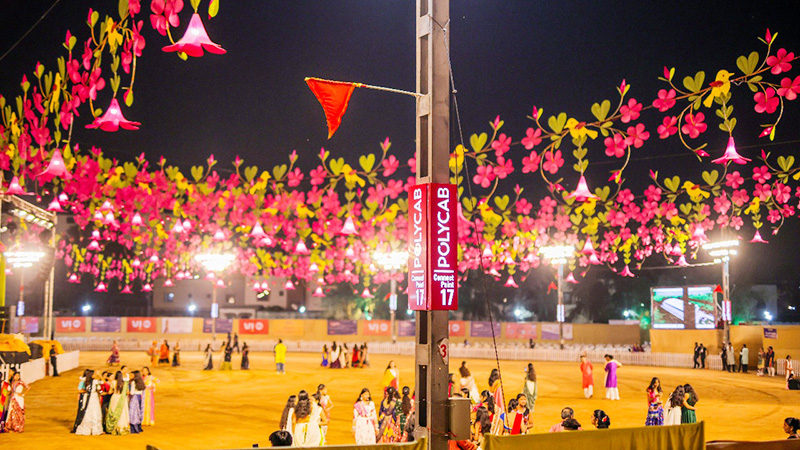
MUMBAI: Festivals may be about faith and fireworks, but this year it’s Polycab India limited that’s turning up the voltage on celebration. As India steps into its busiest festive calendar from Navratri in Gujarat to Durga Puja in Kolkata and Dasara in Mysuru Polycab is proving that a safe connection can be just as powerful as a spiritual one.
At the heart of it all is the brand’s promise: “India’s Safe & Happy Connection.” And Polycab is delivering it with community-first activations that blend tradition, comfort, and inclusion.
In Ahmedabad’s Heritage Garba, revellers are welcomed with selfie installations and cooling zones to keep spirits high (and temperatures low). Vadodara’s VVN Garba takes it a step further with illuminated connect points designed to help people meet, plus mobile charging stations that keep phones buzzing long after the dandiya beats. At the iconic Nyay Mandir Garba, grand Polycab-branded entry gates greet thousands, lighting up the festive nights with style and safety.

Polycab’s theme “Priyojoner Safety, Anonder Connection” (Loved ones’ safety, the connection of happiness) is making a cultural splash across the city’s pandals. At Samaj Sebi Sangha, Goddess Durga’s Vaahans come alive with Polycab products woven into their design, symbolising modern innovation anchored in tradition. Over at Ballygunge Cultural Association, a striking curved LED tunnel narrates Polycab’s journey through culture and light.
For the crowds weaving through Kolkata’s Puja routes, comfort zones offer not just shade and seating but also mobile charging hubs, wheelchair assistance for the elderly, and baby care rooms for young mothers thoughtful touches that make pandal hopping more inclusive.
In Karnataka, Polycab’s footprint shines during the grandeur of Mysuru Dasara. At the Chamundi Hill Temple, devotees find relief in cool zones with water and charging points, while the brand backs the Mysuru Traffic Police with branded jackets and booths to aid crowd management. High-visibility hoardings across the Nada Habba routes ensure that Polycab remains part of the city’s most iconic spectacle.
“At Polycab, our purpose has always been to put people first, and India’s festivals are a natural extension of this belief,” said Polycab India senior vice president for brand & marcom Shwetal Basu. “By creating activations rooted in tradition yet aligned with evolving community needs, we aim to make celebrations safer, more inclusive, and truly memorable.”
This isn’t Polycab’s first tryst with cultural milestones. From Lalbaugcha Raja in Mumbai to Rath Yatra in Puri, the brand has consistently delivered comfort zones, safety booths, and charging hubs to millions of devotees. With its 2025 festive activations, Polycab has cemented its role not just as an electrical brand but as a partner in India’s most cherished celebrations.
In a season where lights, sound, and spirit converge, Polycab has managed to weave in its own sparkle ensuring that the connection of happiness is not just felt, but safely shared.





Brands
Dunkin’ Donuts to exit India as Jubilant FoodWorks ends 15-year franchise deal
The quick service restaurant giant is ending a 15-year franchise partnership with the American doughnut chain, even as it renews its Domino’s agreement for another 15 years
NOIDA: Dunkin’ is done in India. Jubilant FoodWorks Ltd, the country’s leading quick service restaurant operator, has decided not to renew its franchise agreement with the American coffee and doughnut chain, and will wind down its Indian stores in a phased manner before December 31, 2026, bringing a 15-year partnership to a quiet, loss-laden close.
The decision, approved by JFL’s board on March 30, 2026, ends a relationship that began with a Multiple Unit Development Franchise Agreement signed on February 24, 2011. JFL will now evaluate and undertake what it described in a regulatory filing as the “rationalisation and/or cessation of certain operations and/or sale, transfer or disposal of assets and/or assignment or transfer of franchise rights,” all in consultation with Dunkin’s brand owners and strictly within the terms of the original agreement.
The numbers tell the story bluntly. In the financial year 2024-25, Dunkin’ India posted a revenue of Rs 37 crore against a loss of Rs 19 crore — a haemorrhage that was always going to test the patience of a parent company recording revenues of Rs 6,104 crore and a profit of Rs 194 crore in the same period. Doughnuts, it turns out, were never going to move the needle.
The contrast with JFL’s handling of its other marquee franchise could hardly be sharper. Even as it walks away from Dunkin’, the company has just doubled down on Domino’s, signing a fresh Master Franchise Agreement on March 31, 2026, granting it exclusive rights to develop and operate Domino’s Pizza stores in India for 15 years, with an option to renew for a further 10.
JFL, incorporated in 1995 and promoted by the Bharatia family, operates a network of more than 3,500 stores across six markets — India, Turkey, Bangladesh, Sri Lanka, Azerbaijan and Georgia. Its portfolio includes Domino’s and Popeyes on the global side, and two home-grown brands: Hong’s Kitchen and COFFY, a café brand in Turkey.
For Dunkin’, India was always a stretch. The brand never quite cracked the cultural code in a market where filter coffee and chai command fierce loyalty and where the doughnut remains, at best, an occasional indulgence rather than a daily habit. Fifteen years, mounting losses and a parent with better things to spend its capital on was always going to be a difficult equation to solve.
The doughnut has had its last day. The pizza, however, is staying.






