MAM
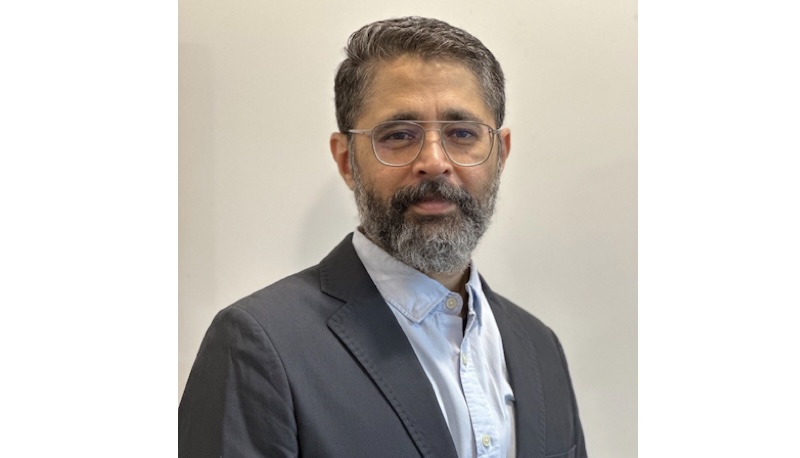
Percept restructures; gets Shiv Sethuraman as CEO


MUMBAI: Percept has gone ahead to consolidate its diverse strategic business units to a single holistic entity called Percept One. The agency currently stands at having revenues of worth Rs 1,250 million. Along with this the agency has also appointed Shiv Sethuraman as CEO of Percept One, with effect from 14 July, 2014.
He will be responsible for leading business development and integration of all marketing communication (marcom) services, creating opportunities for synergy within and across the marcom businesses of the Percept group, attaining profitability and revenue growth organically and inorganically, as also paving the roadmap for the overall marcom business of the Percept group. Sethuraman has a challenging mandate of driving a 30 per cent year-on-year growth with a target of achieving revenues worth Rs 2,750 million by 2017.

Previously, the marketing communications services business of Percept spanned three separate verticals, namely creative services, media services and other marcom services. The creative services vertical encompassed advertising, brand marketing consultancy and communications, corporate identity, strategy, creative, design and packaging and integrated marketing communication consultancy services.
The media services vertical spanned media planning and buying, out-of-home media, retail media, rural media and digital media. The third vertical included a host of services including experiential marketing, sports management and marketing, incentives, conferences and exhibitions management, event management and marketing, celebrity endorsements and talent management, entertainment branding and marketing, branded entertainment, brand activations and promotions, public and media relations and social media marketing.
Sethuraman has had a remarkable two decade long career in the media and communications domain. He has handled dynamic portfolios spanning global brand development and business acquisition and served as country head in Europe and also in India.
Prior to joining Percept, Sethuraman was associated with TBWA, India in the role of CEO and personally led the Nissan, Adidas and infrastructure/realty cluster within the agency. He kick-started his advertising career with Ogilvy where he cut his teeth on many of the key clients of the agency such as Cadbury, Castrol, Unilever and Shell amongst others. He moved to Ogilvy, Paris in 2001 as global business director and was later elevated to the position of MD, Ogilvy & Mather, Paris where he acquired large global and regional accounts such as Louis Vuitton, Coca Cola – Europe and Europcar and also managed several businesses including IBM, Unilever and Nestle.
Sethuraman said, “Percept has been a pioneer in the entertainment, media and communications space and has set many benchmarks over the decades. With the creation of Percept One we are now bringing together the very successful individual businesses to create an integrated entity. This entity is already 700 people strong and has over Rs 1250 million in revenue, making it one of the leading companies in its space. The mandate and the challenge is to use this size and scale to propel us to a faster growth trajectory. I look forward to working closely with the team at Percept to ensure that Percept One reaches its goals.”
“We strongly believe that Shiv will be able to provide the leadership that Percept One needs to become a strong unified marcom service. His global leadership experience and brand experience will help us achieve the scale and growth targets we have set for ourselves,” added Percept director Ajay Upadhyay.




Risk and return maintain inverse proportionality within mutual funds – higher potential rewards accompany elevated volatility, while stability demands lower expectations. SEBI’s Riskometer (1-5 scale) standardizes visualization, but quantitative metrics reveal nuanced relationships across categories and market cycles.
Fundamental Risk-Return Relationship
Equity funds (Riskometer 4-5) deliver historical 12-16% CAGR alongside 18-25% standard deviation—large-cap 15% volatility, small-cap 30%+. Debt funds (1-2) yield 6-8% with 2-6% volatility. Hybrids (3) average 9-12% returns, 10-14% volatility.
Sharpe ratio measures return per risk unit – equity 0.7-0.9, debt 0.5-0.7 over complete cycles. Higher risk categories compensate through return premium capturing economic growth.
Volatility Metrics Explained
Standard Deviation: Annual NAV return dispersion—equity 18-22%, debt 4-6%.
Maximum Drawdown: Peak-to-trough losses – equity 50%+ (2008), debt 8-12%.
Beta: Market sensitivity – equity 0.9-1.1, debt 0.1-0.3.
Sortino Ratio focuses downside volatility—equity 1.0-1.3 favoring recoveries.
Value at Risk (VaR) estimates 95% confidence, worst 1-month loss: equity 10-15%, debt 1-2%.
Category Risk-Return Profiles
Large-cap equity: 12-14% CAGR, 15% volatility, Sharpe 0.8.
Mid/small-cap: 15-18%, 22-30% volatility, Sharpe 0.7.
Corporate bond debt: 7-8%, 4% volatility, Sharpe 0.6.
Liquid funds: 6.5%, <1% volatility—capital preservation.
Credit risk debt: 8.5%, 6% volatility—yield pickup.
Hybrids: 10-12%, 12% volatility—balanced exposure.
Review types of mutual funds specifications confirming mandated asset allocations driving profiles.
Historical Risk-Return Tradeoffs (2000-2025)
Complete cycles: Equity 14% CAGR/18% volatility; 60/40 equity/debt 11%/11% volatility; debt 7.5%/5% volatility. Bull phases (2013-2021): equity 18%, debt 8%. Bear markets (2008, 2020): equity -50%/+80% swings, debt -10%/+10%.
Inflation-adjusted: Equity 8% real CAGR; debt 1.5% real—growth funding requires equity allocation.
Risk Capacity Assessment Framework
Short-term goals (1-3 years): Riskometer 1-2 (liquid/debt), 2-4% real returns. Medium-term (5-7 years): Level 3 (hybrid), 4-6% real. Long-term (10+ years): Level 4-5 (equity), 6-9% real.
Personal factors: Age (younger = higher risk), income stability, emergency fund coverage, other assets. Drawdown tolerance—20% comfortable vs 40% discomfort signals capacity limits.
Portfolio Construction Principles
Diversification: 60/40 equity/debt reduces volatility 40% versus equity-only while capturing 80% returns.
Correlation: Equity/debt 0.3 average enables smoothing.
Rebalancing: Annual drift correction sells outperformers (equity +25%), buys underperformers (debt -5%).
Style balance: Large-cap stability offsets mid-cap growth volatility.
Quantitative Risk Management Tools
Sharpe Ratio: >1.0 indicates efficient risk-taking.
Information Ratio: Alpha per tracking error.
Downside Deviation: Focuses losses only.
Stress Testing: 2008 scenario simulations reveal portfolio behavior extremes.
Conclusion
Higher mutual fund risk levels correlate with elevated return potential – equity 12-16% amid 18-25% volatility versus debt 6-8%/4-6%. Risk capacity matching, category diversification, rebalancing discipline, and quantitative metric interpretation align portfolios with personal tolerance across economic cycles.
Disclaimer: Investments in the securities market are subject to market risk, read all related documents carefully before investing.






