Brands
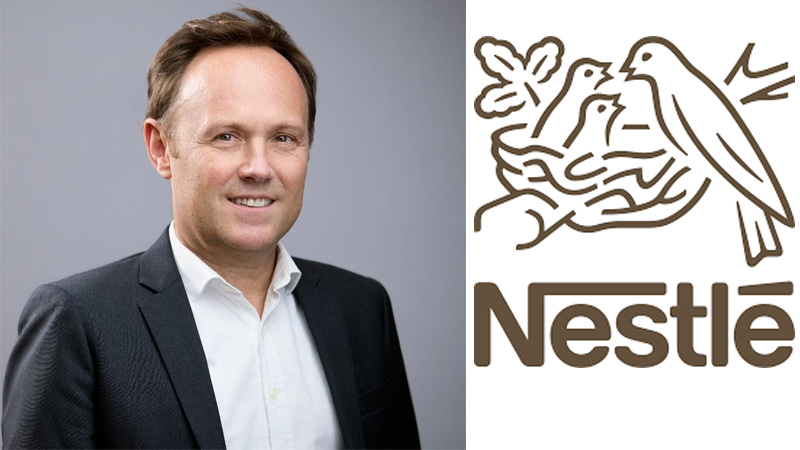
Nestlé names Edouard Mac Nab as CFO
Switzerland: Nestlé is revamping its leadership at a pivotal moment in its digital and operational transformation. Edouard Mac Nab, currently head of finance and control at Nestlé Canada, will take over as chief financial officer and executive director – finance & control from 1st March 2026, succeeding Svetlana Boldina, who moves to a new role within a Nestlé affiliate.
On 1st June 2026, Jagdeep Singh Marahar will step in as executive director – technical, following the retirement of Satish Srinivasan. The appointments reflect Nestlé’s push to strengthen financial oversight and technical leadership as the company focuses on digitalisation and operational profitability.
With the new leadership lineup, Nestlé is aiming to sharpen its strategy, accelerate transformation and ensure the company stays ahead in a fast-evolving consumer and manufacturing landscape.
Change is on the menu. Nestlé is serving up a leaner, tech-savvy leadership to drive growth and efficiency.

Brands
6 in 10 face bias, 58 per cent delay care: India’s LGBTQIA+ health crisis
Study highlights bias in care and unsafe spaces shaping everyday choices
MUMBAI: A significant number of LGBTQIA+ women in India are putting off essential healthcare, with 58 per cent reporting delays or avoidance due to discrimination, according to a new study. The figure is the highest among five countries surveyed, pointing to deep-rooted systemic challenges.
The research, conducted by Kantar in partnership with DIVA Charitable Trust and The Curve Foundation, draws insights from over 3,200 LGBTQIA+ women and non-binary individuals globally. Released around Lesbian Visibility Week, the findings highlight how bias continues to shape access to care.
In India, 60 per cent of respondents said they had faced discrimination in healthcare settings, often feeling dismissed or not taken seriously by providers. This has led many to delay seeking treatment, underscoring how trust deficits in the system directly impact health decisions.
The study also reflects broader social realities. Instances of verbal or physical abuse were commonly reported across platforms such as social media, public transport and social venues, reinforcing a persistent sense of insecurity in everyday life.
At the same time, expectations from brands are evolving. In India, 78 per cent of respondents believe companies should actively contribute to advancing diversity and inclusion, signalling a growing demand for corporate accountability.
Kantar India HR head Mridul Shekhar said, “LGBTQIA+ women and non-binary people remain underrepresented and overlooked. Their experiences are shaped by uneven access to care and systems not designed with them in mind. When people are invisible in data, they become invisible in decision-making.”
DIVA Charitable Trust executive director Lady Phyll added, “When people delay healthcare because they fear discrimination, we are no longer talking about symbolic inclusion. These are life decisions driven by the need to feel safe.”
The findings underline a stark reality. While awareness around inclusion is growing, bridging the gap between intent and lived experience remains an urgent priority.