MAM
Mayank Jain assigned as chief Product Officer of short news content app ‘Shortpedia’


MUMBAI: Mayank Jain joins Shortpedia, a technology driven short news content provider as its Chief Product Officer. He will be responsible for the company's product innovations and drive revenue at the same time. A young and dynamic media professional, Mayank’s last stint was with Dentsu Aegis Network where he was quickly elevated to the position of Group Head- Media and was handling prestigious clients like Adidas, Reebok, Philips & Apple.
Mayank brings a keen understanding of Digital platforms, AI and programmatic advertising which he will leverage to shape Shortpedia’s growth. At Shortpedia, as a part of the management, Mayank will be joining an illustrious team of media and technology professionals which is helmed by Amarjeet Singh who has 15 plus years of experience in IT in the marketing and advertising industry.
Founded on 1st April 2017, Shortpedia launched its App in March 2019. The app and the website are both available to Android & iOS users in both Hindi and English languages. The handpicked team at Shortpedia is experienced in diverse domains ranging from IT, AI, marketing, advertising, content, brands and management, making it a formidable title in the media and content space.

Shortpedia is an innovative and smart content platform that facilitates fresh content everyday to help its audiences evolve. In a short while the company has managed to unify and integrate the entire ecosystem of media consumption as content is available in multiple formats such – reading, watching and listening. Audiences can pick and choose the mode that they are always most comfortable with and remain engaged.
Talking about this new stint at Shortpedia, Mayank Jain, Chief Product Officer, said, “I’m extremely excited to take on this role. Content is a very interesting space and sky is the limit. In this world of clutter it is difficult to find credible and authentic information; we at Shortpedia are absolutely committed towards authenticity while evolving everyday to cater to our dynamic audiences. We are driving at fresh handpicked content, clutter free environment and a phenomenal user experience. Much like our audience, we are a very restless team so we are continuously experimenting and evolving”
He added, “We have already successfully added audio news to every news item that goes up. Apart from the listening feature we have also deployed AI to understand content consumption behaviour and programmatic enabled advertising. It’s a lean team so there has been no breathing space since I have joined which I’m thoroughly enjoying”.
Positioned as a new age, lifestyle-oriented smart content app, Shortpedia has a ‘news on the go approach’- supplying fresh content everyday with positive and educational storytelling. It showcases content as per the user’s consumption.
Talking about Mayank Jain joining the team, Mr. Amarjeet Singh, Mobile Head, Shortpedia stated, “I have known Mayank for a while and witnessed his growth as a professional. I personally feel that Shortpedia is the right platform for a professional like him. His understanding of the digital space is enviable, and we are very glad to have him onboard.”







Brands
Google says Gemini AI cuts irrelevant ads by 40 percent
AI driven search and ad tools boost relevance and results for brands.
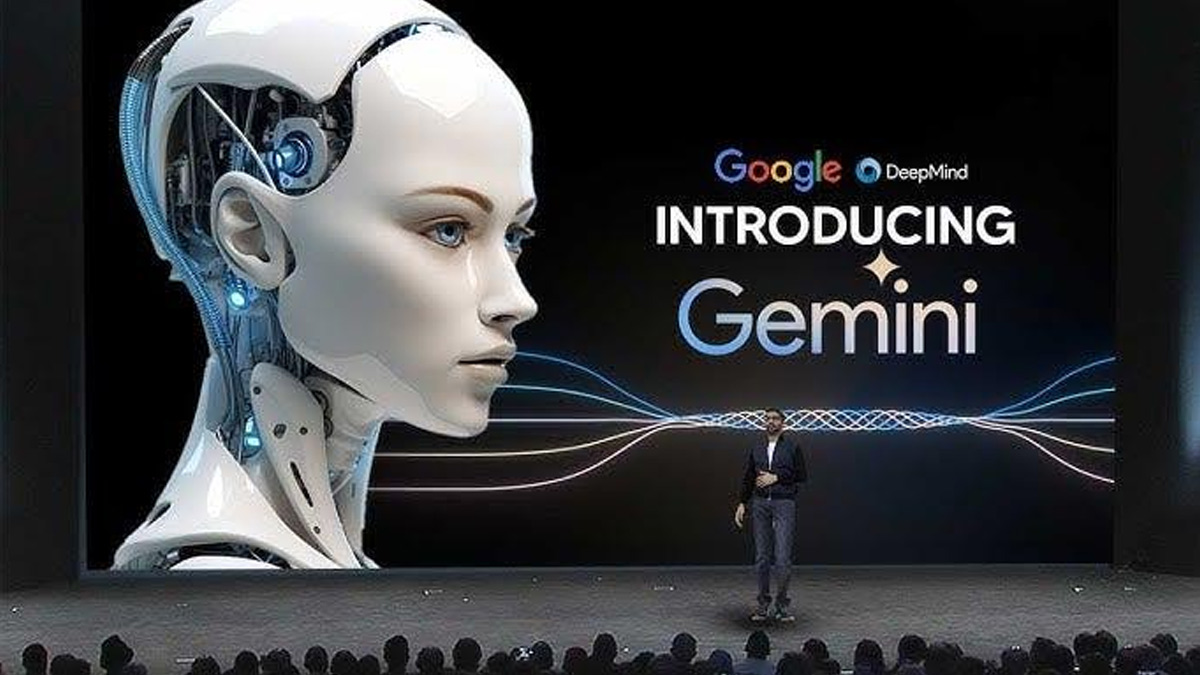
MUMBAI: In the never ending hunt for the right ad at the right moment, artificial intelligence may finally be sharpening the aim. Google says the integration of its multimodal AI models, Gemini, has reduced irrelevant advertisements across its platforms by 40 percent, as improved query understanding allows ads to match user intent more closely.
Speaking at a roundtable on Thursday, Google vice president of Global Ads Dan Taylor said the company has been steadily deploying Gemini powered upgrades to interpret complex search queries more accurately. “We have been making Gemini based improvements to query understanding at a rate of almost one launch per month over the last two years. As the models improve and our ability to deploy them improves, ad quality continues to get better,” Taylor said.
The improvements come as Google leans deeper into AI driven advertising tools. According to the company, 2025 saw a threefold increase in Gemini generated creative assets produced by advertisers using its AI powered ad solutions.
The company also highlighted how these tools are influencing marketing performance for brands in India.
Insurance marketplace Policybazaar recorded a 28 percent rise in health insurance sales while reducing cost per sale by 23 percent after adopting AI Max, a tool that interprets natural language search queries to improve ad targeting.
Meanwhile, hospitality platform OYO reported 50 percent higher return on ad spend (ROAS) and a 25 percent reduction in cost per acquisition after combining its existing search campaigns with Google’s Performance Max (PMax) advertising campaigns.
Taylor noted that evolving consumer behaviour is also reshaping how brands approach digital advertising. According to Google’s data, 86 percent of shoppers in India using Google Search said they were open to trying new brands or products, suggesting that AI driven discovery tools could increasingly influence purchase decisions.
Beyond advertising, Google is also investing in what it calls agentic commerce, an emerging model where AI agents autonomously assist users in discovering, comparing and purchasing products online.
“Our goal with agentic commerce is twofold, first, to remove the grunt work of shopping so consumers can focus on the fun parts; and second, to work hand in hand with the industry to build the foundations needed to make agentic commerce seamless and secure across the web,” Taylor said.
The push into AI enhanced advertising and commerce comes as Google’s core ads business continues to grow. The company recently reported $82.28 billion in advertising revenue, marking a 13.5 percent year on year increase.
For advertisers navigating an increasingly crowded digital landscape, Google is betting that smarter algorithms and sharper intent signals will make ads feel less like interruptions and more like timely suggestions.







