Brands
Libas set to launch 11 news stores on one single day this Independence Day

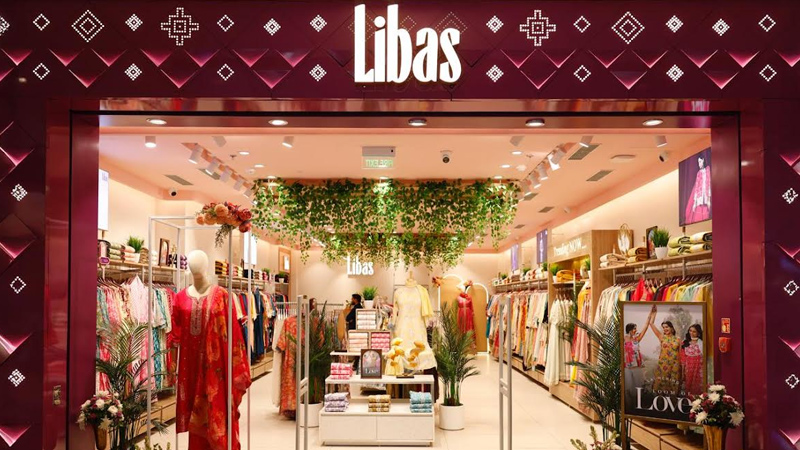
MUMBAI: Libas is set to make retail history by launching 11 new stores in a single day across India on August 15. The expansion reflects the brand’s deeper push into India’s dynamic offline market and marks a significant step towards its goal of opening 100+ stores by the end of 2025.
From design to sourcing to customer experience, Libas has always stayed true to its core philosophy – “Made in India. Made for India.” The upcoming store launches are an extension of this belief, celebrating the diversity, individuality, and aspirations of modern Indian women across geographies.
Each store location has been selected with strategic intent, from the bustling neighbourhoods of Jasola and Rohini in Delhi-NCR to the high-footfall zones of Phoenix Palassio in Lucknow and MG Road in Kochi. These markets represent strong consumer demand and digital engagement for the brand.

The 11 new store locations include Jasola, Rohini, and Gaur City in Delhi-NCR; Lucknow; Indore; Kochi; Amritsar; Udaipur; Bel Road and Sarjapur in Bengaluru; and Mumbai.
Libas founder & CEO Sidhant Keshwani said, “This expansion marks a decisive step in our growth trajectory as we strengthen our presence across the country. By foraying into these high-impact markets, we are strategically taking Libas closer to the modern Indian women who have shaped and inspired us. The 11 steps closer campaign is a tribute to India’s fashion-forward women across regions. As we scale across Tier 1 and Tier 2 cities, we’re committed to creating spaces that reflect local aesthetics while delivering a consistent Libas experience. Every store is an opportunity to engage meaningfully, to listen, and to co-create fashion experiences that appeal to our target audience.”






Brands
Dunkin’ Donuts to exit India as Jubilant FoodWorks ends 15-year franchise deal
The quick service restaurant giant is ending a 15-year franchise partnership with the American doughnut chain, even as it renews its Domino’s agreement for another 15 years
NOIDA: Dunkin’ is done in India. Jubilant FoodWorks Ltd, the country’s leading quick service restaurant operator, has decided not to renew its franchise agreement with the American coffee and doughnut chain, and will wind down its Indian stores in a phased manner before December 31, 2026, bringing a 15-year partnership to a quiet, loss-laden close.
The decision, approved by JFL’s board on March 30, 2026, ends a relationship that began with a Multiple Unit Development Franchise Agreement signed on February 24, 2011. JFL will now evaluate and undertake what it described in a regulatory filing as the “rationalisation and/or cessation of certain operations and/or sale, transfer or disposal of assets and/or assignment or transfer of franchise rights,” all in consultation with Dunkin’s brand owners and strictly within the terms of the original agreement.
The numbers tell the story bluntly. In the financial year 2024-25, Dunkin’ India posted a revenue of Rs 37 crore against a loss of Rs 19 crore — a haemorrhage that was always going to test the patience of a parent company recording revenues of Rs 6,104 crore and a profit of Rs 194 crore in the same period. Doughnuts, it turns out, were never going to move the needle.
The contrast with JFL’s handling of its other marquee franchise could hardly be sharper. Even as it walks away from Dunkin’, the company has just doubled down on Domino’s, signing a fresh Master Franchise Agreement on March 31, 2026, granting it exclusive rights to develop and operate Domino’s Pizza stores in India for 15 years, with an option to renew for a further 10.
JFL, incorporated in 1995 and promoted by the Bharatia family, operates a network of more than 3,500 stores across six markets — India, Turkey, Bangladesh, Sri Lanka, Azerbaijan and Georgia. Its portfolio includes Domino’s and Popeyes on the global side, and two home-grown brands: Hong’s Kitchen and COFFY, a café brand in Turkey.
For Dunkin’, India was always a stretch. The brand never quite cracked the cultural code in a market where filter coffee and chai command fierce loyalty and where the doughnut remains, at best, an occasional indulgence rather than a daily habit. Fifteen years, mounting losses and a parent with better things to spend its capital on was always going to be a difficult equation to solve.
The doughnut has had its last day. The pizza, however, is staying.






