Brands
Libas appoints Saurav Shah as chief financial officer
Fashion retailer taps veteran finance hand to tighten discipline and fund expansion

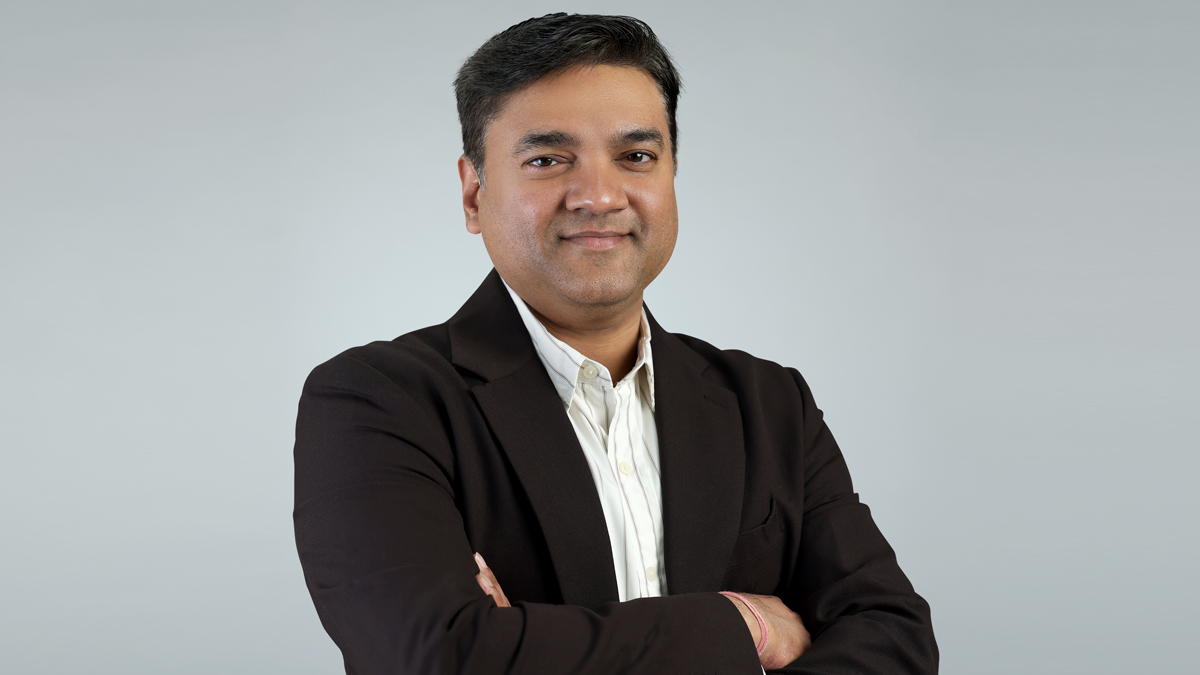
NEW DELHI: Libas has appointed Saurav Shah as chief financial officer, bolstering its top deck as the ultrafast fashion brand pushes for sharper scale, tighter controls and sustainable growth in India’s crowded apparel market.
Shah will run financial operations, capital planning, performance management and governance frameworks, placing him at the centre of Libas’ expansion playbook as it grows its omnichannel and retail footprint.
A chartered accountant with nearly two decades of experience, Shah has worked across fashion, retail and consumer businesses, blending finance leadership with business strategy and commercial operations. His mandate at Libas is clear: build a financially agile, future-ready organisation that can fund innovation, absorb shocks and still grow fast.

He has served as chief financial officer at Jaypore Ecommerce, a subsidiary of Aditya Birla Fashion and Retail Limited (ABFRL), as well as at Reliance Brands and KAZO. In those roles, he drove financial discipline, profitability and expansion in high-growth, multi-channel environments. He also headed finance for ABFRL’s international brands division, overseeing labels such as Galeries Lafayette and The Collective. Most recently, he was associated with ABFRL and KAZO, leading finance operations.
Earlier stints at Landmark Group, KPMG and USPL (WROGN) gave him grounding in governance, audit, taxation, compliance and business advisory.
“We are thrilled to welcome Shah to our team,” said Sidhant Keshwani, founder and chief executive, Libas. “His deep understanding of the fashion and retail landscape, coupled with his strong financial acumen, makes him an invaluable addition. As Libas scales across channels, his strategic approach to finance will be instrumental in building a resilient and growth-oriented organisation.”
Shah called the timing pivotal. “I am excited to join Libas at this important stage of its growth journey,” he said. “My focus will be on creating robust financial systems that support responsible growth, faster decision-making and long-term value creation. I envision scaling Libas responsibly, investing wisely and building a business that is sustainable for the long run, while staying true to the brand’s customer-first ethos.”
The hire comes as Libas doubles down on expansion and operational efficiency, positioning finance as a growth engine rather than a back-office function.
In India’s ultrafast fashion race—where trends change by the week and margins by the season—Libas is signalling that style may win attention, but discipline wins endurance.







Brands
KKR sixes to power EV charger rollout under VIDA campaign
Cricket meets clean mobility as big hits spark India’s charging growth
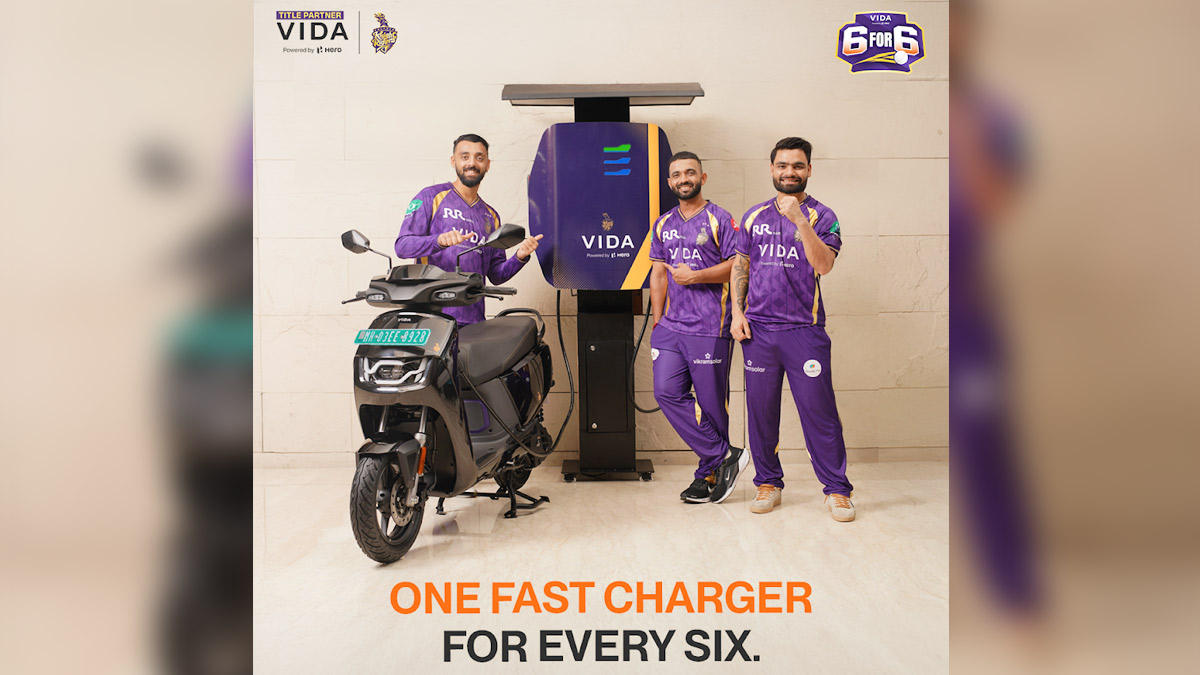
NEW DELHI: VIDA, the electric mobility arm of Hero MotoCorp, has teamed up with Kolkata Knight Riders to launch a campaign that turns cricketing flair into real-world impact.
Titled ‘6 for 6’, the initiative promises to install a 6kW fast EV charger for every six hit by KKR during the ongoing Indian Premier League season. The idea is simple but powerful, as each big hit on the field contributes directly to expanding India’s fast-charging infrastructure.
The campaign builds on VIDA’s growing network, which already spans over 5,300 fast-charging points across more than 430 cities. With EV adoption gaining pace, the brand is using cricket’s mass appeal to accelerate both awareness and infrastructure growth.
Explaining the thinking behind the move, Hero MotoCorp emerging mobility business unit chief business officer Kausalya Nandakumar said, “Cricket has an incredible ability to unite and inspire millions across the country. With the ‘6 for 6’ campaign, we are turning every big hit on the field into a step towards a cleaner and a more accessible mobility future.”
She added that VIDA’s expanding fast-charging network and removable battery technology are designed to make EV ownership more convenient and practical for everyday users.
From the franchise’s side, the campaign is also about giving on-field moments a larger purpose. Kolkata Knight Riders chief executive officer Venky Mysore said, “The ‘6 for 6’ campaign exemplifies the potential of sport as a platform for meaningful, real-world impact. By linking every six to the expansion of EV charging infrastructure, this partnership transforms fan excitement into tangible progress.”
As part of the rollout, VIDA has introduced co-branded charging stations in KKR’s signature colours, with a flagship installation unveiled alongside team players. The chargers are designed for quick top-ups, powering VIDA scooters from zero to 80 percent in about an hour, while also being positioned along key highways to support longer journeys.
The initiative also taps into VIDA’s removable battery system, which allows users to charge using standard household plug points, adding flexibility to the charging ecosystem.
By blending the thrill of cricket with the urgency of clean mobility, VIDA and KKR have found a neat way to make every six count twice, once on the scoreboard and again on India’s road to an electric future.








