Brands
Kia Sonet has the lowest maintenance cost in the compact SUV segment: Frost & Sullivan

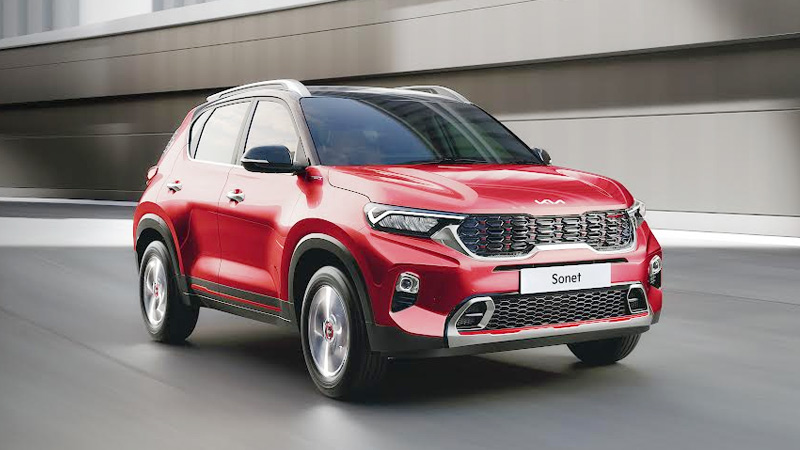
Mumbai: Frost & Sullivan growth advisory company, released its total cost of ownership benchmark analysis, revealing Sonet to have the lowest maintenance cost in the Compact SUV segment. While the diesel model Maintenance cost is per cent lower, the petrol model of Sonet takes it further with a 16 per cent lower maintenance cost than the segment average. The analysis further reveals that the diesel model of Sonet tops the segment with a complete value-for-money package. While the diesel model’s total cost of ownership comes out to be 10 per cent lower than the segment average, making it the best in the segment, the petrol variant emerges as the second best with 4 per cent lower TCO than the segment average, closely following the segment best. Furthermore, the analysis suggested that the residual value of both models is per cent higher than the segment average while being amongst the best in the segment. The comprehensive analysis evaluating 5 petrol and 3 diesel competition models against Sonet encompassed the total cost of ownership, comprising initial acquisition cost, residual value, maintenance cost, finance and insurance costs, and fuel expenses.
Frost & Sullivan’s analysis also revealed that the scheduled maintenance cost of diesel Sonet is lower by 17 per cent compared to the closest rival and 23 per cent compared to the segment average. Regarding Petrol Sonet, the figure is over 7 per cent and 28 per cent lower than the nearest rival and other competition models respectively. Considering a 10,000 km average annual distance travelled among other methodologies the analysis states that the diesel variant’s fuel economy is the best in the segment, standing at 6 per cent lower than the segment average. One of the improvement areas for the Sonet is the fuel economy in the petrol model, where it holds the third position and closely follows the segment’s bests. The analysis further affirms that the initial acquisition, finance, and insurance costs of both models are lower than the segment average.
Further, Frost & Sullivan spokesperson commented, “We analysed the overall cost of ownership trends of the compact SUV segment. The Kia Sonet comes out to be the most value-for-money proposition with lowest maintenance cost in the segment, which is a challenging accomplishment.”
Kia India national head Sales & marketing Hardeep Singh Brar commented, “This transformation underscores our commitment to not only deliver exceptional quality and features but also ensure that our customers enjoy an unparalleled ownership experience with the added advantage of cost-effectiveness. We believe in setting benchmarks, and Sonet’s recognition for its low cost of ownership by Frost & Sullivan is clear evidence of our steadfast dedication to redefine industry standards and cater to the evolving needs of our discerning customers.”
Key Highlights from Frost & Sullivan’s Analysis:
o Maintenance Cost: Best in Segment for both petrol and diesel models
o Petrol Model: 16 per cent lower than the segment average
o Diesel Model: 14 per cent lower than the segment average
· Total Cost of Ownership:
o Sonet Diesel: Best in segment (Lowest TCO) with complete value for money package in diesel; 10 per cent lower than the segment average
o Sonet Petrol: TCO lower than segment average & second best in segment; 4 per cent lower than the segment average
o Residual Value: Among best in the segment with 3 per cent higher residual value than the segment average
· Fuel Cost:
o Sonet Diesel: Best in the segment. 6 per cent lesser than the segment average
o Sonet Petrol: Amongst the top three; closely following the bests
· Scheduled Maintenance:
o Sonet Petrol: Schedule maintenance cost is 7 per cent lower when compared with closest rival and 25 per cent lower with regards to segment average.
o Sonet Diesel: Schedule maintenance cost is lower by 17 per cent when compared with closest rival and 24 per cent with regards to segment average.
Lesser parts replacement frequencies helping Sonet to keep lower maintenance.
Frost & Sullivan, a global analytics and advisory firm known for their industry intelligence, insights, and advisory services to drive growth, did the analysis keeping various parameters in mind. The key parameters which the firm considered are:
· Vehicle Segment: Compact SUV
· Coverage: Metro (New Delhi)
· Competition Model: 8 (5 Petrol and 3 Diesel)
· Insurance: Comprehensive and third Party
· Motor Vehicle Tax: Taxes vary according to engine capacity and fuel type
· Finance cost: Loan and interest rates (5 years of loan tenure considered)
· Target Customers: Individuals and fleet owners
· Considered 10,000 km average distance travelled in a year
· Vehicle prices procured from respective showrooms of competitors
· Comprehensive insurance policy is considered for benchmarking purposes. Insurance cost is procured from the respective Insurance companies
· November 2023 fuel prices are considered as the base price.
· ARAI (Automotive Research Association of India) specified mileage taken for fuel cost calculation over the 5 years
· Component replacement period for schedule and non-schedule service considered to calculate number of replacements during specified years.
· For residual value calculations, various online portals were referred and primary discussions with leading independent used car dealers were conducted.
Kia Sonet was launched in India in September 2020 and has received an overwhelming response from customers, with over 3.65 lakh units sold to date in domestic and export markets. The refreshed Sonet in a new Avatar is slated to debut on December 14 2023.