MAM
Jos Alukkas launches AR virtual try-on for jewellery
Customers can now preview necklaces, earrings and more on their devices.
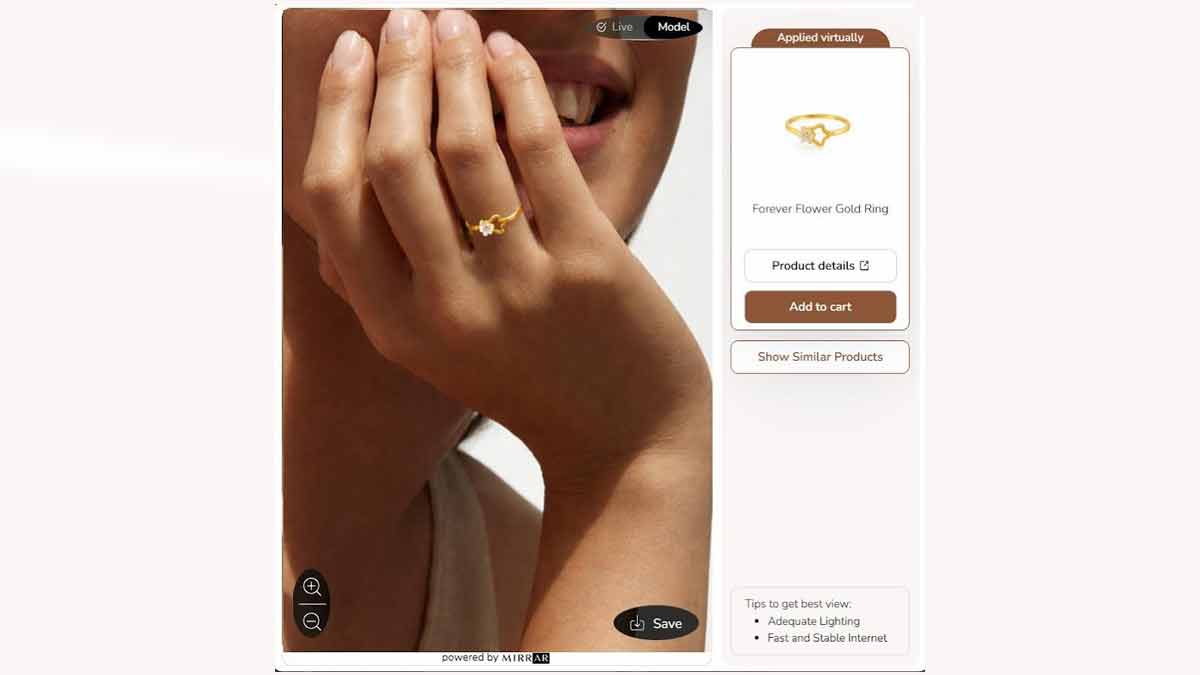
MUMBAI: Jos Alukkas just turned mirrors into magic because why try on jewellery in a showroom when you can let your phone do the sparkling for you? Jos Alukkas, a trusted name in quality and trendy jewellery across India, has introduced an Augmented Reality (AR) virtual try-on feature on its website, developed in partnership with mirrAR. The tool allows customers to see how necklaces, earrings, bangles, rings and other pieces look on them instantly using their smartphone or desktop camera no downloads required.
Users simply visit the official website, select a desired item, choose the ‘Virtual Try-On’ option, and watch the jewellery appear overlaid on their live camera feed. The feature works seamlessly on most modern devices, blending advanced AR technology with the brand’s traditional craftsmanship to bridge the gap between online browsing and in-store confidence.
Jos Alukkas managing director John Alukkas said, “Jewellery is deeply personal, and customers often want to see how a piece looks on them before making a purchase. With this new AR feature, we are bringing the showroom experience directly to our customers’ screens. It reflects our continued efforts to align traditional retail strengths with evolving digital expectations.”
Mirrar founder and CEO Meghna Saraogi added, “We are excited to collaborate with Jos Alukkas to bring cutting-edge AR technology to the jewellery industry. This solution bridges the gap between physical and digital retail, helping customers shop with confidence online.”
The launch forms part of Jos Alukkas’ broader digital transformation strategy to boost customer engagement, lift online conversion rates and reduce returns by giving buyers a more assured, premium omnichannel experience. The feature particularly appeals to younger, tech-savvy shoppers while strengthening the brand’s global online presence.
In a jewellery world where seeing is believing, Jos Alukkas isn’t just selling sparkle, it’s letting every customer try it on for size from the comfort of their own selfie, proving that the perfect fit can now happen without ever leaving the sofa.

Brands
Estée Lauder to shed 10,000 jobs as new boss bets on digital shift
The cosmetics giant raises its profit outlook but stays silent on a possible merger with Spain’s Puig, as job cuts deepen and a three-year sales slump weighs on the turnaround
NEW YORK: Stéphane de La Faverie is not done cutting. Estée Lauder announced on Friday that it plans to eliminate as many as 3,000 additional jobs, taking its total redundancy programme to as many as 10,000 roles, up from a previous target of 7,000 announced a year ago. The company, which owns La Mer, The Ordinary, Tom Ford, and Aveda, employs roughly 57,000 people worldwide. The mathematics of what is now being contemplated is stark.
The fresh round of cuts is expected to generate a further $200 million in savings, bringing the total annual savings from the programme to as much as $1.2 billion before taxes. That money, De La Faverie has made clear, will be ploughed back into the turnaround.
A CEO in a hurry
De La Faverie, who took the helm in January 2025, inherited a company that had endured three consecutive years of annual sales declines. His response has been to move fast and cut deep. A significant portion of the latest redundancies reflects his push to reduce headcount at US department stores, long a cornerstone of Estée Lauder’s distribution model but now a channel in structural decline. In their place, he is accelerating the shift toward faster-growing online platforms, including Amazon.com and TikTok Shop, a pivot that is reshaping not just where Estée Lauder sells but how it thinks about its customers.
The numbers are moving in the right direction
Despite the pain, there are signs the medicine is working. Estée Lauder raised its profit outlook for the remainder of the fiscal year, guiding for adjusted earnings per share in the range of $2.35 to $2.45, above analyst estimates and a notable step up from the $2.05 to $2.25 range it had guided for in February. Organic net sales growth is expected to come in at 3 per cent, the company said, at the high end of the range it set out in February.
The share price tells a mixed story. After De La Faverie took charge, the stock surged nearly 60 per cent, buoyed by investor optimism that a longtime company insider could finally arrest the decline. But 2026 has been rougher: the shares have fallen 27 per cent this year, weighed down by disappointing February results and the overhang of unresolved merger talks with Spanish beauty giant Puig Brands SA. The company gave no additional details about those discussions on Friday, leaving the market to guess.
Silence on Puig
The proposed tie-up with Puig remains the most consequential unknown hanging over Estée Lauder. A deal with the Barcelona-based group, which owns brands including Carolina Herrera and Rabanne, would reshape the global luxury beauty landscape. But with nothing new to say and a turnaround still very much in progress, De La Faverie is asking investors to trust the process.
Three years of sales declines, 10,000 job cuts, and a merger that may or may not happen. At Estée Lauder, the overhaul has barely started.