Brands
JioStar elevates Srijith Jagdish to senior VP entertainment ad sales

MUMBAI: JioStar has given its entertainment advertising engine a fresh boost with the appointment of Srijith Jagdish as senior vice president for entertainment ad sales. Based in Mumbai, Jagdish steps into the role at a time when content, commerce and creativity are colliding faster than ever.
This is not unfamiliar territory for him. Until recently, Jagdish was heading emerging markets at JioStar, where he focused on expanding newer revenue opportunities and sharpening regional momentum. His elevation signals continuity with ambition, rewarding someone who already knows the organisation’s pulse.
Before joining JioStar, Jagdish spent nearly three years at Disney+ Hotstar, where he played a pivotal role in building and scaling advertising revenue. As head of SMB ads revenue, he led the charge to bring small and medium businesses into the digital video advertising fold. Earlier, as director for LCS ads revenue, he drove growth across key categories including auto, BFSI and food and beverages.

Long before streaming platforms entered his vocabulary, Jagdish built a formidable foundation at Mahindra and Mahindra. Over 17 years, he wore multiple hats across sales and brand leadership, shaping some of India’s most recognisable SUV brands such as Scorpio, Bolero and XUV. From management trainee to senior leadership roles, his journey blended ground level sales experience with big brand storytelling.
With a rare mix of auto sector grit and media sales finesse, Jagdish now brings a well rounded playbook to JioStar’s entertainment portfolio. As advertisers chase attention in an increasingly crowded landscape, his brief is clear. Make brands unmissable, and make the business grow while doing it.






Brands
Dunkin’ Donuts to exit India as Jubilant FoodWorks ends 15-year franchise deal
The quick service restaurant giant is ending a 15-year franchise partnership with the American doughnut chain, even as it renews its Domino’s agreement for another 15 years
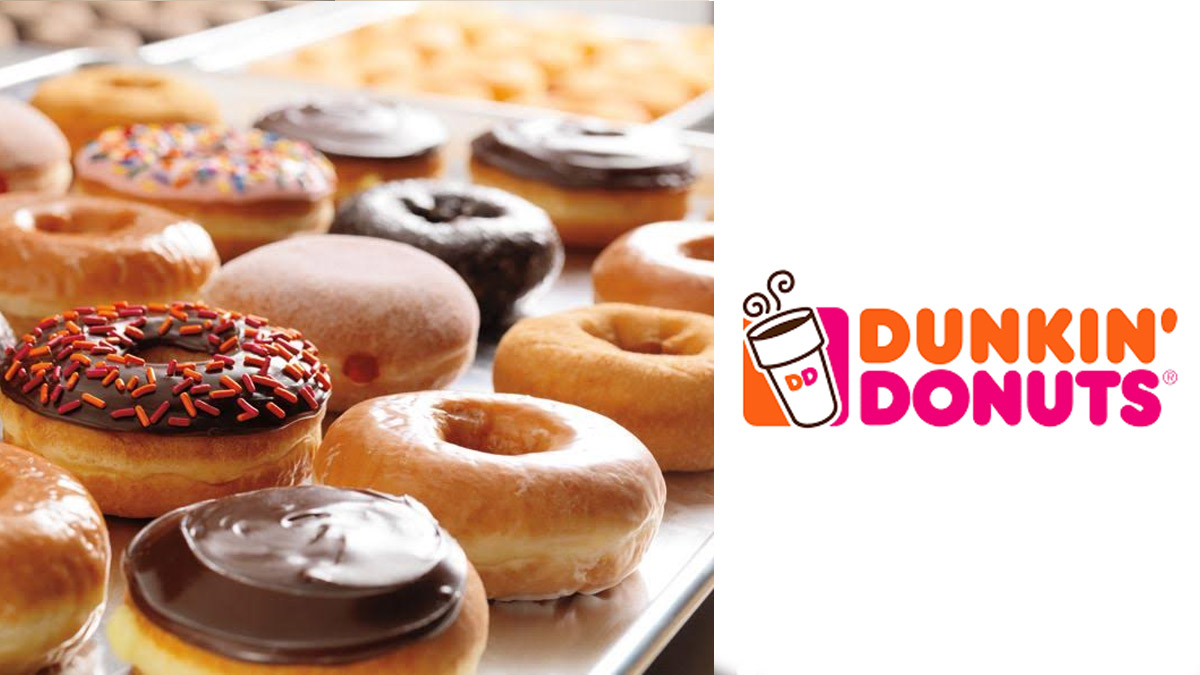
NOIDA: Dunkin’ is done in India. Jubilant FoodWorks Ltd, the country’s leading quick service restaurant operator, has decided not to renew its franchise agreement with the American coffee and doughnut chain, and will wind down its Indian stores in a phased manner before December 31, 2026, bringing a 15-year partnership to a quiet, loss-laden close.
The decision, approved by JFL’s board on March 30, 2026, ends a relationship that began with a Multiple Unit Development Franchise Agreement signed on February 24, 2011. JFL will now evaluate and undertake what it described in a regulatory filing as the “rationalisation and/or cessation of certain operations and/or sale, transfer or disposal of assets and/or assignment or transfer of franchise rights,” all in consultation with Dunkin’s brand owners and strictly within the terms of the original agreement.
The numbers tell the story bluntly. In the financial year 2024-25, Dunkin’ India posted a revenue of Rs 37 crore against a loss of Rs 19 crore — a haemorrhage that was always going to test the patience of a parent company recording revenues of Rs 6,104 crore and a profit of Rs 194 crore in the same period. Doughnuts, it turns out, were never going to move the needle.
The contrast with JFL’s handling of its other marquee franchise could hardly be sharper. Even as it walks away from Dunkin’, the company has just doubled down on Domino’s, signing a fresh Master Franchise Agreement on March 31, 2026, granting it exclusive rights to develop and operate Domino’s Pizza stores in India for 15 years, with an option to renew for a further 10.
JFL, incorporated in 1995 and promoted by the Bharatia family, operates a network of more than 3,500 stores across six markets — India, Turkey, Bangladesh, Sri Lanka, Azerbaijan and Georgia. Its portfolio includes Domino’s and Popeyes on the global side, and two home-grown brands: Hong’s Kitchen and COFFY, a café brand in Turkey.
For Dunkin’, India was always a stretch. The brand never quite cracked the cultural code in a market where filter coffee and chai command fierce loyalty and where the doughnut remains, at best, an occasional indulgence rather than a daily habit. Fifteen years, mounting losses and a parent with better things to spend its capital on was always going to be a difficult equation to solve.
The doughnut has had its last day. The pizza, however, is staying.






