Brands
Is there a market for advertising on feature phones?


MUMBAI: When HUL’s ‘Kan Khajura Tesan’ campaign came back home with a Gold Lion in the mobile category from Cannes this year, it took the whole industry by surprise.
The campaign rolled out by the FMCG giant was an effort to reach out to the media dark areas. ‘The Kan Khajura Station’ a 15 minute free, on-demand, entertainment channel was a service where people could give a missed call and then get entertained for free.

The brand created a new media through a rudimentary mobile phone that brought people out of media darkness and connected them with the world. According to the brand, the activity was done at a cost of Rs 6 per person. This campaign was executed in Bihar and Jharkhand.
This is not the first time that the country’s largest consumer good company had executed a campaign for people with feature phones in the country. It can be recalled, couple of years back the company’s detergent brand Active Wheel had also used missed call as an advertising inventory to catch the attention of consumers in UP and Bihar.
Further to this, the company is now collaborating with local grocery shops and is working on making custom-made caller tune as part of a new marketing initiative. This means that when a consumer calls up the shop to place an order he/she will be informed about various promotions and offers on the various brands from the house of HUL. According to economic times, HUL has piloted this initiated in Mumbai and Delhi.
If studies by International Data Corporation (IDC) are to be believed feature phones still hold over 70 per cent of the Indian mobile market. Experts in the space are optimistic that the scenario will change the game. A recent IDC report mentions that India is the fastest-growing market in Asia-Pacific, with a year-on-year smartphone shipment growth of over 186 per cent in 1Q 2014.
Is there still a market for advertising on feature phones in country where smartphones are growing exponentially?
Digital Quotient COO Vinish Kathuria believes there is a lot of scope of exploring this market. According to him, advertising opportunities on feature phones revolve around text and banner ads on WAP sites, IVR based outreach and SMS and missed call strategies which are being used interestingly even today by many big brands.
Out these advertising options, missed call as tool looks to be promising to many other experts. In a recent development, Facebook announced that it has introduced missed call inventory to boost its advertising revenues in India that counts for the second largest user base for it.
This advertising tool will allow mobile phone users to click a button that calls an advertiser, immediately hangs up and then receives a return call. The return call delivers pre-recorded audio messages about everything from sponsored cricket scores to information about shopping discounts, minimizing data charges for the user.
The social networking site has partnered with ZipDial for this. In early tests of the missed call ads by L’Oreal-owned haircare product Garnier Men, the ads led to a 2.5 times year-on-year increase in online sales, according to Facebook.
When asked how different is it to execute an advertising campaign on feature phone than on a smartphone, ZipDial founder and CEO Valerie R Wagoner mentions, “We don’t believe in thinking of it as advertising on feature phones but rather advertising to consumers who have feature phones.”
Wagoner thinks media activations with these set of mobiles can deliver great results. She is of the opinion that every media whether print, television, outdoor, or even digital ads should have a mobile call-to-action to make it interactive and to drive ongoing engagement with consumers in a targeted and personalised way.
“While a QR Code is relevant to less than 1 per cent of mobile consumers in India, a missed call is the easiest thing that anyone could do from any phone,” adds Wagoner.
She informs that ZipDial is collaborating with Unilever to work on expanding this success globally across emerging markets.
Apart from this the cost is minimalistic. Running a campaign on feature phones might cost a brand anywhere between Rs 3 to 6 lakhs mentions a senior media planner.
The Roadblocks
Having said that, thought there is a huge opportunity in using mobile as a broadcast channel to directly reach consumers, it has to be done very carefully, especially for consumers on feature phones.
“Advertising potential is significantly lower on feature phones because of two main reasons. One is the limited screen size and phone’s processing makes it harder to offer plethora of multi media advertising options. Two, availability of apps and usage of it are significantly lower. So, in-app advertising, one of the biggest mobile advertising categories, is almost non-existent,” says Kathuria.
Brands should never spam users. Wagoner states, “Blasting SMS or voice calls can be extremely intrusive. However, SMS and voice Calls are a very powerful tool when you use them in combination with protecting consumer privacy. For example, standard industry response rates to generic push SMS blasts are around 0.1-0.2 per cent. However, response rates to SMS sent to ZipDial followers are between 9-56 per cent because users give permission and are in control of the content they receive.”
It is extremely necessary to have personalised experience which targets the right message to the right consumer at the right time that will successfully lead to behavioural change, conversions and business impact across this segment.
”The difference is that there are thousands of companies designing for smartphones (especially companies in the West and developed markets), and there are very few innovative companies designing and building good advertising technology for emerging markets,” concludes Wagoner.






Brands
Nykaa eyes majority stake in Deepika Padukone’s 82°E brand
Deal could help scale premium label as Nykaa sharpens its beauty play
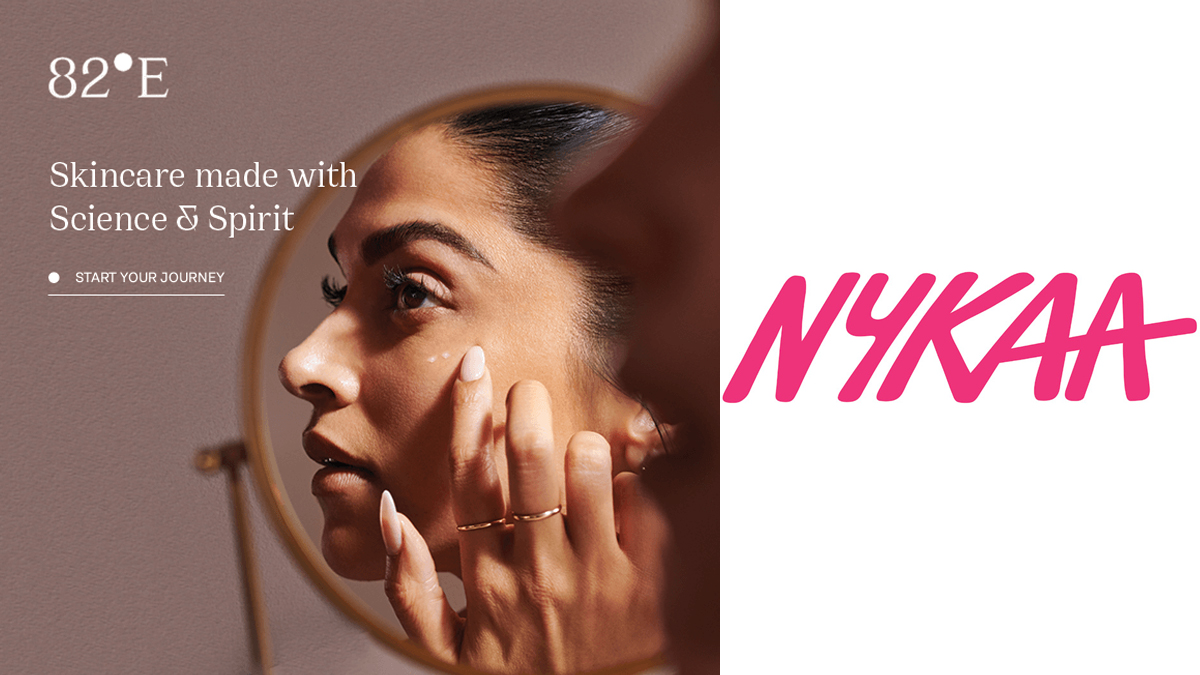
MUMBAI: Nykaa is in advanced discussions to acquire a majority stake in 82°E, the premium skincare label founded by Deepika Padukone, according to media reports.
The proposed deal signals Nykaa’s intent to deepen its House of Nykaa portfolio while giving 82°E the scale it has struggled to achieve independently. Padukone is expected to retain a minority stake if the transaction goes through.
For Nykaa, the play is both strategic and timely. With a customer base of over 42 million, the company is betting on its strong distribution, logistics, and repeat purchase ecosystem to revive the brand’s momentum. The two sides already share a working relationship, with Padukone serving as Nykaa’s global brand ambassador since September 2025.
Launched in late 2022, 82°E entered the market with a premium positioning but has faced headwinds. The brand reported revenue of Rs 14.7 crore in FY25, down 30 per cent year on year, alongside losses of Rs 12.26 crore. Industry observers have pointed to steep pricing, a somewhat diffused brand identity, and intense competition from digital-first labels as key challenges.
The potential acquisition also reflects a broader shift in India’s beauty and lifestyle space, where celebrity-led brands are increasingly partnering with larger corporates to unlock scale. Alia Bhatt’s Ed-a-Mamma, for instance, sold a majority stake to Reliance Retail, while Katrina Kaif’s Kay Beauty has emerged as a standout success within Nykaa’s portfolio, clocking Rs 132.4 crore in FY25 revenue.
Nykaa itself has been on a strong growth trajectory. Its parent, FSN E-Commerce Ventures, reported a 156 per cent jump in net profit to Rs 68 crore in the December 2025 quarter, with revenue reaching Rs 2,873 crore.
Nykaa has been steadily building its portfolio through acquisitions such as Dot & Key, Earth Rhythm and Nudge Wellness, signalling a clear push to own and scale homegrown brands.
If the 82°E deal materialises, it could mark a fresh chapter for the label, blending celebrity appeal with corporate muscle. For Nykaa, it is another calculated step in staying ahead in an increasingly crowded beauty aisle.






