MAM
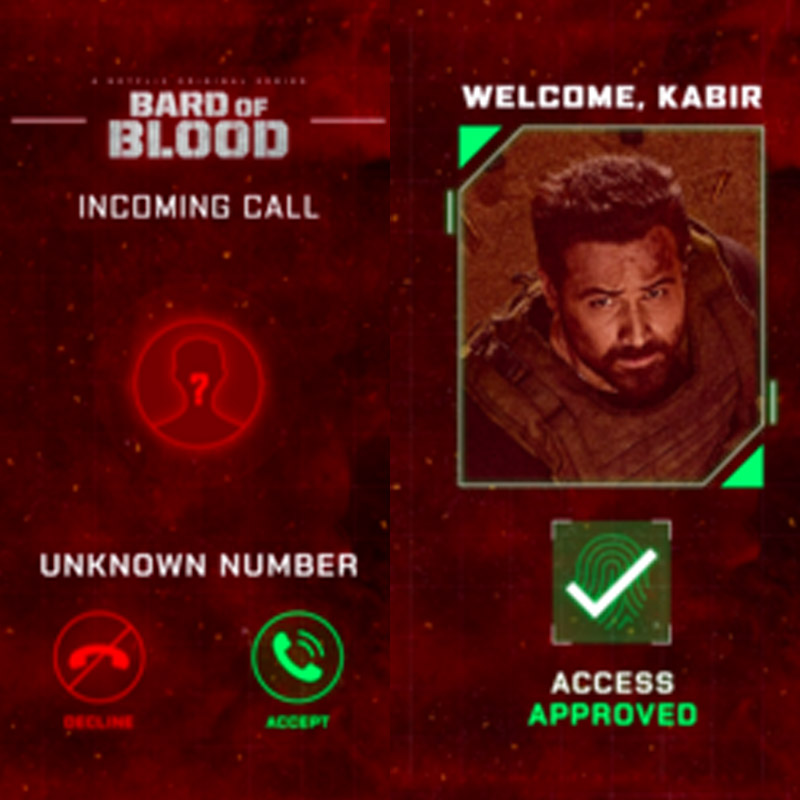
Inshorts curates interactive campaign for ‘Bard of Blood’
MUMBAI: Advocating that creative content in today’s time cannot be restricted to only text, English news app Inshorts has created a first-of-its-kind interactive campaign for the recently launched Netflix original ‘Bard of Blood’.
The interactive campaign is designed to intrigue the audience to engage with the content and further hook the users to the brand story. The innovative ad is designed to tell the users a story in an interactive format in short snippets activated on user actions. Starring popular actors including Emraan Hashmi, Shobhita Dhulipala, and Vineet Kumar Singh in the lead roles, the innovation is appropriately able to capitalise on aspects of the series and create intrigue which would have been hard for any other media or format.
Inshorts national sales head Piyush Thakur asaid, “The six-inch screen today allows for ample experimentation to create ad formats and innovations that are non-intrusive, interactive, and easy to follow for the user. We have seen high engagement on such formats, which makes us believe in utilising the combined power of vertical, video, and interactive to create a new paradigm in advertising on the small screen.”
With a large pool of content available on the internet, consumers today are spoilt for choice and it takes a flicker of a second to lose the interest of the audience. Thus, it has become crucial for marketers to choose the right ad format to engage the users and get the most value out of their advertising spend. Inshorts being the leader in the short form content space has effectively catered to the changing online behaviours by consistently investing in Ad-tech and thus offering novel and customised ad solutions to brands.
With the primary focus on creativity and innovation, Inshorts has marked a dent in the advertising space with its engaging ad formats like – motion story, digital magazine, and vertical videos.

MAM
Kerala election ads surged in 2026, with print nearly tripling and TV up 52 per cent
Political parties spent bigger and smarter this cycle, concentrating their firepower in the final weeks before polling day
KERALA: Kerala’s politicians discovered something in 2026 that seasoned marketers have known for years: timing is everything, and when in doubt, spend more. Political advertising during the Kerala Assembly Elections 2026 surged sharply across traditional media compared to the 2021 cycle, with print and television leading the charge, according to the latest analysis by TAM AdEx.
Print was the standout performer, expanding nearly 2.7 times compared to 2021, a striking jump that underlines its continued grip on targeted political communication in a state with some of India’s highest newspaper readership. Television was not far behind, with ad insertions rising 52 per cent, reflecting the enduring appeal of mass-reach platforms for shaping voter sentiment at scale. Radio held steady, mirroring television trends and reinforcing its role as a reliable supporting medium.
The pattern of spending was as revealing as the volumes. More than 85 per cent of all political ad insertions were recorded in the weeks immediately before polling, a concentration that points to a deliberate, last-mile strategy. Ad volumes peaked during weeks four and five in both the 2021 and 2026 cycles, suggesting that parties have settled on a consistent playbook of high-frequency messaging in the home stretch.
The contrast between media types was equally instructive. Print advertising maintained a relatively even spread across the campaign period, serving as a vehicle for sustained, detailed communication. Television and radio, by contrast, displayed sharp spikes in the closing weeks, deployed as blunt instruments for high-impact bursts at the precise moment voters are making up their minds.
What the 2026 cycle signals most clearly is a shift toward more structured, data-driven media planning. The increase in overall volumes, combined with sharper peaks in campaign intensity, suggests that political advertisers are beginning to think less like propagandists and more like performance marketers, balancing broad reach with targeted engagement and watching the returns closely.
Kerala’s election advertising has, in short, grown up. The question for the next cycle is whether digital finally gate-crashes a party that print and television have so far kept firmly to themselves.