MAM
India’s youngest CEO Suhas Gopinath’s journey of highs & lows

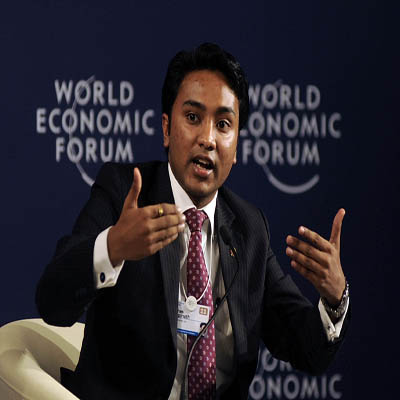
MUMBAI: If a 14 year old boy frequently visits an Internet café in India, he is often presumed to be viewing prohibited sites. However, Suhas Gopinath a small boy from Bangalore, made such use of internet café that no mother will stop her child from visiting one anymore! Gopinath taught himself to make websites with the help of books used on the internet to start Global INC.
How He Started:
In the beginning of 2000, usage of internet was very expensive in India and something that Gopinath could not afford out of his pocket money. So he decided to crack a barter deal with the internet cafe owner. “I went to the shop owner and asked offered him my free service. I told him that while he went out for lunch, I would take care of the shop and in return I would use his internet for free. That’s how I started,” Gopinath tells Indiantelevision.com.
It from that internet cafe that he started his journey.
Parental Pressure:
Indian parents always want their child to finish schooling, then engineering and ultimately land a great job. Gopinath’s family was no different. His parents also wanted him to be an engineer and entrepreneurship was a sin according to them. “Whenever I spoke about entrepreneurship, my mother reacted as if I committed a crime. The life cycle was pre-drawn and entrepreneurship has no room in it. I lied to my mom that I joined NCC classes after school so that I could give myself more time at the internet café. However, after my board exams, my mother was called for a parent teacher meeting where the teacher told her about my poor performance. Defending me, my mom replied saying that it wasn’t my fault but theirs as the NCC classes exhausted me. The stunned teacher was obviously stunned and that’s how my mom came to know about the truth. On our way back, my mother wept and told me that it was okay if I didn’t want to study because my elder brother was in IIM and would take care of me once he settled down. That was the only moment I felt sad as I never wanted to be taken care by anyone,” said Gopinath, who was by then the CEO of his IT Company Global INC.
First Marketing Step:
In the United States, he did his first marketing stint. Out of the yellow pages, Gopinath listed all the automobile companies without a website and mailed them from a fake id called ‘Micheal.’
“Please send me your company details and website link, we want to sign a long time deal with your company,” he wrote in the email.
As the companies didn’t have a website, they responded with a PDF. Gopinath replied from the faux id, “If you don’t have a website, you don’t meet the necessary requirement to be our client.”
After a few days, Gopinath mailed them again from his official id offering to build a website for $500 and in case they needed it built in a day’s time, the charge would be $750.
“There were more people opting for the faster option. But I was scared of the entire mischief and thought the FBI would be at my door any moment. So after a while, I confessed and 80 per cent of the people forgave me, while 20 per cent threatened legal action. However, eventually they all realised that a website is an important tool,” says Gopinath.
The last encounter with Indian education system:
Just because his mother wanted, he decided to complete his college. However, due to lack of attendance, his hall ticket was withheld. In the same year, he was invited to represent the World Bank’s ICT Leadership Roundtable, and he thought if he shows the certificate, the HOD would be proud of him and allow him to sit for the examination. The HOD replied, “It doesn’t matter if you work for State Bank or World Bank, I want 75 per cent attendance.”
That reply shattered him. He says, “Education should be a manifestation and not a bookish one always. While it is very important to have an education, we need to change the system and introduce more practicality in it. A kid may not be equally talented in each and every subject.”
Recognition and rewards:
Gopinath taught himself to make websites with the help of books and made his one – www.coolhindustan.com, at the age of 14. With this, he incorporated his company Global INC the same year in 2000. He became CEO of his multinational company at the age of 17. According to the India Book of Records, Gopinath holds the record as “The Youngest CEO.”
- In 2005, Gopinath was the youngest among the 175 recipients of Karnataka”s Rajyotsava Award.
- On 2 December, 2007, The European Parliament and International Association for Human Values conferred “Young Achiever Award” on Gopinath at the European Parliament, Brussels.
- In November 2008, he was invited to represent the World Bank’s ICT Leadership Roundtable for adopting ICT in Africa to increase employability and fostering ICT skills in students from these countries.
- He was announced as “Young Global Leader” for 2008–2009 by the World Economic Forum, Davos. In that position he would be involved in development programs across the world.
- He holds a diploma on global leadership and public policy from the John F. Kennedy School of Government and Harvard University.
- Most importantly the mother who wanted his brother to look after him is proud of Gopinath and says, “I can’t take care of a maid in my house and he takes care of so many employees in his office, though I was scared of entrepreneurship in the beginning as no one has ever gone for it from our family I am proud of Suhas and what he is doing” despite his huge wealth and global recognition Suhas Gopinath lives a normal life with his family in Bangalore.
The excerpts have been taken from his key note in Goafest 2015.






