Brands
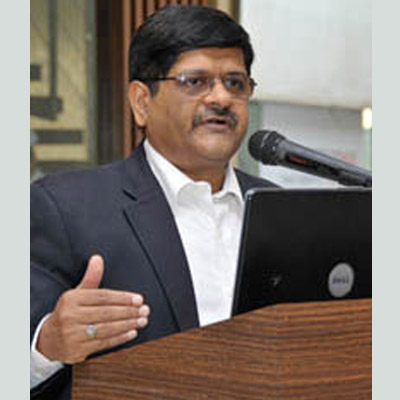
‘India’s diversity makes distribution a big challenge’ : Brandscapes CMD Pranesh Misra

|
In a rapidly changing business environment where brands need to be constantly rejuvenated, it is not only important to analyse but also interpret data from a marketing agenda perspective.
The most significant change that has happened in India is the growth of the services over the consumer products sector. Mobile is also emerging as a strong personal medium, which marketers and advertisers have not fully exploited yet.
In an interview with Indiantelevision.com’s Ashwin Pinto, Brandscapes Worldwide chairman & managing director Pranesh Misra talks about how there is need for a marketing data centric company to build profitable growth strategies.
Excerpts: |
|
|
When you started Brandscapes Worldwide in 2008, what was the aim? |
|
|
What progress has been made so far? |
|
|
How are you addressing this need? |
|
|
What are the challenges that you face?
The second challenge is finding the right caliber of people. This is a people driven business. It is about understand marketing and how data can be applied to it. I have been able to put together a solid team of 10 leadership team members. Each member has 20-30 years of experience in fields like research, marketing, media strategy, sales and distribution. It is this eclectic mix of talent that I have gotten together. These are the leaders who recruit the next generation of talent and create an organisation. |
|
|
What is the advantage you offer to clients vis-a-vis competitive services?
We are trying to carve out a niche for ourselves between the bigger consulting houses and narrow focussed marketing consulting players. We give holistic solutions around marketing problems. We are not general consultants nor are we very specific. We are not just analytics focussed or market research focussed. |
|
|
|
|
Could you give me some examples where clients have benefited?
On a micro level there was an FMCG whose brand was not doing well. We got access to retail data. We had to find an insight to take the brand further. One big pack size was not doing well while the others were growing. This size accounted for 25 -30 per cent of sales and was declining. This was the first clue and we dug deeper. Competition was coming with a slightly smaller pack size at a much cheaper price while this company had pushed the price up. We did price sensitivity testing which led to the right price point being found.
A Marketing Dashboard was developed for a shopping mall. This helps it keep track of Key Performance Indicators relating to its tenants – and take strategic and tactical action on an ongoing basis. Strategy Maps were used to guide a global NGO on how to change its branding approach for better success in some countries. |
|
|
How have you grown over the past couple of years? |
|
|
Which sector is the most challenging to deal with? |
|
|
What mistakes do companies make when they go about their marketing? |
|
|
What other obstacles do companies face? |
|
|
Which categories will spend the most on advertising and marketing this year? |
|
|
During the downturn did the spends of clients on research get affected? |
|
|
How is India different as a market from other countries?
In India, distribution is a big challenge. There is a lot of diversity compared to a country like the UK which is fairly homogeneous. It is not about where do you enter in India but about how do you get going. India’s complexity is a challenge in terms of distribution, pricing, target segmentation. You have to be careful in terms of deciding which markets do you go to and which audience do you address. |
|
|
You have a JV with Design Bridge. How has this worked for you?
In the healthcare category we have a JV with Healthy Marketing Team. They are focussed on helping clients quickly zoom into the brand positioning strategy in the healthcare segment. We partnered with them, have trained our people on their system and have brought that to |
|
|
What marketing strategies work well for alcohol companies in India, given that direct advertising on television and print is not allowed?
Associating with a sporting event like Golf works. Spirit brands want to have a lifestyle association; they want to project a certain lifestyle and be in a premium space. Alcohol companies also take space in retail outlets. Besides, a lot of attention is spent on packaging of the product, which works towards effective brand building. |
|
|
In the financial and insurance sector a lot of companies follow a guilty tag to get parents to buy products. Is that a wrong way to go about selling products like insurance?
It depends on the situation. Too much of guilt can be counter productive. In some situations, guilt might work. But from my perspective, a positive outlook is better than guilt. Consumers after a while do not want to receive too many negative messages. |
|
|
Which marketing avenue is most effective in terms of ROI – print, television, radio, online?
It differs from category to category and brand to brand. This is what our marketing modeling mix practice estimates. We are able to pinpoint for a market which element gives higher ROIs. |
|
|
Is new media becoming more important?
Yes! It is credible as a medium as people share their opinions and experiences here. It is becoming a credible source of information. A lot of companies, especially international, go to new media first to get answers about consumers. |
|
|
But are companies tapping into this medium properly in India?
As far as online is oncerned, Indian consumers are already using that medium in categories like hotels and airlines. They want to find out what others feel about a particular brand. This is an area where a dramatic change will happen in the next three to four years. Companies have to understand that the Internet will play a critical step in the decision making process. Companies will need to have a larger presence online.
They can be a part of the online conversation, at least in terms of keeping track of what consumers are saying, and then take corrective action if there is negative feedback. They can also find out what consumers feel works for the brand and why they choose it over competition. |
|
|
When you look at the marketing and advertising scenario what are the two biggest changes that have happened over the past five years?
The growth of the services over the consumer products sector is a big change that has happened in India. Also, the emergence of mobile as a personal medium is a change. This has not been totally exploited by marketers and advertisers, but I think that this is a life changer today. Younger consumers have evolved. |