MAM
Indian citizens trust defence forces and the PM the most: Ipsos survey

MUMBAI : The news is not so good for all of us who are part of the media. Our tribe ranks even below the police in terms of the trust that the general public places in it, if one were to go by the results of the quarterly survey, the Ipsos IndiaBus Trust in Institutions, conducted by global research company’s Ipsos India..
If the fourth estate is held in such low esteem by its primary customer, the Indian citizen, do media owners need to go back to the drawing board and do a rethink about their raison d’etre ? That’s question that begs an answer! An honest answer!
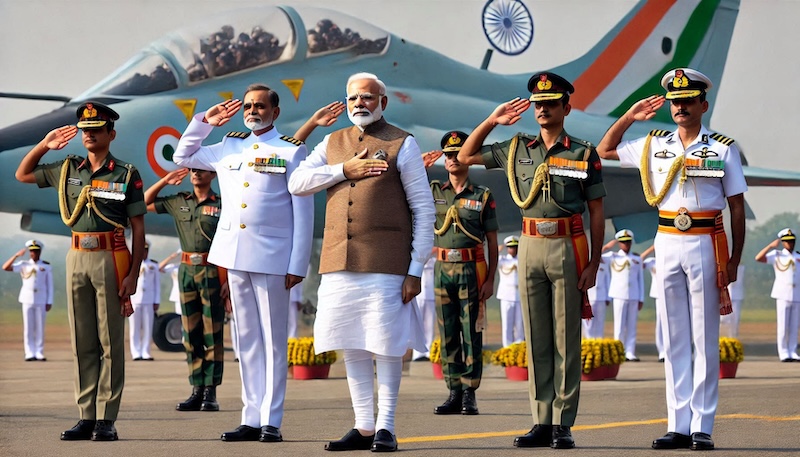
The Ipsos survey revealed that the defence forces (army, air force and navy) are the most trusted with a score of 56 pr cent, followed by Indian prime minister Narendra Modi who scored 45 per cent positive responses. The RBI came third with a 44 per cent score, followed by the supreme court.
Interestingly, all these institutions have improved their scores over the last quarter (in September) and have shown that the citizens have the highest faith in these institutions, as they continue to serve the nation with exemplary dedication and ethical work practices, says a press release issued by Ipsos India. To be fair even us media folks improved our trust score from 24 per cent in September 2024. But we are a far cry from the 36 per cent we notched up in June 2024.

Politicians (20 per cent), political parties (21 per cent), community leaders (22 per cent), and religious leaders (24 per cent), have even more reasons to be worried as they continue to lead in the distrust list.
The survey displayed certain pockets where the most trusted institutions have higher equity among the citizens.
The defence forces have received higher trust scores among the tier1 citizens (71 per cent), the north zone (69 per cent), the west zone (68 per cent), the employed (67 per cent), tier2 (63 per cent), metros (62 per cent) and males (61 per cent) etc.
The PM of the country received highest scores in the north zone (62 per cent), tier1 (57 per cent) and tier 2 (57 per cent) cities, the west zone (52 per cent), the employed (51 per cent) and males (48 per cent). Whlle the RBI was trusted most by the west zone (61 per cent), tier1 (59 per cent) and tier2 (54 per cent) citizens, the north zone (53 per cent) and the employed (52 per cent). Across these three institutions, they have a common thread of supporters with high trust – though only in the case of the RBI, trust is high in the west zone, Mumbai being the commercial capital of India.
 Ipsos India group service line leader, public affairs, corporate reputation, CSR & ESG Parijat Chakraborty pointed out that the topper institutions are the backbone of the nation with their word being sacrosanct. “After all, they have stood the test of time in serving the nation with transparency, equality and justice. All these institutions command respect – whether our defence forces, PM of the country, the RBI, the supreme court of India, the parliament – and their reputation has been built over years of impeccable delivery and service to the nation,” he elaborated.
According to him politicians, political parties, community leaders, and religious leaders, are institutions that need to win the trust of the masses through greater transparency and fulfilment of their promises to the electorate and patrons on one hand and managing their reputation through visibility around their achievements via communication, not leaving anything to speculation. He highlighted one positive outcome from the survey for them. ”We see recovery in scores to the previous levels, after a dip in September,” he said.
(For the doubting Thomases who doubt the survey’s authenticity, at least use it as a guide post. Ipsos IndiaBus is a monthly pan India omnibus – which also runs multiple client surveys- that uses a structured questionnaire and is conducted by Ipsos India on diverse topics among 2200+ respondents from Sec A, B and C households, covering adults of both genders from all four zones in the country. The survey is conducted in metros, tier one, tier two and tier three towns, providing a more robust and representative view of urban Indians. The respondents were polled face to face and online. We have city-level quota for each demographic segments that ensure the waves are identical and no additional sampling error. The data is weighted by demographics and city-class population to arrive at a national average. )