MAM
In conversation: Kraus Jeans’ Ravi Punjabi on ditching ads for micro-drama
With its Instagram-first micro-drama series, Kraus Jeans is betting that Gen Z would rather watch a relatable story than sit through an ad — Founder Ravi Punjabi explains the thinking behind it.


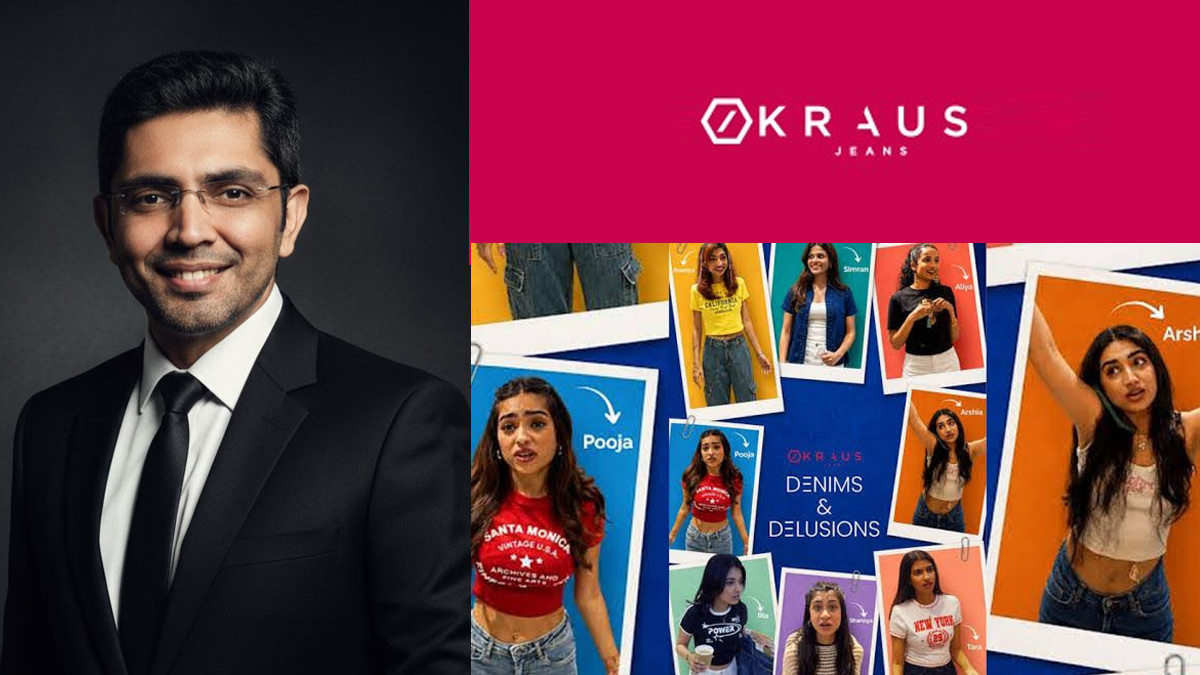
MUMBAI: Ravi Punjabi is the Founder of Kraus Jeans, a brand he launched in 2003 under the Oriental Trading Company with a clear mission: to create denim that celebrates individuality while delivering a fit tailored specifically to the Indian body type. A Commerce graduate from H.R. College of Commerce & Economics, Mumbai, Punjabi cut his teeth in bottom-wear manufacturing before launching a menswear line in 2000. Spotting a stronger opportunity in women’s fashion, he pivoted to womenswear in 2003 — a decision that became the foundation of Kraus.
Over the past two decades, Kraus has grown from a denim-focused label into one of India’s leading women’s casual-wear brands, built on a reputation for quality, fit, and accessible pricing. Punjabi remains hands-on with product development and retail strategy, and has steered the brand’s expansion into major retail partnerships with Shoppers Stop, Lifestyle, Central, Reliance Trends, and Pantaloons. Today, Kraus runs 28 exclusive brand outlets across India, with 16 new stores opening in FY 2026–27 alone.
In this interview with Indian Television.com, Punjabi discusses Kraus Jeans’ foray into branded entertainment with its Instagram-first micro-drama series Denims & Delusions, covering its production process, content-first approach, episodic release strategy, and the brand’s outlook on the future of micro-dramas in India’s fashion and digital landscape.
Launching Denims & Delusions essentially transforms Kraus Jeans from a traditional advertiser into a content creator. Could you walk us through the production pipeline? Was this handled like a standard agency-led ad campaign, or did you build a dedicated team to script and produce it?
We didn’t treat this like a typical ad campaign. We noticed that younger audiences are watching more short and episodic content, so we wanted to find a more engaging way to connect with them.
After choosing the micro-drama format, we teamed up with a content production house to create compelling, story-driven content. Creating the narrative was an enjoyable and collaborative process. From the very beginning, we worked together to shape the concept, develop the characters, and bring the series to life in a way that felt authentic and engaging. There was a lot of creative exchange throughout the journey, and we had fun building stories that reflected real fashion moments and everyday experiences.
Our focus was always on creating content that audiences could genuinely relate to. Rather than building stories around products, we centered the narrative on relatable situations and natural fashion choices, allowing the brand to integrate seamlessly into the storytelling.
Traditional television runs on daily or weekly schedules, while OTT platforms popularised the binge-watch model. How are you approaching the release strategy for this micro-drama? Will episodes drop daily, or is it designed as a single, uninterrupted viewing experience?
We are releasing the episodes in phases rather than dropping everything together. Till now we have released two episodes. Since this is a new format for us, it also allows us to understand audience reactions and engagement as the series progresses.
Each episode stands strong on its own while seamlessly contributing to the overarching narrative. The series comprises six episodes, with the first two already live on our Instagram and YouTube handles. Designed to keep audiences invested, the storytelling unfolds gradually, giving viewers a compelling reason to return for each new installment. The cast has done a fantastic job of bringing the story to life, adding the right mix of emotion and entertainment to keep viewers hooked.
One of the biggest risks with brand-led content is that it can start to feel like an extended advertisement. How did you ensure the script for Denims & Delusions put storytelling first? How did you balance creative freedom with the commercial need to feature the product?
Honestly, we never looked at Denims & Delusions as an advertisement. We looked at it as content. The idea was simple, if the story is entertaining and relatable, people will watch it; if it feels like a sales pitch, they will scroll past it.
To keep the integration authentic, we chose Kraus stores as key shoot locations, allowing the brand to become a natural part of the narrative rather than a promotional element. Instead of relying on obvious product placements, we focused on real-life fashion moments where the store environment, products, and characters fit seamlessly together. This approach helped maintain the flow of the story while subtly reinforcing the brand’s presence.
By letting the brand exist organically within the characters’ world, we were able to create meaningful recall and connect with audiences in a way that felt genuine and relatable.
When writing Denims & Delusions, how did you ensure the script prioritized genuine entertainment over product placement? Were there instances where you had to tone down the branding to protect the storytelling integrity of the episode?
Definitely. While making the series, we made sure it never felt like a product catalog. If a scene or line focused too much on the brand, we simplified it so the story stayed front and center.
We believed that if viewers enjoy the content, they’ll connect with the brand on their own. Our goal was to tell relatable, entertaining stories where fashion fits in naturally, rather than constantly reminding people that it’sa branded content.
To make the series feel even more relatable, we have given the episodes titles inspired by popular Gen Z phrases and trends, such as “Found Her,” “Girl Math,” “Choice Dilemma,” “Action Heroine,” and “Anti Purse.” These titles instantly connect with the audience and reflect the language and cultural references that resonate with young viewers today.
If Denims & Delusions resonates with audiences, is the long-term ambition to turn it into a recurring seasonal property? Could Kraus Jeans eventually move toward producing full-length web series or co-producing content directly with major streaming platforms?
It’s still very early for us to make that call. At this stage, our focus is on understanding audience response and closely tracking engagement to see how consumers connect with the format.
What makes this particularly exciting is that it is a relatively new territory not just for Kraus, but also for the fashion industry at large. As one of the early fashion brands exploring the micro drama space, we see this as an opportunity to take a bold step and understand how entertainment-led storytelling can create deeper consumer engagement. While there is always an element of risk when entering a new format, we believe innovation often comes from being willing to experiment and learn.
We do believe there is significant potential in entertainment-led content, but any future plans will ultimately be shaped by audience choices and how the broader content ecosystem evolves. For now, we are approaching this as a valuable learning experience and a growth opportunity, remaining open to where consumer responses and market trends take us.
Denims & Delusions has been launched as an Instagram-first series. As the micro-drama format matures in India, do you see it migrating to dedicated apps or mainstream streaming platforms, or will social media remain the primary home for brand-led fiction?
I think it’s still too early to predict how the ecosystem will evolve. Right now, social media is naturally the best starting point because that’s where consumers already spend a significant amount of their time and discovernew content.
That said, if audience consumption patterns shift and dedicated platforms or streaming services create stronger opportunities for this format, I believe brands will be open to exploring them. Ultimately, the format will go wherever the audience is, and brands will adapt accordingly.
Short-form micro-dramas are already a massive multi-billion dollar phenomenon in markets like China and the US. What specific signals in the Indian digital ecosystem made you realize that Indian consumers, particularly women, were ready to consume branded entertainment in this highly episodic, 1-to-2-minute bite-sized format?
The biggest sign was how people’s habits changed. Bite-sized content is undoubtedly on the rise, but audiences still want compelling stories and emotional depth. Industry trends indicate that micro dramas are particularly popular among the 18–34 age group, who are drawn to emotionally engaging, relatable, and high-impact storytelling delivered in a short-form format without the commitment of a traditional 30–40 minuteepisode. We noticed a similar trend among our audience, particularly young women, who were increasingly engaging with relatable, episodic content centered on everyday experiences and relationships.
Micro dramas seemed like a natural next step. They mix storytelling with quick, easy viewing, which fits today’s digital-first audience. For us, it wasn’t about following a global trend; it was about responding to how our audience is already consuming content.
Micro-dramas are built for vertical, mobile-first consumption. Do you see fashion brands eventually moving toward premium, horizontally formatted content designed to compete on connected television platforms and mainstream OTT networks?
I believe both formats will coexist. Micro-dramas are extremely effective for grabbing attention in today’s mobile-first environment, but as branded storytelling continues to evolve, we will also see brands experimenting with longer, more premium content formats.
People are more willing to watch brand-made content if it’s fun and relevant. Whether it’s a two-minute video on a phone or a longer show on OTT, the main thing is that the story must be compelling enough to make people want to watch.
For fashion brands in particular, there is a significant opportunity to move beyond traditional advertising and become storytellers in their own right.
Since each episode is short and designed for quick consumption, how are you structuring the cliffhangers? Can audiences expect a continuous, overarching storyline that rewards watching all six episodes back-to-back, or will each episode function as a standalone sketch?
We didn’t want to use cliffhangers just to keep people watching. Instead, we focused on creating relatable situations and characters that viewers would want to return to.
Each episode tells its own story and can be watched independently, while still being connected by a common thread. For instance, the first episode follows a young employee who quits her job to pursue a career as a content creator and records a dramatic “Quit Fit” video. What follows is a series of relatable and humorous moments that reflect the everyday experiences, aspirations, and dilemmas of Gen Z. We wanted viewers to feel at home in the world of Denims & Delusions and look forward to the next episode, while ensuring that each episode stands on its own.
Watch the Denims & Delusions episodes here:
YouTube: https://www.youtube.com/@kraus_jeans
Instagram: