
MAM
Humans hesitate, bots decide: 2026 to reset the rules of marketing


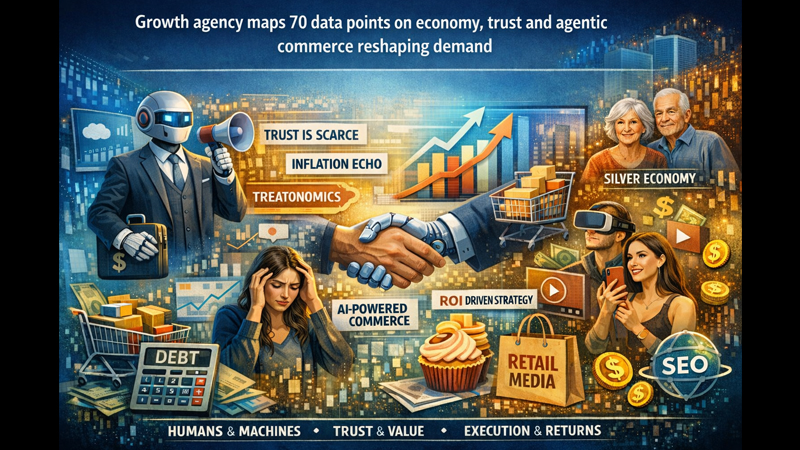
MUMBAI: Performance marketing is entering a harder, sharper, more automated era. Inflation is cooling, consumers are still bruised, AI is everywhere and trust is scarce. The result: fewer vanity metrics, more machine-led buying and a ruthless focus on returns. That is the thrust of a 2026 trends report by affect, a growth marketing agency, which synthesises more than 100 industry studies into 70 “trend facts” spanning the economy, media, technology and business.
The macro mood is cautiously steadier but fragile. Global inflation is forecast to ease from 4.2 per cent in 2025 to 3.6 per cent in 2026, yet consumers feel an “inflation echo” from cumulative price rises. Seventy-three per cent of those who feel worse off blame living costs. A basket that cost $100 in 2023 will cost $106 in 2026. Healthcare prices are up 5.4 per cent, snacks and confectionery 4.9 per cent and non-alcoholic drinks 3.6 per cent. Seventy-four per cent worldwide worry about everyday costs, now a bigger concern than climate change or unemployment.
Growth continues but nerves linger. Global GDP is seen expanding 3.1 per cent. Conflicts have jumped from the fifth to the second biggest global worry, up 9 per cent year on year; political instability ranks seventh. In America, 42 per cent say finances have improved or stabilised and the financially insecure share has fallen to 17 per cent. Only 8.5 per cent say they are “much worse” off than a year ago. Still, nearly half of households have nothing left after essentials. Seventy-eight per cent plan to boost emergency savings, 60 per cent seek extra income and 36 per cent aim to clear credit-card debt. Yet 36 per cent are willing to take short-term debt for pleasure, a nod to “Treatonomics”. Meanwhile, 77 per cent in North America expect unemployment to rise.
Age holds the money. Over-65s control 50 per cent of American household wealth. Gen Z is the richest young cohort yet: the average 25-year-old Gen Z household earns $40,000, but its spending is rising twice as fast as predecessors.
In the aisles, trust and value rule. Tariffs have pushed U.S. import prices 5.4 per cent above trend. The average American FMCG basket is $36, up 4 per cent. Sixty-two per cent cite trust as the decisive brand factor, versus 56 per cent in 2024; 75 per cent want brands to respond faster. Physical retail still delivers 77 per cent of FMCG sales. Households make 294 store visits a year, spend $8,222 in-store and $2,737 online. Food and beverage leads budgets at $7,127 a year.
Consumers still trade down: 79 per cent globally do so, often cutting basics to fund treats. Thirty-two per cent switch to cheaper brands. Thirty per cent buy private label; U.S. private labels are growing 5.5 per cent versus 6 per cent for national brands. Speed increasingly trumps price: food delivery’s share of foodservice spend has leapt from 9 per cent in 2019 to 21 per cent in 2024. More than half of U.S. households now seek financial advice, the highest since 2008, and 44 per cent turn to social media for it.
Authenticity is fraying. Over half of consumers question online content because of AI. Seventy-six per cent struggle to tell real from synthetic images; a third have faced deepfakes or AI fraud. Real-world contact is regaining allure: 42 per cent say physical events are the week’s highlight versus 15 per cent for digital; 79 per cent of Gen Z prefer in-person dating. Sixty-eight per cent stress self-reliance in health and finance. While 64 per cent like personalisation, 32 per cent are uneasy about data use. Seventy per cent track health via apps or wearables.
Discovery is social and omnichannel. Half of adults find brands via social platforms; Instagram leads research. Sixty-three per cent of Gen Z say social ads drive purchases. The average buyer uses 3.6 channels to buy food. People have three extra free hours a week, but spend 90 per cent of it alone. Daily time online averages six hours and 38 minutes. Fifty-five per cent prefer fast solutions and lean on “collective intelligence” online, even for health and money. Social commerce keeps rising, though Western markets fret about payments.
Media habits are splitting by age. Gen Z spends 50 more minutes on social media and 44 fewer minutes on TV and film than the average consumer. Subscription fatigue is biting: four streaming services now cost $69 a month, up 13 per cent. Nearly half feel they overpay; 39 per cent cancelled at least one service in six months, over half among young cohorts. Cable penetration has slid from 63 per cent to 49 per cent in three years. Yet linear TV still claims 57 per cent of viewing time, anchored by older audiences, news and sport.
Search remains the top discovery channel at 32.8 per cent, but among 16–34s social ads lead. YouTube dominates time spent, TikTok leads engagement at roughly 35 hours a month per Android user. Facebook still counts 2.3bn users but with falling engagement; Instagram beats TikTok in ad reach. Social ads and reviews sway 63 per cent of Gen Z and 49 per cent of Millennials; streaming ads far less. Half of young users feel closer to creators than TV celebrities. Social media is deemed least trustworthy, yet 29 per cent still buy from it. As platforms hoard attention, news outlets lose revenue and rely more on algorithms, a risk to quality.
AI is the backbone. Fifty-three per cent of Americans already use generative AI. ChatGPT counts 800m weekly users, about 10 per cent of humanity. Forty per cent of brands plan to deploy GenAI; 70 per cent of marketers budget for it expecting revenue gains. Twenty-four per cent of AI users shop with assistants. Seventy-four per cent of B2B and B2B2C firms use AI agents; by end-2026, 40 per cent of enterprise apps will embed them. By 2029, AI may handle 80 per cent of routine customer service.
Amazon has rolled out one million AI-driven robots, lifting warehouse efficiency 10 per cent. Algorithmic systems will manage 71.6 per cent of global ad spend. Trust in neobanks lags at 30 per cent versus 67 per cent for regional banks; Gen Z prefers debit. A quarter plan crypto investments, often peer-led. Discomfort persists: 58 per cent feel uneasy dealing with AI brands, 86 per cent still value humans, yet 80 per cent want AI in service. “AI shoppers” or digital twins are expected to buy autonomously.
For marketers, the playbook is being rewritten. Retail media networks are becoming the prime performance channel, forecast to grow 14.1 per cent and absorb over 20 per cent of digital ad spend, expanding off-site into CTV and the open web. Generative AI is turning video into mass-customised production; 42 per cent already use AI for personalisation. SEO is giving way to GEO—generative engine optimisation—as AI agents choose products. One-fifth of B2B vendors may negotiate with bots by 2026.
Budgets are tilting to hard returns. Programmatic buying is moving to curated private marketplaces, now taking 66 per cent of open-market spend. Everything is becoming shoppable, from social feeds to CTV, where 60 per cent of buyers expect interactive commerce. Mobile will command 66 per cent of digital budgets. As privacy dents attribution, marketers are reviving marketing-mix modelling to tie spend to revenue, margins and lifetime value. Influencer marketing is being judged on ROI; 61 per cent of marketers plan to spend more on creators. With 79 per cent of consumers hunting value and 55 per cent ready to switch brands, “smart frugality” is the tone.
At the corporate level, 68.7 per cent of global ad spend will be digital in 2026. Firms report 5–10x ROI on AI agents. Eighty-six per cent of advertisers plan to use GenAI for video; 40 per cent of video ads will be AI-made or enhanced. Unilever alone aims to work with 300,000 creators, 20 times more than now. Linear TV is set to fall 4.2 per cent and then flatline; CTV ad spend will jump 13.6 per cent past $37bn. Fifty-four per cent of buyers will raise performance budgets versus 22 per cent for brands. ROI is the top criterion for 84 per cent of CMOs. Support from CEOs and CFOs for long-term brand building has slipped to 69 per cent, though 83 per cent of CMOs still see brand as a core asset. Meanwhile, 60 per cent of employees fear GenAI will raise stress and burnout.
Affect’s conclusions are blunt. Marketing must address both humans and machines as AI agents start buying. Trust is the new currency in a world of deepfakes. Retail media is the growth engine. SEO must evolve into GEO. Treatonomics rewards small joys. Offline experiences are reviving. Influencer marketing is industrialising. AI adoption must be cultural, not just technical. Older consumers—the “silver economy”—deserve more attention. And with ROI pressure peaking, the era of experimentation is giving way to execution.
In short: the future buyer may be a bot, the future metric a sale, and the future brand one that machines and humans both trust. In 2026, marketing grows up—and the excuses run out.






