MAM
How ShareChat enables 150+ brands to engage with India’s heartland


NEW DELHI: With over 530 million people connected to the world wide web and counting, India has the second-largest internet user base in the world today. Out of these, around 71 per cent come from lower-tier cities, according to a Statista report. Another study by Zinnov indicates that 81 per cent of tier-2 and 80 per cent of the tier-3 population choose mobiles as the preferred platform for consuming content. Naturally, these numbers are quite attractive to the marketing community. With growing awareness, a rise in disposable income, and access to information, these netizens are also their next set of consumers. But the question is, what’s the most effective way to reach them?
ShareChat claims to have the answer. Founded in 2015 by three IIT-Kanpur graduates, Ankush Sachdeva, Bhanu Pratap Singh and Farid Ahsan, ShareChat is a unique social media platform – it’s available in 15 Indian languages and dialects, but not in English. It hosts content ranging from love, devotional, entertainment, to great user-generated material. With more than 160 million active users, it’s fair to say the app has a direct line to India’s heartland.
ShareChat director sales Satyajit Deb Roy shared, “Today, ShareChat is the only social media platform connecting language-first, new internet users at scale. We are at the forefront of the India's internet revolution. Users are coming to ShareChat to discover content, and also consume content in the comfort of their own language, societal norms and interests. Our user community is dominated by language-first internet users across the country, the majority of them hailing from tier-2 and tier-3 cities. Exploring this space has been of utmost priority for brands, and ShareChat stays relevant with its capability to connect brands to language first internet users at scale, and in a targeted way.”

He added that the app’s focus remains on driving good performance advertisements and solutions for brands. “We have built our adtech solutions after evaluating brands’ needs and understanding consumer behaviour insights that we gathered over the years. We work with brands and marketers to design customised campaigns, relevant to their target audience. Taking their product deeper into the country and engaging with audiences they haven’t been able to do it at scale.”
Roy highlighted that within a year of starting monetisation, more than 150 brands have signed up and worked with them on multiple occasions.
“We have seen increasing interest from the companies belonging to e-commerce, consumer durables, FMCG, telecom, gaming, automotive and many more verticals. We are expanding our focus beyond these verticals and would like to cater to more than 25 consumer-focused verticals in the foreseeable future,” he elaborated.
Brands are open to partner with ShareChat not just because it has traditional advertising solutions in store for them. Rather, the platform brings in unique capabilities to drive maximum reach and retention for the advertisers.
Roy explained, “The intent is to connect brands with the targeted audience on our platform through every possible touchpoint. Apart from traditional digital marketing solutions like video/banner ads, we offer native ad formats, influencer-led conversational ads, user-generated content, creator-led ads, hashtags and impact options, et al.”
As brands demanded high impact for their campaigns on the platform, ShareChat introduced the idea of exit interstitial, which appears to the targeted users while exiting the platform. This generally includes a banner or a 6-second video. In addition to this, it has recently introduced a 360-degree solution called Divas. This drives engagement for the brands through branded user-generated content, hashtag challenges along with top creators and influencers on ShareChat to drive KPI's like sales, downloads etc. “That said, we have also rolled out programmatic solutions recently and are experimenting with a selective set of brands,” he quipped.
The app’s success and popularity are attracting good investments too. Just last year, the platform won a 100 million dollar financing round led by Twitter. Other investors include TrustBridge Partners, Shunwei Capital, Lightspeed Venture Partners, SAIF Capital, India Quotient, and Morningside Venture Capital. Reportedly, the company’s valuation today stands at 650 million dollar. Also, speculation is rife that Google is now eyeing to buy the platform.





Brands
RR Kabel expands FMEG portfolio with kitchen appliances and air coolers
Company forays into mixers, cooktops and hand blenders under RR Signature brand.
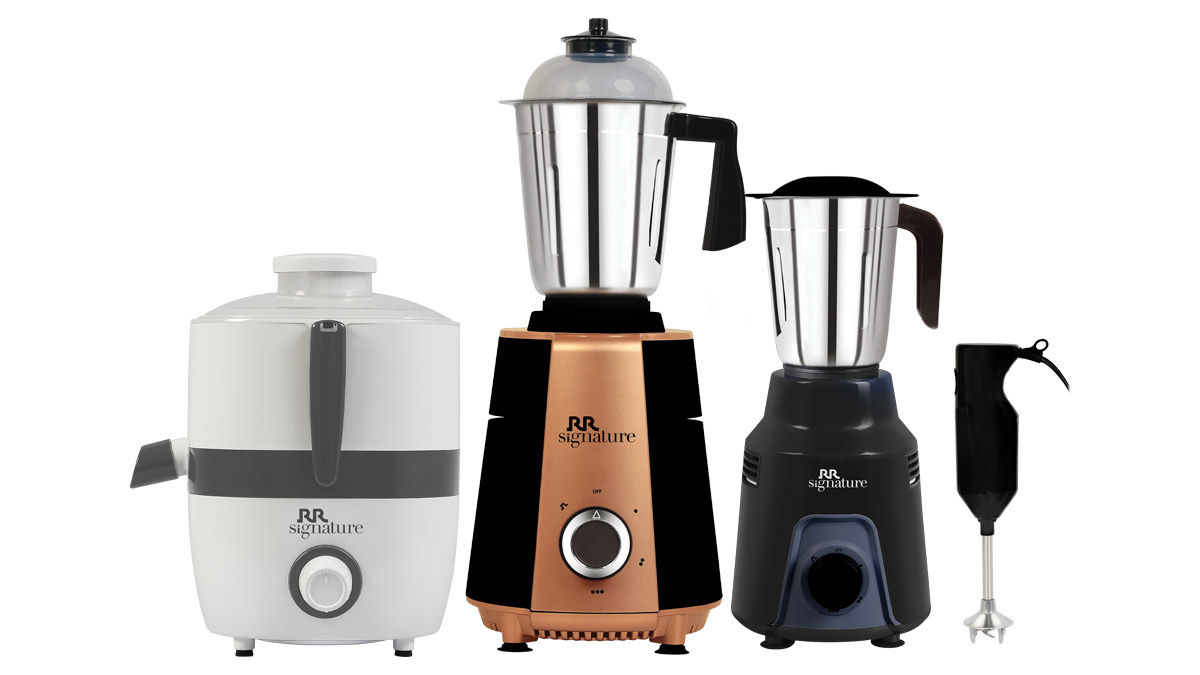
MUMBAI: RR Kabel has just cooked up something new and it’s not just another wire. The leading wires and cables manufacturer has announced a significant expansion of its Fast-Moving Electrical Goods (FMEG) portfolio by entering the kitchen appliances segment and strengthening its air coolers range under the premium RR Signature brand. The company has introduced Mixer Grinders, Electric Cooktops (both Induction and Infra-Red variants), and Hand Blenders. These products mark RR Kabel’s strategic foray into everyday kitchen essentials, allowing it to reach deeper into Indian households beyond traditional electrical categories.
The Induction and Infra-Red Cooktops are seeing particularly strong demand amid global developments affecting LPG pricing and supply. Consumers are increasingly shifting to electric cooking for its energy efficiency, precise control, and safety features. RR Signature is reinforcing its ‘Aapke Kaam Ki Baat’ promise with best-in-class warranties across the range.
The company also plans to introduce additional kitchen appliance categories in FY26-27. In parallel, it has expanded its Air Cooler portfolio with new Industrial (Semi-Commercial) models featuring higher tank capacities and superior air throw, catering to both commercial users and households seeking powerful cooling during intensifying summers.
RR Kabel executive director Mahhesh Kabra said, “Our expansion into kitchen appliances allows us to connect with consumers at more touchpoints in their daily lives, while our expanded air cooler range addresses the rising need for effective cooling solutions. These launches reflect our continued focus on quality, innovation, and market relevance.”
By stepping into kitchen appliances and enhancing its cooling solutions, RR Kabel is wiring itself more deeply into Indian homes proving that even a cables company knows how to heat things up in the kitchen and keep things cool elsewhere. The move positions the brand for broader growth as it evolves from wires to a more complete home solutions player.







