Connect with us

Brands

How Google views India’s internet landscape

Published

on

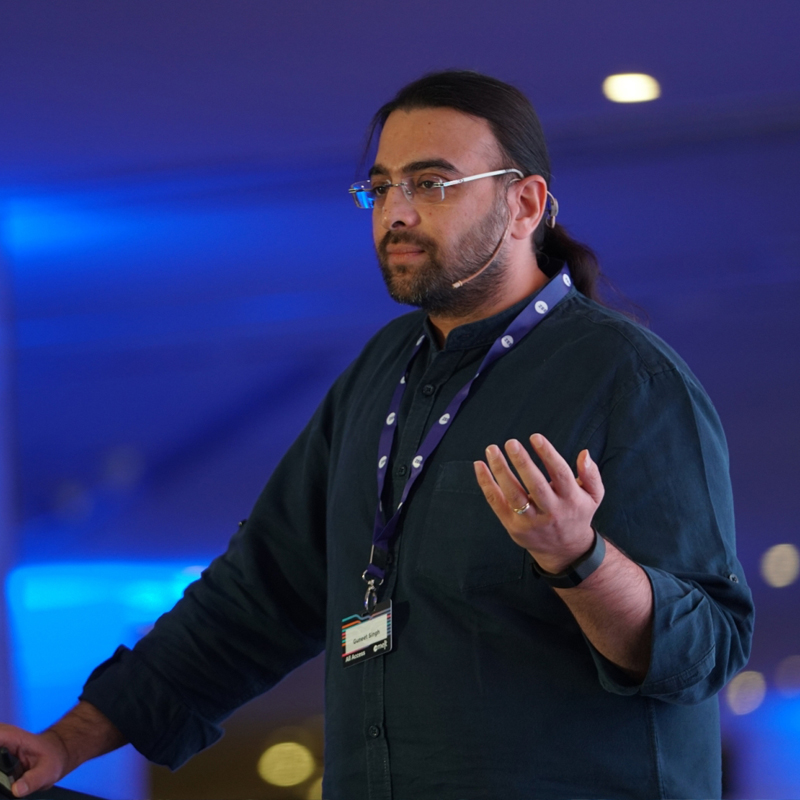
MUMBAI: After having worked with three tech giants of today – Google, Microsoft and Samsung – Guneet Singh is not hesitant to speak of the power of digital. The Google head of marketing solutions for India and SEA was speaking at the Zee Melt 2018 conference.

At Google since the time digital market was a minuscule fraction in the country, he believes that digital empowers people to market their products providing equal chance. As the industry transformed from TV to digital, creative ecosystem needs to change to understand how the consumption is happening.

“Internet market is led by two things. It’s led by the smart device which has to process and the good network. Both of those were struggling. The first big shift came between 2012-15 when prices were going down and quality of data improved. The next shift came after Jio entered the market,” he revealed in an interaction with Indiantelevision.com.

Advertisement

Owing to the large population, even when only 10 per cent of Indians were on the internet, India was a priority market for Google. Though India’s vast cultural and linguistic diversity makes it a challenging market, Singh thinks every company has to be ready to able to be flexible and appeal to users across the country. According to him, the best way to look at India is not as a country but as a region which has eight to nine geo-clusters or small countries.

India being a priority market, Google has a large marketing team in India. It likes to keep a multi-cultural team in every office. Along with a high number of local population, it also encourages people from other parts of the world to come and work in different countries paving the way to knowledge-sharing.

One of the major areas Google focuses on India is always having more people on the internet, to really get the value of the internet which is beyond funny videos. It is also working with manufacturers to look at ways to get great performance at affordable prices on Android devices. In 2016, Google launched, in collaboration with Indian Railways, its free high-speed public wi-fi service at five railway stations which has now reached around 400 stations.

Advertisement

“The second part is that as you grow beyond the first 100 million users, we have so many different languages, cultures, there’s an effort on trying to build a vernacularity. The focus is on the content on the internet which is primarily in English and then goes to Hindi, Punjabi, Telugu, Malayalam, Bengali, whatever India needs and next generation of Indian users comes up from that effort. That’s another big initiative we are taking,” Singh said.

While with the recent Cambridge Analytica scandal, GDPR roll out in Europe, protection of consumer data has become a burning issue worldwide, Singh also considers the issue very important. “The internet empowers people. Therefore the way data can be used should be a choice of that individual,” he said. However, he thinks it should not become a rightist movement. People should be given a choice if they are okay with sharing data for getting something better.

With an experience of more than 15 years in the industry, he thinks digital advertising needs to evolve to grab the eyeballs of an audience which has a very short attention span. Six-second videos aren’t always the goal but the right engagement. The optimistic man, however, firmly believes creativity is not dead.


Advertisement
Click to comment

Leave a Reply

Your email address will not be published. Required fields are marked *

Brands

Airtel, Jio, Vi quietly raise tariffs with tweaks ahead of major hike

Airtel, Jio and Vi test subscriber response with subtle plan changes

Published

on

NEW DELHI: India’s top telecom operators, including Bharti Airtel, Reliance Jio and Vodafone Idea, are quietly reworking their prepaid plans in what appears to be a calculated run-up to a broader tariff hike expected later this year.

Rather than announcing headline-grabbing price increases, the operators are opting for subtle tweaks that are less likely to trigger immediate consumer backlash. Industry observers describe this as a “testing the waters” approach, where small changes help gauge subscriber sensitivity while gradually improving revenues.

Among the most visible moves is plan pruning. Airtel has discontinued its popular Rs 799 pack, widely seen as a high-value offering, while nudging up the price of its Rs 859 plan to Rs 899. The changes may seem marginal, but across millions of users, they translate into meaningful revenue gains.

Advertisement

Reliance Jio, on its part, has taken a sharper route by slashing the validity of its Rs 195 plan from 90 days to just 30 days. The price remains unchanged, but the value per day has dropped steeply, effectively raising costs for consumers without altering headline tariffs.

Meanwhile, Vodafone Idea is restructuring its “NonStopHero” packs, limiting unlimited data benefits to night hours in several circles. The move trims usage flexibility while keeping plan positioning largely intact.

Another common tactic is bundling. Operators are increasingly pairing plans with OTT subscriptions such as streaming services, framing price adjustments as value additions even when the core offering remains largely unchanged.

Advertisement

The broader goal behind these moves is to lift ARPU (Average Revenue Per User), a key profitability metric in the telecom business. Airtel is targeting an ARPU of around Rs 300, up from roughly Rs 250, while Jio is under pressure to demonstrate stronger revenue growth ahead of a potential IPO. For Vodafone Idea, the urgency is more immediate as it seeks higher cash flows to fund 5G expansion and manage outstanding dues.

Industry estimates suggest that these incremental changes are a precursor to a larger, industry-wide tariff hike of 15 to 20 per cent, likely towards the end of 2026. The delay in announcing a full-scale increase is partly due to macroeconomic concerns, including inflation and volatile fuel prices, which could dampen consumer sentiment.

The push to monetise 5G is also gathering pace. After investing more than Rs 3 lakh crore in next-generation networks, operators are expected to gradually phase out free 5G data and reposition it as a premium service.

Advertisement

For consumers, the impact is already visible in small but steady increases in monthly bills. For telcos, however, this is a carefully choreographed build-up, easing users into higher spending before the bigger pricing reset arrives.

Continue Reading

Advertisement News18
Advertisement
Advertisement
Advertisement
Advertisement Whtasapp
Advertisement Year Enders

Indian Television Dot Com Pvt Ltd

Signup for news and special offers!

Copyright © 2026 Indian Television Dot Com PVT LTD

This will close in 10 seconds