
MAM
FICCI FRAMES 2026 charts the next phase of India’s live events boom
Government and industry discuss infrastructure, ticketing, policy and fan-first growth


MUMBAI: India’s concert economy is no longer waiting for the encore. With sold-out shows, global artists and audiences willing to travel for live experiences, the country’s live events business is entering a new phase and the industry now wants the infrastructure and policy framework to match the appetite.
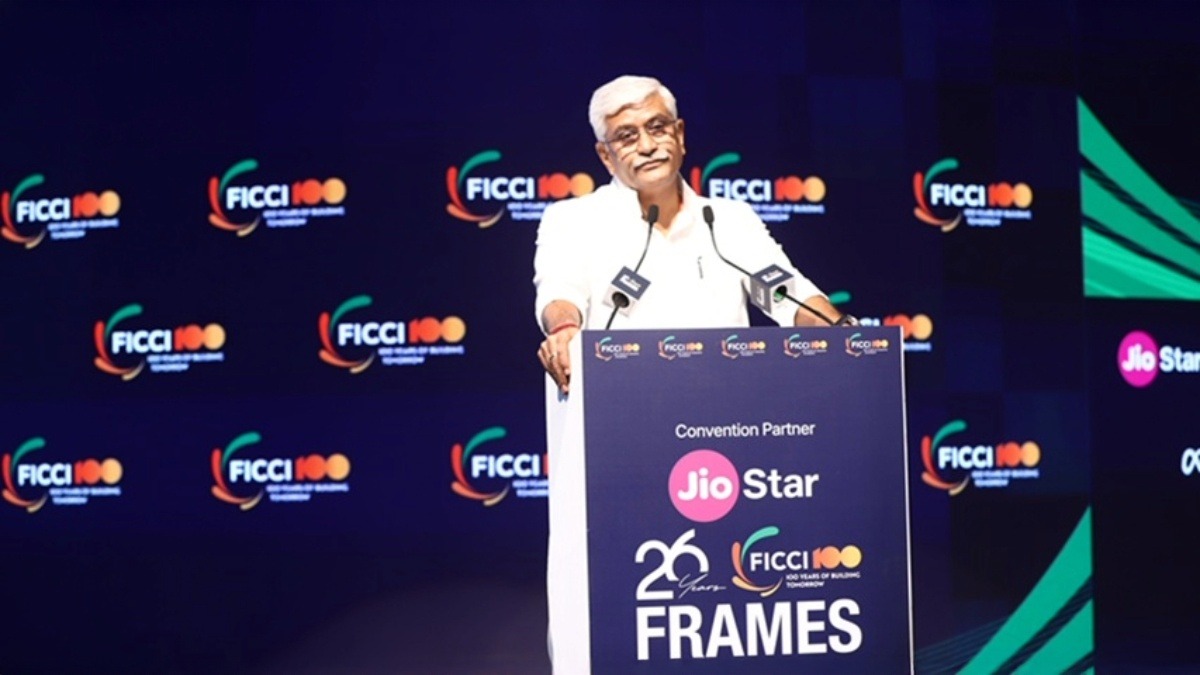
At FICCI FRAMES 2026, the session ‘Sold Out, Scaling Up: Why India’s Live Events Need to Rebuild from the Fan Up’ brought government and industry voices together to examine what it will take to build a larger, more efficient and more sustainable live events ecosystem.
The discussion was led by Kunal Khambhati, Chair, FICCI M&E Live Events Forum and Founder & COO – Events, District by Zomato. The panel featured Prithul Kumar, Joint Secretary – Broadcasting, Ministry of Information and Broadcasting; Kumar Padmapani Bora, Commissioner & Secretary, Information & Public Relations Department, Government of Assam and Managing Director, Assam Tourism Development Corporation; Sabbas Joseph, Founder, Wizcraft Global; Siddharth Anand Kumar, Executive Vice President – Films & Events, Saregama India; and Priyanka Khimani, Founder, Khimani & Associates, Billboard India.
A special address was delivered by Avarna Jain, Vice Chairperson, Saregama India.
The conversation made one thing clear: getting audiences to buy tickets is only the first act. The bigger challenge is creating the systems that allow India to host more events, attract more international artists, improve the fan journey and spread the economic benefits beyond the venue.
A major focus of the discussion was the Live Entertainment Development Council (LEDC), an initiative led by the Ministry of Information and Broadcasting to address structural challenges facing the sector.
Prithul Kumar explained that the council emerged after the government began recognising the wider potential of India’s concert economy, not only in terms of entertainment but also employment generation and the country’s soft power.
The momentum accelerated in 2025 after the Prime Minister highlighted the potential of the concert economy. At WAVES in May 2025, the Ministry engaged with industry stakeholders and prepared a white paper identifying the key challenges confronting live events.
One of the fundamental problems was surprisingly basic: the industry did not have a clearly identified government ministry to approach for its concerns.
The Ministry of Information and Broadcasting subsequently became the nodal ministry, given its wider media and entertainment remit. A joint committee was then formed bringing together ministries connected to the live events ecosystem, including Sports, Culture, Economic Affairs, Health and Environment.
Seven states are also part of the framework, reflecting the fact that live events rely heavily on state-level infrastructure and permissions.
Industry associations and key players are part of the council as well, with four meetings having already taken place.
One of the most significant developments discussed was the creation of a single-window portal for live events.
The portal is already operational, with state governments beginning to adopt it. The objective is to reduce the maze of permissions and administrative processes that organisers have traditionally had to navigate across different states.
The government has also created a model executive order based on best practices from across the country.
The model seeks to standardise the broad framework for permissions and contractual arrangements while allowing states to make local modifications. It has been circulated to states with a recommendation for adoption.
Five states have already adopted the model, with Maharashtra among them.
The significance goes beyond paperwork. For an industry where an event can involve artists, equipment, venues, security, transport, local authorities and multiple government departments, delays in one permission can have a cascading impact on the entire production.
The LEDC’s work is also extending to some of the practical hurdles associated with bringing international artists and crews to India.
Foreign exchange regulations have been eased after the Reserve Bank of India notified that bank guarantees would no longer be required for advance remittances in the relevant context discussed at the session.
The Ministry of Home Affairs is also working on easing foreign artist registration requirements, including provisions relating to repeat registrations.
Another issue being examined is the absence of a dedicated visa framework for live entertainment professionals travelling with musical instruments and production equipment.
Customs procedures for such equipment have also created challenges for international productions.
The government is working with the relevant authorities on visa provisions that could better accommodate the performance industry.
The underlying aim is straightforward: if India wants to attract the world’s biggest artists, the process of getting their people and equipment into the country needs to be as predictable as the performance itself.
Assam emerged during the discussion as an example of how states can actively build an ecosystem around live entertainment.
The state has introduced a concert production policy that provides financial support to event organisers and access to state-owned venues at no cost for organisers under the policy.
The Assam Tourism Development Corporation is also acting as a nodal department to facilitate permissions, while work is underway with the Ministry of Information and Broadcasting on an online approvals portal.
The strategy is already translating into a growing event calendar.
Assam hosted a sold-out show following Coldplay’s concert momentum, while a Diljit Dosanjh show became another marker of the state’s growing concert economy.
The state’s upcoming calendar includes Guns N’ Roses in Guwahati on 17 November, which was described as almost sold out within 23 hours.
Other names and events mentioned during the discussion included Lucky Ali, Sunidhi Chauhan, ABGT, Godlyness and Cell Crosa, with shows spread across the coming months.
The ambition, however, extends beyond filling venues.
The state wants concert audiences to become tourists as well encouraging visitors to travel to destinations such as Kaziranga and Kamakhya Temple and spend across accommodation, food, transport and other tourism services.
That turns a concert from a one-night event into a potential economic multiplier for the destination.
Sabbas Joseph offered a historical perspective on just how dramatically India’s live events business has changed.
Michael Jackson’s 1996 concert in India was described as a pivotal moment in the development of the country’s professional event management industry.
Since then, the market has expanded through concerts featuring artists ranging from Bon Jovi and Deep Purple to Apache Indian and, more recently, Guns N’ Roses and other global performers.
But the infrastructure supporting those shows was once a very different story.
Ticketing, for example, was largely manual. Physical tickets had to be protected against duplication using methods including waterproof inks, ultraviolet inks and holograms.
Even those systems could be defeated.
The real problem emerged when venues filled up but the box office figures did not match the crowd. Ticket duplication and unofficial entry could undermine the economics of an entire show.
There were also no sophisticated entry-management systems to account for every person entering a venue.
Ticket distribution was similarly fragmented, with tickets sold through outlets ranging from music stores and restaurants to coffee shops, general stores and street locations.
The contrast with 2016 could hardly be sharper.
By the time of the Global Citizen Festival, digital ticketing and online payments had transformed the way major concerts could be sold.
Ticketing platforms including BookMyShow and Insider which later became District had emerged as major distribution partners.
For the Global Citizen Festival in Mumbai, the industry experienced what was described as a landmark moment.
The concert sold Rs 22 crore worth of tickets on BookMyShow in around two and a half hours, despite the system crashing for approximately one hour during the sales process.
The event attracted 80,000 people, although only 20,000 tickets were paid tickets. The remaining 60,000 attendees could qualify for tickets through a lottery system linked to activities involving environmental work, charity and other specified causes.
The fact that 20,000 paid tickets generated Rs 22 crore demonstrated the willingness of audiences to spend significantly on live experiences.
It also provided the industry with something equally valuable: confidence.
Once organisers could see demand being converted into ticket sales well before an event took place, the economics of staging concerts became more predictable.
Advance ticketing has since become a crucial part of the live events economy.
The ability to sell tickets months before a festival or concert gives organisers greater visibility on cash flow and allows production planning to begin with a clearer picture of demand.
It also changes the equation for artists.
An artist travelling to India can know that the audience is already waiting, while organisers can plan production around confirmed demand rather than relying entirely on last-minute sales.
The result is an ecosystem that is increasingly data-led, digitally enabled and accountable.
The live events business has consequently moved a long way from physical tickets, unofficial entry and fragmented distribution.
The discussion also highlighted how the government’s perception of live events has changed.
The industry has increasingly been viewed not merely as entertainment but as an economic activity capable of generating employment, transactions and wider local spending.
The multiplier effect extends beyond ticket sales. Audiences spend on travel, accommodation, food, transportation and other services, while concerts create work across production, security, hospitality, technology, logistics and other allied sectors.
That broader economic footprint is one reason the industry is pushing for more supportive infrastructure and policy.
The fan buying a ticket may see a two-hour or three-hour performance. Behind that experience is a much larger network of people, businesses and government agencies.
The discussion at FICCI FRAMES 2026 ultimately shifted the focus from the headline number of sold-out shows to what comes next.
India has demonstrated that audiences are willing to pay for live experiences. International artists are increasingly looking at the country. States such as Assam are actively courting concerts. Digital ticketing has made demand more measurable, while government has begun creating mechanisms to address some of the sector’s structural challenges.
The next task is scale.
That means more venues, smoother approvals, better ticketing and entry systems, easier movement of international artists and equipment, stronger local infrastructure and closer coordination between central and state governments.
It also means thinking about the fan journey beyond the ticket from discovering an event and buying entry to travelling to the venue, entering safely, experiencing the show and returning home.
If India’s live events economy is to move from a collection of blockbuster concerts to a mature entertainment sector, the fan has to remain at the centre of every one of those decisions.
The sold-out sign may be the industry’s most visible symbol of demand. But at FICCI FRAMES 2026, the larger message was that filling the venue is only the beginning. The real challenge is building an ecosystem capable of filling many more venues, in many more cities, again and again.






