MAM
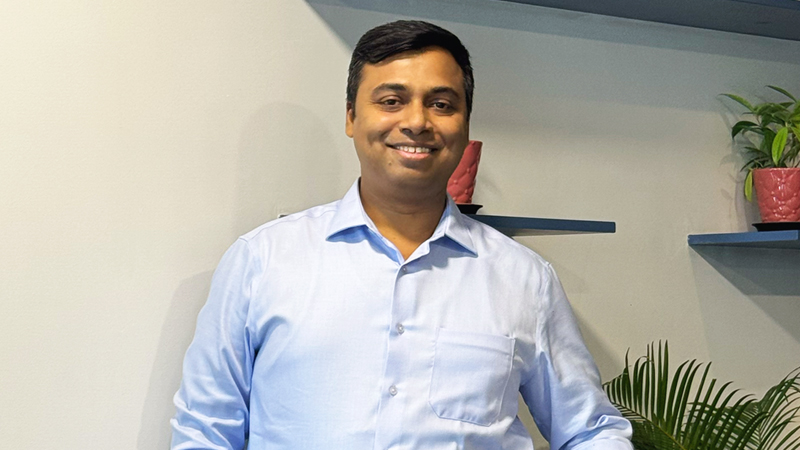
FCB Ulka appoints Ajay Ravindran as national planning director
Mumbai: – FCB Ulka, part of FCB Group India, has announced the appointment of Ajay Ravindran as national planning director.
Ajay comes to FCB Ulka with remarkable breadth and depth of experience. He has a 360-degree view of brand strategy, having worked on the entire gamut from advertising to social media, content, media planning, and market research. He specializes in new-age planning, bringing together storytelling, social media culture, and technology.
In his previous role as head of brand marketing for Razorpay, Ajay oversaw numerous campaigns that seamlessly integrated technology, creativity, and storytelling, demonstrating his ability to deliver successful and innovative strategies. Over his career, Ajay has worked on brands like Unilever, Britannia, Colgate, Vodafone-Idea, Dell, Titan, TVS, 3M and many others. He is a multi-time EFFIE award winner. He has led planning teams in agencies like Ogilvy, VML, MullenLowe Lintas Group & Grey with distinction.
On the appointment, FCB Ulka CEO Kulvinder Ahluwalia said, “We are thrilled to have Ajay join us as our National Planning Director. His exceptional blend of creativity and strategic insight will play a pivotal role in enhancing our capabilities and driving impactful brand solutions for our clients. We believe his leadership will strengthen our strategic initiatives and inspire our teams to push the boundaries of creativity.”
“I believe the true power of Brand Marketing lies not just in creating ‘buzz’ or some fuzzy ‘brand love’ but unlocking hidden growth opportunities for businesses. And the new-age we live in provides us with an array of avenues to do this – technology, digital, data, content, CX. FCB Ulka provides the finest playground to practice this craft. An enviable client roster, entrenched relationships, and a burning desire to do the very best for the businesses we work on. Just a few minutes into the conversation with Dheeraj, Nitin, Kulvinder and Hemant, I just had one question: “When can I start?” Ajay expressed on his appointment.

MAM
Reed Hastings to exit Netflix board as company posts steady growth
Shares dip 8 per cent as cofounder exits; revenue up 16 per cent to $12.25 billion.
MUMBAI- When the man who taught the world to binge decides to log off, the credits don’t just roll, they reset the script. Reed Hastings is set to step away from Netflix, marking the end of a defining chapter for a company that reshaped global entertainment even as its latest numbers suggest a business finding firmer footing.
Hastings, who co-founded Netflix nearly three decades ago and transformed it from a DVD-by-mail service into a streaming powerhouse, will not stand for re-election at the company’s annual meeting in June. While the company offered little detail on his next move beyond philanthropy and personal pursuits, the symbolic weight of his departure was immediate. Shares fell around 8 per cent following the announcement, underlining how closely Hastings remains tied to investor confidence and the company’s long-term vision.
The exit comes at a moment of recalibration. Netflix has been working to stabilise growth after a period of strategic turbulence, including the loss of a high-profile $72 billion deal involving Warner Bros. Discovery to Paramount Skydance, a setback that raised fresh questions about its ambitions in large-scale content consolidation. Yet, if the deal slipped, the fundamentals appear to be holding.
For the first quarter, Netflix reported revenue growth of 16 per cent to $12.25 billion, slightly ahead of expectations, while earnings per share nearly doubled to $1.23 from 66 cents a year ago. The company reaffirmed its full-year outlook, projecting double-digit revenue growth, expanding margins and strong free cash flow signals aimed squarely at calming post-announcement jitters.
In its shareholder communication, Netflix struck a careful balance between legacy and continuity. Its mission, it reiterated, remains unchanged: to serve a global audience with diverse storytelling across languages and cultures. The message was clear—while a founder may exit, the playbook stays in motion.
At the same time, the company is quietly redrawing that playbook. Netflix is leaning into newer formats such as video podcasts and live programming, including events like the World Baseball Classic in Japan, reflecting a broader industry shift where streaming, television and live experiences increasingly overlap. Advertising, once an afterthought in its subscription-first model, is now moving centre stage, with the company projecting ad revenues of $3 billion in 2026 roughly double current levels.
Still, some questions linger in the wings. Chief among them is how Netflix plans to deploy the $2.8 billion termination fee from the collapsed Warner Bros deal. With competition for premium content intensifying, capital allocation decisions in the coming quarters could prove as consequential as the leadership transition itself.
For now, Netflix finds itself in a familiar paradox: a company built on disruption navigating continuity. Hastings may be stepping off the stage, but the show by design goes on.