Brands
Facebook’s ‘Why Am I Seeing This Ad’ update to help brands create better impact

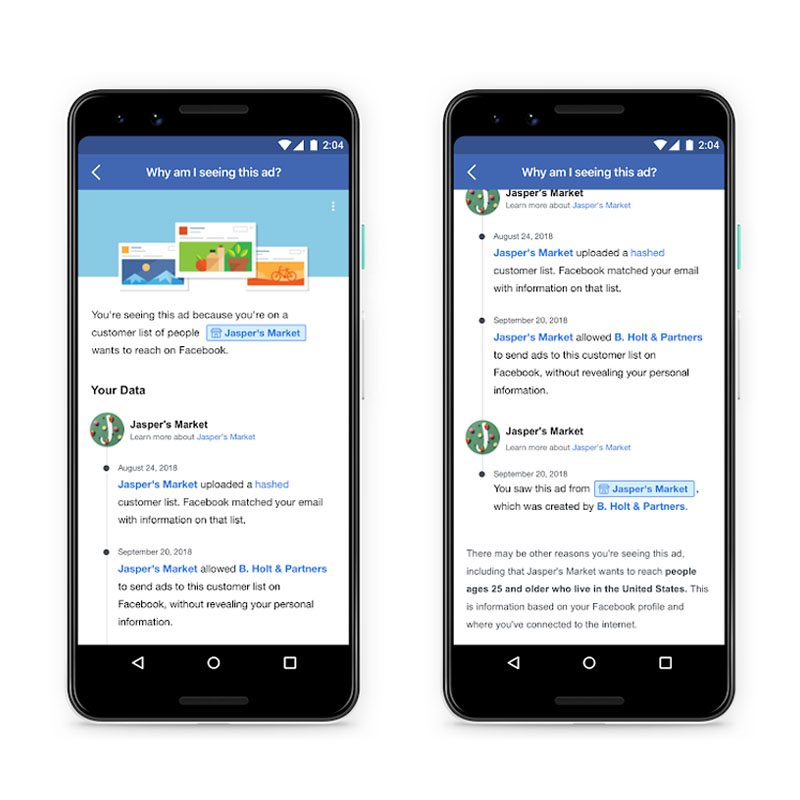
MUMBAI: Social media giant Facebook recently announced some new controls to its ‘Why Am I Seeing This Ad’ feature offering more transparency and control to its users. The platform will now show more detailed information on the targeting parameters used and the source of information for a particular ad, among several other control measures for the users to pick which ads they want to see and which they don’t.
Digichefs co-founder Deep Mehta feels that there was a strong need for Facebook to roll out features like these given ‘the scandals’ it had been involved in during the last few years.
Logicserve Digital co-founder and CEO Prasad Shejale thinks that the social media company is making conscious efforts to take care of users’ data & privacy and gain back their trust after numerous concerns that it has faced around user data misuse.
He adds, “Also, we saw many countries passing laws to ensure user data is protected and not misused by companies and brands including GDPR, California Consumer Privacy Act and also India's Personal Data Protection Bill to be discussed in the upcoming parliament session. The new-age users are smart and becoming mindful about their data, its usage, and how, at times, unwanted ads often cross the fine line between being helpful and being spooky. This further adds to consumers' concern about how their information reaches the brand. They also feel the need for an option to opt-out of such marketing activities and, sometimes, judge the brands for exploiting users' behavioural data.”
Times Internet COO-Indiatimes and lifestyle brands Angad Bhatia notes that this is a step in the right direction. “Empowering users to further control their newsfeed experience helps build a stronger relationship between the user and the platform. The more control users have, the better is the retention and higher is the uptake of the platform. Facebook has reached a critical mass from both the advertiser demand and user supply sides. This only leads to a better advertising recommendation. With this, advertisers can gauge customer affinity and organic pull of the brands by serving them their brands of choice.”
Most of the digital industry is of the view that the move won’t impact the advertisers’ reach immediately. Shejale says, “I really don't think any good step like this can truly impact the reach. Rather, if they adhere to the rules, it will only help brands create better impact among the audiences and build their brand equity.”
1702 Digital co-founder Mihir Joshi mentions that this is just the ‘learning phase’ for Facebook. He adds, “The new update in the Facebook feature won't impact the advertisers reach. Diligent audience targeting helps marketers achieve their goals. Seldom, they do bombard the user, which is when the question of ''Why do I see this Ad?'' arises.”
However, Zolo co-founder and CEO Nikhil Sikri says that the move will impact the advertisers who use Facebook retargeting by uploading user lists which they’ve not generated themselves i.e. purchased from 3rd party vendors. “This change will have a long-standing impact on those businesses which are using the non-opt-in database as Facebook might stop those brands from targeting custom audiences and thus limit their reach on social channels.”
The move is not only a great proposition for users worried about the safety of their data but comes as a great opportunity for advertisers looking to streamline their strategies and targeting approach.
Triton Communications executive vice president Virendra Saini shares that it can help advertisers in checking competitors' ad targeting. This might help them in better planning their approach as well.
Bhatia quips that such initiatives are a part of the bigger shift in the industry’s perspective of the advertiser-consumer relationship and thus they should look at it with an approach to embrace this system.
He says, “The ‘spray and pray’ approach in advertising has rarely worked and is rightfully on its way out. It pays to effectively engage potential customers via a meaningful conversation about your brand than sneak in pop-up ads that are jarring and disrupt their experience.”