Brands
Facebook’s ‘Why Am I Seeing This Ad’ update to help brands create better impact

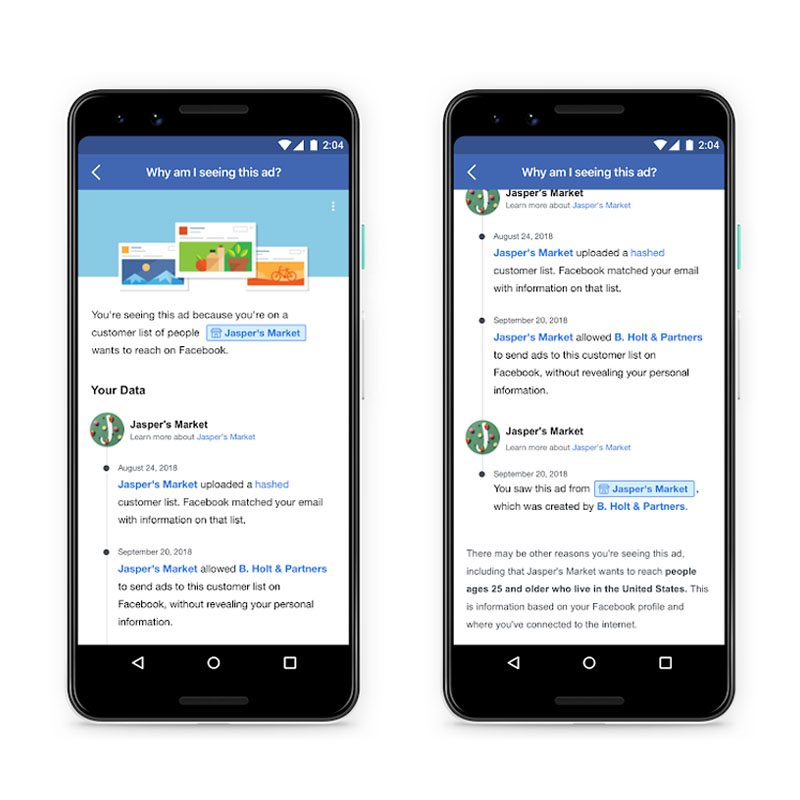
MUMBAI: Social media giant Facebook recently announced some new controls to its ‘Why Am I Seeing This Ad’ feature offering more transparency and control to its users. The platform will now show more detailed information on the targeting parameters used and the source of information for a particular ad, among several other control measures for the users to pick which ads they want to see and which they don’t.
Digichefs co-founder Deep Mehta feels that there was a strong need for Facebook to roll out features like these given ‘the scandals’ it had been involved in during the last few years.
Logicserve Digital co-founder and CEO Prasad Shejale thinks that the social media company is making conscious efforts to take care of users’ data & privacy and gain back their trust after numerous concerns that it has faced around user data misuse.

He adds, “Also, we saw many countries passing laws to ensure user data is protected and not misused by companies and brands including GDPR, California Consumer Privacy Act and also India's Personal Data Protection Bill to be discussed in the upcoming parliament session. The new-age users are smart and becoming mindful about their data, its usage, and how, at times, unwanted ads often cross the fine line between being helpful and being spooky. This further adds to consumers' concern about how their information reaches the brand. They also feel the need for an option to opt-out of such marketing activities and, sometimes, judge the brands for exploiting users' behavioural data.”
Times Internet COO-Indiatimes and lifestyle brands Angad Bhatia notes that this is a step in the right direction. “Empowering users to further control their newsfeed experience helps build a stronger relationship between the user and the platform. The more control users have, the better is the retention and higher is the uptake of the platform. Facebook has reached a critical mass from both the advertiser demand and user supply sides. This only leads to a better advertising recommendation. With this, advertisers can gauge customer affinity and organic pull of the brands by serving them their brands of choice.”
Most of the digital industry is of the view that the move won’t impact the advertisers’ reach immediately. Shejale says, “I really don't think any good step like this can truly impact the reach. Rather, if they adhere to the rules, it will only help brands create better impact among the audiences and build their brand equity.”
1702 Digital co-founder Mihir Joshi mentions that this is just the ‘learning phase’ for Facebook. He adds, “The new update in the Facebook feature won't impact the advertisers reach. Diligent audience targeting helps marketers achieve their goals. Seldom, they do bombard the user, which is when the question of ''Why do I see this Ad?'' arises.”
However, Zolo co-founder and CEO Nikhil Sikri says that the move will impact the advertisers who use Facebook retargeting by uploading user lists which they’ve not generated themselves i.e. purchased from 3rd party vendors. “This change will have a long-standing impact on those businesses which are using the non-opt-in database as Facebook might stop those brands from targeting custom audiences and thus limit their reach on social channels.”
The move is not only a great proposition for users worried about the safety of their data but comes as a great opportunity for advertisers looking to streamline their strategies and targeting approach.
Triton Communications executive vice president Virendra Saini shares that it can help advertisers in checking competitors' ad targeting. This might help them in better planning their approach as well.
Bhatia quips that such initiatives are a part of the bigger shift in the industry’s perspective of the advertiser-consumer relationship and thus they should look at it with an approach to embrace this system.
He says, “The ‘spray and pray’ approach in advertising has rarely worked and is rightfully on its way out. It pays to effectively engage potential customers via a meaningful conversation about your brand than sneak in pop-up ads that are jarring and disrupt their experience.”




Brands
India’s food culture takes a bold turn in 2025
From fusion desserts to experiential dining, four trends reshape how the nation eats.
MUMBAI: India’s plates just got a serious upgrade in 2025 because when tradition meets TikTok and fusion meets fitness, even the humble samosa starts feeling trendy. The Godrej Food Trends Report 2025 predicted several shifts in Indian eating habits, and the past year proved the forecasters right. From reimagined desserts to immersive dining experiences, Indian consumers showed they want authenticity, convenience, global flavours and health in equal measure.
Here are four trends that truly came alive in 2025 and are now shaping how India eats and dines:
1. Indian Desserts Get a Modern Makeover Traditional mithai found fresh life through fusion experiments. Cheesecakes, truffles and plated desserts inspired by classics like gulab jamun and rasgulla gained popularity, while chocolate-forward, fruit-led and lower-sugar options appealed to younger diners. According to the How India Eats 2025 report, desserts and ice-cream parlours were among the fastest-growing segments in organised food services. Examples: The Bombay Canteen’s Coffee Rasgulla Sundae and Le Chocolate Cakes and More’s Gulab Jamun Cake. Chef Aarohi Sanghavi of Maki Patisserie noted the shift toward seasonality and fresh Indian produce, while Chef Heena Punwani of Maska Bakery highlighted the appeal of flexible, weekend-special menus.
2. Social Media Becomes the New Menu Food discovery went fully digital. Instagram Reels, YouTube reviews and creator-led content heavily influenced dining choices, with food remaining one of the most consumed categories on social media. Restaurants began designing visually striking dishes specifically for shareability, while many diners found new spots through viral videos rather than traditional advertising. The How India Eats 2025 report revealed that over 75% of marketing spends by leading QSR chains now go toward digital channels. Cafes like Mokai and Candies became creator favourites, and brands such as Bastian Hospitality curated highly shareable pop-ups and events. Kavita Rajwade of IVM Podcasts emphasised how long-form storytelling helps decode food’s cultural and economic layers, while Pranav Joshi of Floydian Cookery admitted his page grew far beyond expectations.
3. Snacking Culture Goes Mainstream India’s love for snacks evolved into a full grazing lifestyle, with many opting for multiple small bites throughout the day instead of three structured meals. This shift spurred innovation in formats—from gourmet chips and fusion street food to protein-packed options. Restaurants responded with small-plate menus designed for sharing. The How India Eats 2025 report noted that late-night orders grew nearly 3x faster than dinner. Brands like The Whole Truth Foods and Green Snack Co. popularised clean-label snacks such as protein bars and roasted nuts. Madhushree Basu Roy of Pikturenama Studios predicted a mix of convenience, health consciousness and global influences, while freelance food writer Sharmila Vaidyanathan observed that consumers want the best of both worlds healthy options for routine snacking and traditional treats for special occasions.
4. Dining Becomes an Experience, Not Just a Meal The most noticeable shift was the rise of experiential dining. Consumers increasingly sought restaurants that offered more than good food, they wanted immersion, storytelling and chef-driven concepts. Venues like Papa’s in Mumbai (intimate tasting menus), Bombay Daak (theatrical regional flavours) and Masala Library (modernist presentations) turned meals into memorable events. Tasting menus, themed pop-ups and chef collaborations became more common, transforming dining out into entertainment. The How India Eats 2025 report highlighted how experience-led formats and storytelling are key to attracting younger diners. Chef Karan Upmanyu of ParTTwo in Bengaluru observed that new outlets are breaking away from rigid formats, focusing instead on creating relaxed spaces where people simply enjoy spending time.
As 2026 unfolds, these trends suggest India’s food culture is no longer just about what’s on the plate, it’s about how the plate makes us feel, connect and remember. From a quick Reel-inspired snack to a full theatrical dining experience, Indian diners are voting with their forks for food that is both rooted in tradition and unafraid to experiment. The table, it seems, has never been more exciting.








