MAM
E-comms step forward to help tide over Covid second wave

MUMBAI: With India battling a deadly second wave of the pandemic, night curfews and partial-to-near-complete lockdowns seem to be the norm in many parts of the country. The last couple of weeks in particular have been more devastating with the nation witnessing an unprecedented pan-India surge in Covid cases. India Inc is stepping on the gas to ensure that employees and their families get vaccinated as soon as possible. MNC consumer goods company Procter & Gamble, on Monday pledged Rs 50 crores towards ten lakh vaccine doses covering five lakh Indians.
E-comms are also going the extra mile to ensure protection of their associates, including delivery staff, while guaranteeing safe delivery of orders to customers. With movement restrictions being introduced in additional parts of the country, buyers are taking the safety route of shopping from home. This has resulted in driving bigger orders for e-commerce companies across India.
Here are some of the efforts undertaken by online platforms in the fight against Covid2019:
Food delivery app Swiggy last month took the initiative of supporting the vaccination cost for its entire delivery fleet. The company announced on its Twitter handle: “From essentials to food, delivery partners have always been our lifelines. We’re happy to announce that we’re supporting 100 per cent of the vaccination cost for our entire delivery fleet, and that this entire drive will be facilitated by us to keep them and you safe. #DeliveringHope”
From essentials to food, delivery partners have always been our lifelines.
We’re happy to announce that we’re supporting 100% of the vaccination cost for our entire delivery fleet, and that this entire drive will be facilitated by us to keep them and you safe. #DeliveringHope
— Swiggy (@swiggy_in) March 24, 2021
Food & Grocery app Grofers took the initiative of using its platform to set up a real-time data of all Covid2019 resources, including city-wise databases and helpline numbers. It shared on its blog, “A lot of people are currently overwhelmed and struggling to find relevant information on what to do and what measures to take if they or someone they know is currently affected by the virus. We thought we could use our platform to help a bit here. To help make this a slightly less cumbersome process we have aggregated some of the publicly available information for your convenience, so you do not have to go looking for it in different places.”
Recently, we put together a resource bank to help our teams deal with the ongoing COVID-19 situation.
We figured this may be useful for more people – and are using our platform to extend real-time info related to COVID-19 resources: https://t.co/l5V1Dy6drr
[1/4]
— Albinder Dhindsa (@albinder) April 21, 2021
Grofers has also partnered with UNICEF to encourage people across the country to get vaccinated. It tweeted :“When you get vaccinated, you potentially safeguard yourself and your family from Covid2019. Here is our little way of expressing our appreciation for those who have taken this important step.”
When you get vaccinated, you potentially safeguard yourself and your family from COVID-19. Here is our little way of expressing our appreciation for those who have taken this important step.
Know more: https://t.co/Uyvl4EdVAt. @UNICEFIndia#GrofersCares #LargestVaccinationDrive pic.twitter.com/9YuS0BMCvi
— Grofers (@Grofers) April 23, 2021
E-commerce giant Flipkart went all-out in its measures to ensure a safe working environment for all its employees and stakeholders across the board. The company took to its twitter handle to share a video on the same. “We stand strong in our commitment to safety. Our priority remains the well-being of our employees, customers, sellers, and our entire ecosystem. Watch for the various measures we continue to implement to ensure #SafeCommerce for all.”
The firm has also been lending its helping hand to deliver Covid care medical kits. Official Twitter handle of infrastructure & industrial development department of the Uttar Pradesh government tweeted lauding the company’s efforts, which included delivering over 3,000 covidcare medical kits free of charge.
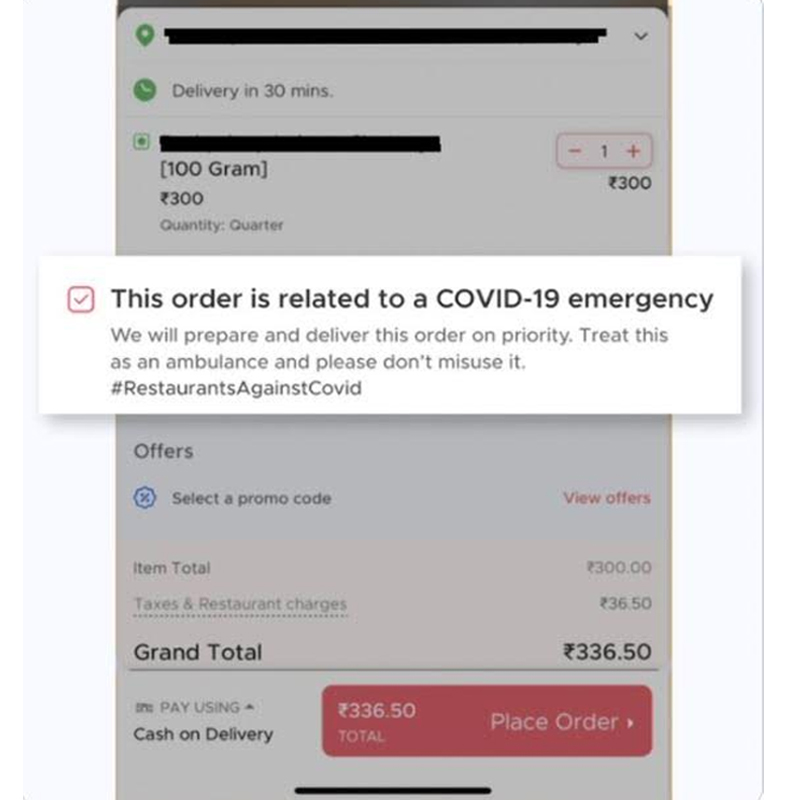
Food delivery app Zomato had in 2020 taken steps to educate the riders and restaurants on safety and hygiene practices, provided them with COVID insurance, masks, and facilitated hand sanitisation stations at restaurants across the country. This time the Food delivery app has rolled out a feature for “Covid emergencies”. Zomato Founder Deepinder Goyal tweeted, “Today, along with thousands of our restaurant partners, we just rolled out a “priority delivery for covid emergencies” feature on the Zomato app. This feature will allow our customers to mark *This order is related to a Covid2019 emergency* option during checkout.
Today, along with thousands of our restaurant partners, we just rolled out a “priority delivery for covid emergencies” feature on the Zomato app. This feature will allow our customers to mark *This order is related to a COVID-19 emergency* option during checkout. (1/4) pic.twitter.com/BxmBF02PnS
— Deepinder Goyal (@deepigoyal) April 21, 2021
These orders will be prioritised by providing fastest rider assignment, and dedicated customer support in case of queries. Thousands of restaurants have pledged to prioritise these orders in their kitchen above all others.
In addition, the firm’s not-for-profit arm Zomato Feeding India has kickstarted a Help Save My India endeavour in association with @delhivery to source oxygen concentrators and related supplies to help hospitals and families in need.
Zomato Feeding India, our not-for-profit has kickstarted the “Help Save My India” endeavour today in association with @delhivery to source oxygen concentrators and related supplies to help hospitals and families in need. pic.twitter.com/60kBYZMrrd
— Deepinder Goyal (@deepigoyal) April 25, 2021
Early this month, Urban Company (formerly UrbanClap) – a managed marketplace for home services, committed towards getting 100 per cent of their fleet vaccinated, free of cost in the coming weeks. “We have already initiated phase 1 of this effort for service partners aged 45+, and are working closely with local govts and healthcare providers.
@urbancompany_UC is happy to announce our commitment towards getting 100% of our fleet vaccinated, free of cost in the coming weeks. We have already initiated phase 1 of this effort for service partners aged 45+, and are working closely with local govts and healthcare providers. pic.twitter.com/vc9M10cRyX
— Abhiraj Singh Bhal (@abhirajbhal) April 6, 2021
With the government now allowing vaccination for all above 18 starting 1 May, @urbancompany_UC further reiterated its commitment. “ @urbancompany_UC is committed to getting all our front lines service professionals and employees vaccinated at the earliest possible availability,” tweeted Urban Company co-founder Abhiraj Singh Bhal @abhirajbhal .
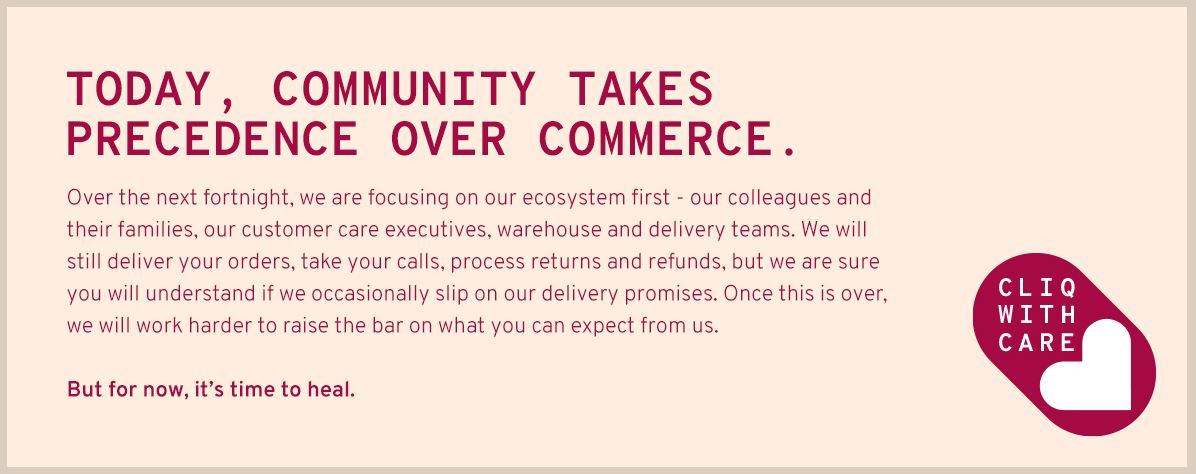
Tata Group’s Online apparel brand TATA CLIQ chose to take a step back by reminding everyone that ‘It’s Time To Pause’. It urged its customers to think again before making a purchase on the app. Declaring that ‘Today Community takes precedence over Commerce’ the brand sent out communication to its subscribers and on its webpage saying “Sometimes it takes courage to pause, to listen to what the heart already knows. We encourage you to pause and ask yourself – do you really need to buy this now? Just because someone else carries it well doesn’t mean it isn’t heavy.”
It added “Out of respect for our stakeholders, we are open for commerce – so we will still deliver your orders, take your calls, process returns and refunds – but we will not penalise our delivery team on road for a day of delayed delivery, we will not focus on the number of calls made in an hour by our customer care executives, we will not allow colleagues at our warehouse to travel via public transport and expose themselves and their families to risk.”