Digital
How ChatGPT ads will work: What consumers will see and how advertisers can target users
From conversational targeting to CPC bidding, here’s how the new ad model works


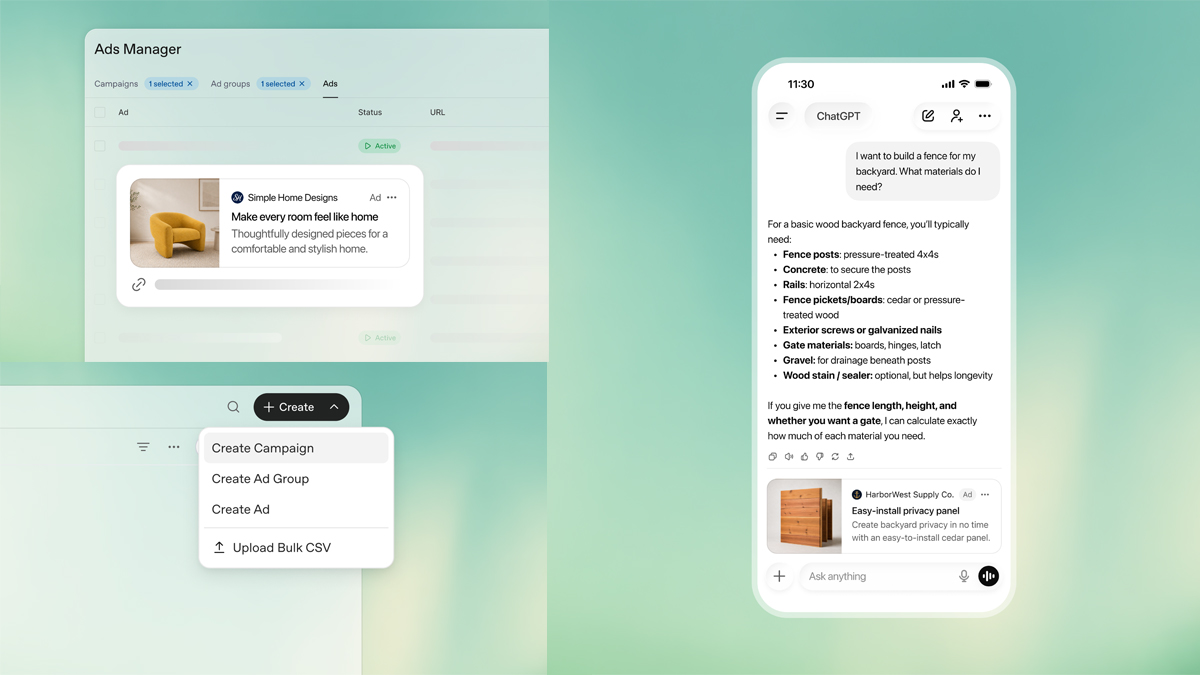
MUMBAI: Ads are coming to ChatGPT in India, but they will work differently from conventional search and social advertising. Instead of simply matching keywords, ChatGPT Ads will use the context and intent of a conversation to determine which sponsored messages may be relevant.
OpenAI’s decision to bring ChatGPT Ads to India within months of introducing its advertising product globally puts one of the world’s largest digital advertising markets at the centre of its monetisation strategy.
The company has launched ChatGPT Ads in India for logged-in adults on its Free and Go tiers. Users on Plus, Pro, Business, Enterprise and Education plans will remain ad-free.
For consumers, the basic experience is fairly simple. Ads will appear below ChatGPT’s responses, clearly labelled and visually separated from the answer. An ad can include the advertiser’s name and logo, headline, description, landing page and an image.
The important distinction is that the ad does not determine the answer. OpenAI says advertisements will remain separate from ChatGPT’s responses, while advertisers will not have access to users’ chats or chat history. Users will also have controls over how their data is used for advertising.
How ads will work for consumers
ChatGPT Ads are designed to appear when users are exploring options, comparing products or weighing a decision. For example, someone asking ChatGPT about options for building a backyard fence could see an ad for a relevant fencing product.
The matching system considers the context and intent of the current conversation, rather than relying only on traditional keywords. When ad personalisation is enabled, selected signals from a user’s broader ChatGPT experience can also be considered.
Advertisers can provide context hints describing the conversations, topics or keywords where their products or services may be relevant. These hints help guide ad matching but are not exact-match keywords and do not guarantee delivery in a particular conversation.
Ads will not be eligible in certain sensitive contexts, while accounts identified as belonging to users under 18 will not see them.
How it will work for advertisers
For brands, the pitch is essentially intent plus context.
Advertisers can create and manage campaigns through OpenAI Ads Manager Beta. The platform allows brands to set campaign objectives and budgets, create ad groups and ads, upload creatives and monitor performance. Campaigns can also be created at scale through bulk uploads.
For the India launch, self-serve access to ChatGPT Ads Manager will begin on September 4, allowing businesses to sign up and run campaigns with daily budgets starting at Rs 725.
OpenAI has also brought agencies into the India rollout. WPP and Omnicom are its first agency partners in the country, with the company citing their relationships with brands and expertise in areas such as strategy, creative, measurement, brand safety and campaign execution.
More than 50 brands are expected to go live with advertisements on ChatGPT in India this week.
CPC or CPM: How brands will pay
Advertisers can currently choose between two buying models.
- CPM: Brands pay for every 1,000 impressions and can use the Reach objective.
- CPC: Brands pay for valid clicks and can optimise campaigns towards clicks.
Advertisers set a maximum bid at the ad-group level. For CPC campaigns, OpenAI recommends a starting maximum bid of $3 to $5 per click, although the company has not specified a separate India-specific CPC range.
The company uses a relevance-weighted, second-price auction to select among eligible ads, with the system designed to balance advertiser and user value.
What advertisers can measure
Ads Manager Beta provides metrics including impressions, clicks, spend, click-through rate, average CPC, average CPM and conversions.
Advertisers can also add tracking parameters to landing-page URLs and set up conversion measurement to understand what happens after a user clicks an ad.
This gives brands the ability to track the advertising journey from exposure and engagement through to conversion, while keeping campaign reporting separate from users’ private conversations.
What this means for consumers
For ChatGPT users on advertising-supported plans, the most visible change will be the appearance of sponsored content below responses.
The ad format is designed to remain distinct from the answer itself. This means a user could receive a ChatGPT response about a product category and see a relevant sponsored message separately below it, rather than having the advertisement inserted into the AI-generated response.
The model also gives users a degree of control around advertising personalisation, while OpenAI says advertisers do not receive access to individual conversations, chat history, memories or personal details.
What this means for advertisers
For advertisers, ChatGPT offers a different proposition from traditional digital platforms: reaching consumers while they are actively considering a decision.
A person asking about running shoes, comparing laptops, planning a holiday or researching home-improvement products is already providing signals about what they are trying to accomplish. ChatGPT Ads are designed to use that conversational context to identify potentially relevant advertising opportunities.
This potentially moves advertising closer to the consideration stage, rather than relying solely on a user’s explicit search query or their browsing behaviour.
The bigger shift
The interesting part of ChatGPT Ads is that the advertising opportunity moves from “What did the user search for?” to “What is the user trying to decide?”
That could give advertisers access to consumers closer to a purchase or consideration decision, while giving users sponsored information in the same environment where they are researching and comparing options.
For OpenAI, India is an important market in that strategy. The company is bringing its advertising business to the country with agency partners already in place, more than 50 brands expected to launch campaigns and a relatively low entry point for self-serve advertisers.
At the same time, OpenAI is trying to keep the commercial message separate from the AI-generated answer. That separation, alongside conversational targeting, will be central to how ChatGPT’s advertising model develops as more brands and consumers enter the ecosystem.