Brands
Digital takes centre stage on tepid Valentine’s Day for brands


MUMBAI: Love has been in the air and on the internet all week. Valentine’s Day is no longer about just a day you spend with your loved one but is rather a week-long affair of gifts and celebration. Valentine’s Day has become no less than a festival in India, a country that takes much pride in its traditions and culture.
Although the phenomenon is only a few years old, the enthusiasm of brands investing in Valentine’s Day seems to be only increasing every year. Gifting and food and beverage (F&B) industry are most active during this time of the year and it is a big occasion for all sectors other than BFSI.
Earlier, brands focussed mainly on print advertising backed by television for Valentine’s Day promotion. But that seems to have changed now. Brands are increasingly looking at newer avenues to connect with consumers and remind them about the brand. Although the market sentiment for the day in 2018 has been tepid as major brands chose to stay away from advertising, some SMEs and new players leveraged the day to connect with consumers. The day also saw e-commerce, a major advertiser during major festivals and occasions in India, not being too gung-ho but small gifting websites such as Chumbak, Bigsmall, Dailyobjects among others got the most from the occasion on the digital platform.


iProspect India associate vice president, branding and affiliate marketing Mihir Mehta notes that brand sentiment this year has been weak as advertisers have stopped force fitting their products to occasions.
Over the years, Mondelez India has built and led the occasion through its concerted marketing efforts and gifting innovations. This year, Cadbury Dairy Milk Silk announced the launch of its new special edition pack with a heart pop, which urges consumers to not hold back from expressing their love.
Dentsu Aegis Network’s digital agency, Carat, collaborated with Snapchat to create India’s first ‘National Snapchat Lens’ for the product. Through this lens, one can blow a kiss with the Silk bar, which creates a drool effect around the consumer. Additionally, the agency also used 3D filters on Facebook that allowed users to engage and post a variety of animations on their pictures/videos, which could be downloaded and shared later.
This year, we saw brands leverage digital as the primary medium for brand activation as the occasion caters to people in the age group of 16-30 years and as the millennials are more active on digital than on traditional mediums. Other than the usual promotional ads, brands started Valentine’s hashtags to attract online audiences and organised social media contests.
Consumers have today become more product-centric and brands are making sure they deliver that. Mehta says that this year brands have not used Valentine’s Day for customer acquisition but have rather concentrated on engagement with existing customers.

Food-delivery platform Swiggy created an opt-in platform called, My ValenDine, that used interested Swiggy users’ order history, and matched them based on their favourite food and preferences. On Valentine’s Day, users could come back to the microsite to find out who their Valendine’s matches were.
Jewellery brand Tanishq created an 8-minute digital film that captured seven real love stories. Kellogg’s launched a digital-only campaign on Facebook and Instagram to create buzz around its chocolate flavoured crunchy snack.
A post shared by Kaneez Surka (@kaneezsurka) on Feb 7, 2018 at 2:26am PST
Kellogg’s believes that the response to its campaign has been very encouraging as both their branded creatives as well as content co-created with leading youth influencers like Tanmay Bhat, Ashish Shakya and Kaneez Surka have surpassed their expectation. This goes on to show that bite-sized and engaging pieces of content create relevant conversation around the brand.
Brand-Building.com founder and brand guru Ambi Parameswaran notes that this year Valentine’s Day did not see too many ads in the daily newspapers as brands decided to play it low key. “It is possible that after the furore around Padmaavat they were just playing safe but the final pudding is in the eating and if Indian upper-income consumers and youngsters do want an occasion to celebrate, then they will use Valentine’s Day to do that.”
Also Read :
How iProspect’s Vivek Bhargava foresaw a digital future two decades ago
Kids’ candy segment: Communication sees a shift
Dairy Milk innovates Silk for Valentine’s Day





Brands
Godrej clarifies ‘GI’ identifier after logo similarity debate
Says GI is not a logo, will not replace Godrej signature across products.
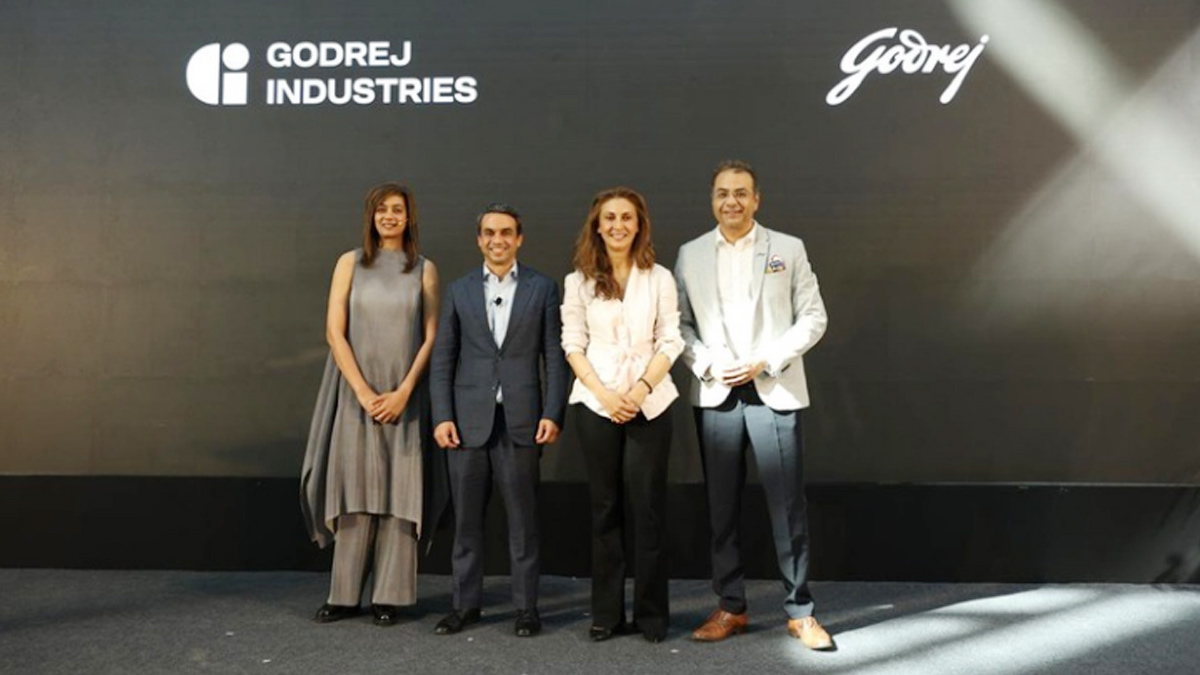
MUMBAI: In a branding storm where shapes did the talking, Godrej is now spelling things out. Godrej Industries Group (GIG) has issued a clarification on its newly introduced ‘GI’ identifier, addressing questions around its purpose and design following a wave of online criticism. At the centre of the debate were two concerns: whether the new mark replaces the long-standing Godrej logo, and whether its geometric design mirrors other corporate identities.
The company has drawn a clear line. The Godrej signature logo, it said, remains unchanged and continues to be the sole logo across all consumer-facing products and services. The ‘GI’ mark, by contrast, is not a logo but a corporate group identifier intended for use alongside the Godrej signature or company name, and aimed at stakeholders such as investors, media and talent rather than consumers.
The need for such a distinction stems from the 2024 restructuring of the broader Godrej Group into two separate business entities. With both continuing to operate under the same Godrej name and signature, the identifier is positioned as a way to differentiate the Godrej Industries Group at a corporate level.
The rollout, however, triggered a broader conversation on design originality. Critics pointed to similarities between the GI mark’s geometric composition and logos used by companies globally, raising questions about distinctiveness.
Responding to this, GIG said its intellectual property and legal review found that such overlaps are common in minimalist, geometry-led design systems. Basic forms such as circles and rectangles appear across dozens of brand identities worldwide, the company noted.
It added that the identifier emerged from an extensive design process and was chosen for its simplicity, allowing it to sit alongside the Godrej signature without competing visually. While acknowledging that elemental shapes may appear less distinctive in isolation, the group emphasised that the mark is part of a broader identity system that includes a custom typeface, sonic branding and other proprietary elements.
Following legal and ethical assessments, the company said it found no impediment to using the identifier, reiterating that the GI mark is a corporate tool not a consumer-facing symbol.
In short, the logo isn’t changing but the conversation around it certainly has.