Brands
Digital takes centre stage on tepid Valentine’s Day for brands


MUMBAI: Love has been in the air and on the internet all week. Valentine’s Day is no longer about just a day you spend with your loved one but is rather a week-long affair of gifts and celebration. Valentine’s Day has become no less than a festival in India, a country that takes much pride in its traditions and culture.
Although the phenomenon is only a few years old, the enthusiasm of brands investing in Valentine’s Day seems to be only increasing every year. Gifting and food and beverage (F&B) industry are most active during this time of the year and it is a big occasion for all sectors other than BFSI.
Earlier, brands focussed mainly on print advertising backed by television for Valentine’s Day promotion. But that seems to have changed now. Brands are increasingly looking at newer avenues to connect with consumers and remind them about the brand. Although the market sentiment for the day in 2018 has been tepid as major brands chose to stay away from advertising, some SMEs and new players leveraged the day to connect with consumers. The day also saw e-commerce, a major advertiser during major festivals and occasions in India, not being too gung-ho but small gifting websites such as Chumbak, Bigsmall, Dailyobjects among others got the most from the occasion on the digital platform.


iProspect India associate vice president, branding and affiliate marketing Mihir Mehta notes that brand sentiment this year has been weak as advertisers have stopped force fitting their products to occasions.
Over the years, Mondelez India has built and led the occasion through its concerted marketing efforts and gifting innovations. This year, Cadbury Dairy Milk Silk announced the launch of its new special edition pack with a heart pop, which urges consumers to not hold back from expressing their love.
Dentsu Aegis Network’s digital agency, Carat, collaborated with Snapchat to create India’s first ‘National Snapchat Lens’ for the product. Through this lens, one can blow a kiss with the Silk bar, which creates a drool effect around the consumer. Additionally, the agency also used 3D filters on Facebook that allowed users to engage and post a variety of animations on their pictures/videos, which could be downloaded and shared later.
This year, we saw brands leverage digital as the primary medium for brand activation as the occasion caters to people in the age group of 16-30 years and as the millennials are more active on digital than on traditional mediums. Other than the usual promotional ads, brands started Valentine’s hashtags to attract online audiences and organised social media contests.
Consumers have today become more product-centric and brands are making sure they deliver that. Mehta says that this year brands have not used Valentine’s Day for customer acquisition but have rather concentrated on engagement with existing customers.

Food-delivery platform Swiggy created an opt-in platform called, My ValenDine, that used interested Swiggy users’ order history, and matched them based on their favourite food and preferences. On Valentine’s Day, users could come back to the microsite to find out who their Valendine’s matches were.
Jewellery brand Tanishq created an 8-minute digital film that captured seven real love stories. Kellogg’s launched a digital-only campaign on Facebook and Instagram to create buzz around its chocolate flavoured crunchy snack.
A post shared by Kaneez Surka (@kaneezsurka) on Feb 7, 2018 at 2:26am PST
Kellogg’s believes that the response to its campaign has been very encouraging as both their branded creatives as well as content co-created with leading youth influencers like Tanmay Bhat, Ashish Shakya and Kaneez Surka have surpassed their expectation. This goes on to show that bite-sized and engaging pieces of content create relevant conversation around the brand.
Brand-Building.com founder and brand guru Ambi Parameswaran notes that this year Valentine’s Day did not see too many ads in the daily newspapers as brands decided to play it low key. “It is possible that after the furore around Padmaavat they were just playing safe but the final pudding is in the eating and if Indian upper-income consumers and youngsters do want an occasion to celebrate, then they will use Valentine’s Day to do that.”
Also Read :
How iProspect’s Vivek Bhargava foresaw a digital future two decades ago
Kids’ candy segment: Communication sees a shift
Dairy Milk innovates Silk for Valentine’s Day






Brands
Tessolve lands a semiconductor veteran to drive its next big push
Ravi Kumar Chirugudu, who started his career at ISRO and has spent 35 years building chips and companies, joins the Bengaluru-based firm as president and chief operating officer
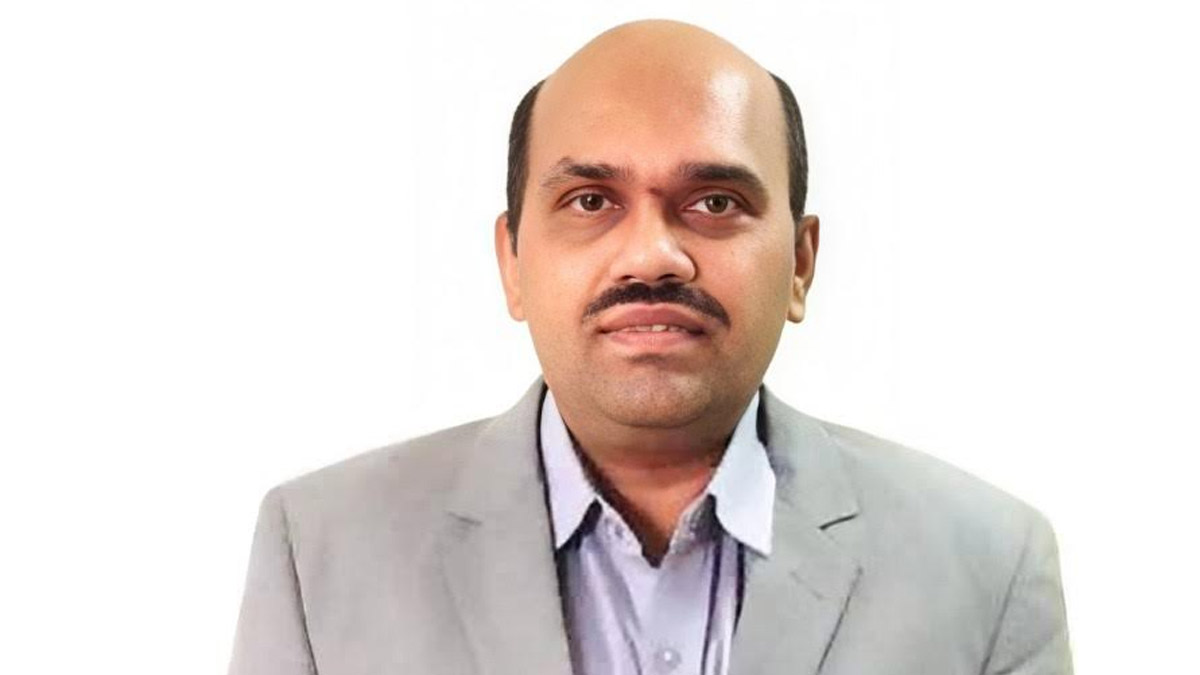
BENGALURU: Tessolve has never been shy about its ambitions. The Bengaluru-based engineering services firm already counts 18 of the world’s top 20 semiconductor companies among its clients, employs more than 3,500 engineers across 12 countries, and last year pocketed a $150m investment from TPG. Now it has hired the executive it believes can turn those assets into something bigger. Ravi Kumar Chirugudu, a 35-year semiconductor veteran who once built satellite payloads for ISRO and has since scaled engineering organisations across three continents, joins as president and chief operating officer, effective immediately.
THE MAN AND THE MANDATE
The appointment is, by any measure, a serious hire. Ravi Kumar Chirugudu comes to Tessolve after senior leadership stints at HCL Technologies, Altran and Wipro, where he managed large profit-and-loss portfolios and oversaw cross-regional teams. Over the course of his career, he has been instrumental in bringing more than 1,000 new products to market across the high-tech, energy and manufacturing verticals. Before the private sector claimed him, he began his working life as a scientist at the Indian Space Research Organisation, contributing to research and development in charge-coupled device technology and satellite payloads, a foundation that shaped everything that followed.
In his new role, he will lead Tessolve’s global growth strategy: expanding its engineering capabilities, deepening customer relationships and accelerating innovation across semiconductor and high-performance computing domains. The brief is broad, but the context is specific. Tessolve operates in the $550 billion global semiconductor market, and its recent moves, the acquisition of Germany’s Dream Chip Technologies and the TPG funding round, have sharpened both its reach and its expectations.
Srini Chinamilli, co-founder and chief executive of Tessolve, is characteristically direct about why Ravi Kumar Chirugudu was the choice:
“As we scale our global semiconductor and system engineering capabilities, Ravi’s appointment marks an important step forward. As global semiconductor demand continues to accelerate across industries, it is creating significant opportunities across the semiconductor lifecycle, from design, packaging, validation and systems integration. Ravi’s deep knowledge and leadership in this ecosystem brings the right mix of industry expertise, customer connect and execution capability, which will play a key role in strengthening our position as a trusted global engineering partner and reinforcing our market leadership.”
THE NEW ARRIVAL SPEAKS
Ravi Kumar Chirugudu, for his part, frames the move in terms of timing and culture, two factors that veteran executives tend to weigh as heavily as title or compensation:
“I am happy to join Tessolve at a time when the industry is rapidly evolving towards more complex, AI-driven systems. What stands out to me is its strong people-first culture and its commitment to bringing value to its customers. The strength of its global team, combined with its deep expertise in semiconductor innovation and next-generation product engineering, creates a solid foundation to build differentiated, scalable solutions. I look forward to working closely with the team to drive strategic growth and strengthen its role in shaping the global semiconductor ecosystem.”
The reference to AI-driven systems is not incidental. The semiconductor industry is in the midst of a structural reshaping, driven by the insatiable compute demands of artificial intelligence. For engineering services firms like Tessolve, which offers end-to-end capabilities from silicon design to packaged parts and invests in high-performance computing, high-speed interfaces, photonics and 5G, the moment is both an opportunity and a test. The company says it is well positioned to capture the next wave of industry growth. Ravi Kumar Chirugudu is now the person who has to prove it.
He came in from outer space, literally, and spent three decades learning how the semiconductor industry works from the inside out. Now Tessolve is betting that accumulated knowledge can help it cross the next frontier. In the $550 billion global chip market, the gap between ambition and execution is measured in engineering hours and leadership quality. Tessolve has just gone shopping for both.






