Brands
Datadog names Namit D’Cruz regional vice-president for India and SAARC
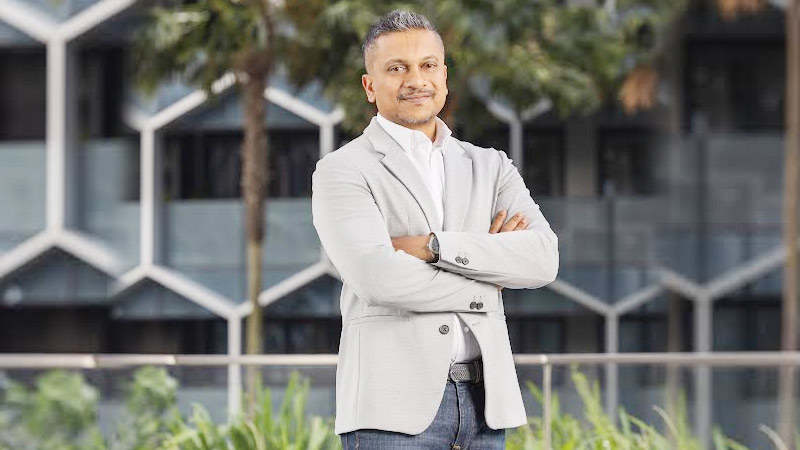
Bengaluru: Datadog is sharpening its focus on India and South Asia. The cloud monitoring and security firm has promoted Namit D’Cruz as regional vice-president for enterprise across India and SAARC, betting on rising enterprise demand for observability, security and AI-led operations.
Based in Bengaluru, D’Cruz will expand his remit from southern India to the wider region, taking charge of Datadog’s enterprise strategy as companies scale cloud-native and AI-driven systems. His role spans customer growth, regional go-to-market execution and the build-out of Datadog’s India teams across sales, alliances, in-region support, marketing and SDR operations.
The move reflects India’s growing weight in Datadog’s global growth story. Enterprises across the region are moving rapidly from AI pilots to production deployments, pushing visibility, governance and system reliability higher up boardroom agendas.
D’Cruz said organisations were entering a phase where AI adoption demanded deeper operational discipline. Datadog’s platform, he said, offered end-to-end observability across AI-driven stacks, from infrastructure and GPUs to models and agents, while helping enterprises manage cost, risk and responsible AI use.
Rob Thorne, vp for APJ at Datadog, said India had become a critical market for the company, driven by strong uptake of cloud, security and AI-led operations. D’Cruz’s leadership, he said, would be central to scaling regional teams, deepening enterprise relationships and accelerating growth across India and SAARC.
D’Cruz brings more than two decades of experience in large-scale digital and cloud transformation. During his tenure at Datadog, he has helped expand the company’s enterprise footprint in India, supporting some of the country’s largest organisations as they modernised infrastructure and sought real-time visibility across increasingly complex environments.
Before joining Datadog, he held senior leadership roles at Microsoft, where he played a key role in shaping the company’s digital-native business in India and supporting high-growth firms as they scaled on cloud platforms.
As enterprises across South Asia double down on AI, security and scale, Datadog’s message is clear. The region is no longer a growth experiment. It is a frontline market, and the company is gearing up accordingly.

Brands
Godrej clarifies ‘GI’ identifier after logo similarity debate
Says GI is not a logo, will not replace Godrej signature across products.
MUMBAI: In a branding storm where shapes did the talking, Godrej is now spelling things out. Godrej Industries Group (GIG) has issued a clarification on its newly introduced ‘GI’ identifier, addressing questions around its purpose and design following a wave of online criticism. At the centre of the debate were two concerns: whether the new mark replaces the long-standing Godrej logo, and whether its geometric design mirrors other corporate identities.
The company has drawn a clear line. The Godrej signature logo, it said, remains unchanged and continues to be the sole logo across all consumer-facing products and services. The ‘GI’ mark, by contrast, is not a logo but a corporate group identifier intended for use alongside the Godrej signature or company name, and aimed at stakeholders such as investors, media and talent rather than consumers.
The need for such a distinction stems from the 2024 restructuring of the broader Godrej Group into two separate business entities. With both continuing to operate under the same Godrej name and signature, the identifier is positioned as a way to differentiate the Godrej Industries Group at a corporate level.
The rollout, however, triggered a broader conversation on design originality. Critics pointed to similarities between the GI mark’s geometric composition and logos used by companies globally, raising questions about distinctiveness.
Responding to this, GIG said its intellectual property and legal review found that such overlaps are common in minimalist, geometry-led design systems. Basic forms such as circles and rectangles appear across dozens of brand identities worldwide, the company noted.
It added that the identifier emerged from an extensive design process and was chosen for its simplicity, allowing it to sit alongside the Godrej signature without competing visually. While acknowledging that elemental shapes may appear less distinctive in isolation, the group emphasised that the mark is part of a broader identity system that includes a custom typeface, sonic branding and other proprietary elements.
Following legal and ethical assessments, the company said it found no impediment to using the identifier, reiterating that the GI mark is a corporate tool not a consumer-facing symbol.
In short, the logo isn’t changing but the conversation around it certainly has.