Brands
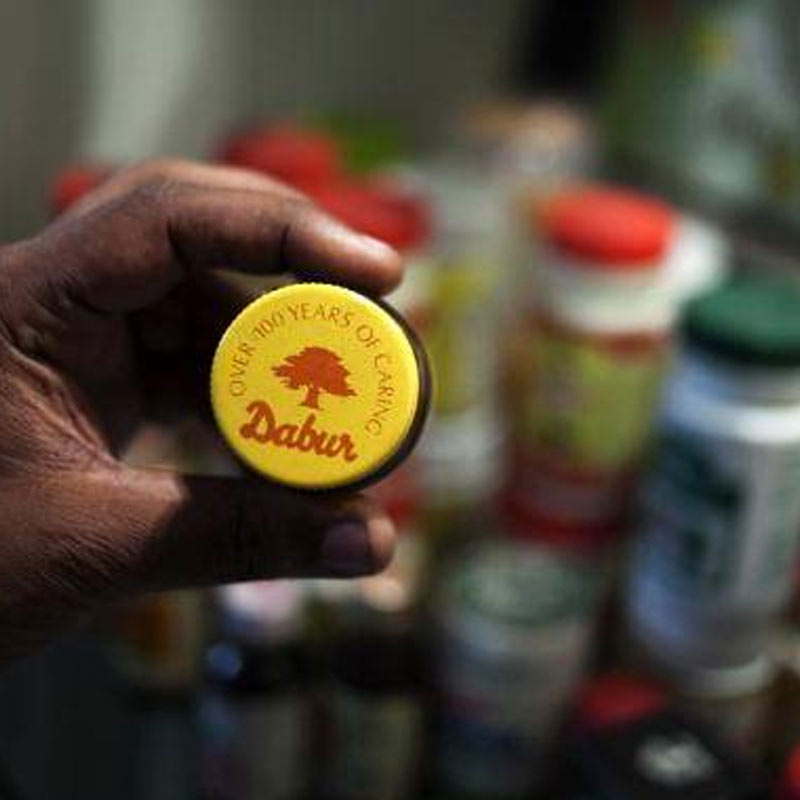
Dabur strengthens its ayurveda push with AyurMedha
MUMBAI: After Patanjali reminded the market of the country’s belief in its ancient ayurvedic solutions with its aggressive performance in the FMCG sector, it is now Dabur India’s turn to solidify its position as the ‘oldest ayurvedic brand’ in India.
Dabur India is promoting Ayurveda amongst the young professionals with AyurMedha scholarship. This program has been inculcated to encourage young talents in the field of Ayurveda. Through this initiative, the company will reach out to India’s top 50 Ayurveda medical colleges and select three meritorious students for the scholarship prize.
Introduced in 2012, this initiative has already facilitated over 300 students till now and endeavors to reach out to more colleges each year. In an attempt to make Ayurveda practices contemporary, Dabur is inviting successful Ayurveda practitioners from across the country to deliver lectures on Clinical Aspects of Ayurveda.
Dabur India head ethicals Dr. Durga Prasad said, “We are very pleased to announce this year AyurMedha scholarship. Such platform encourages young professionals to practice Ayurveda and take Goodness of Ayurveda across. Dabur as the continuum of traditional Ayurveda and cutting edge science strongly believes in passing on this knowledge to the younger generations which can take the Ayurveda heritage forward.
Dabur recently announced Dabur Chyawan Vatika, in which, the company with the help of Bio resource scientists, local tribes and NGOs has identified and established Green houses, across India, to cultivate rare medicinal plants. Under this initiative, the rare herbs/ saplings grown in the Chyawan Vatika green houses will be donated to India’s top 50 Ayurveda medical colleges and cultivated into medicinal plant garden, which will be named ‘Dabur Chyawan Vatika.”

Brands
UK’s OnlyFans seeks US investor at $3bn valuation after owner’s death
The adult video platform is seeking stability after the death of its billionaire owner
LONDON: OnlyFans is looking for a new partner. The London-based adult video platform is in advanced talks to sell a minority stake of less than 20 per cent to Architect Capital, a San Francisco-based investment firm, in a deal that would value the business at more than $3bn (£2.2bn).
The move is driven by an urgent need for stability. Leonid Radvinsky, the Ukrainian-American billionaire who owned OnlyFans, died of cancer last month at the age of 43, leaving the future of one of Britain’s most profitable privately held businesses suddenly uncertain.
The choice of Architect Capital is not arbitrary. The firm has deep expertise in financial services, which aligns neatly with OnlyFans’ ambitions to offer banking products to its creators, many of whom have long struggled to access basic financial services because of the nature of their work.
The numbers behind OnlyFans are, by any measure, staggering. The platform posted revenues of $1.4bn in the year to 30th November 2024, with a pre-tax profit of $684m, up four per cent on the prior year. Payments to creators totalled $7.2bn over the same period, a rise of nearly ten per cent. Radvinsky personally collected $701m in dividends from the business in 2024 alone, on top of more than $1bn in such payments he had already received. The platform, run through its parent company Felix International, hosts 4.6m creator accounts, with performers keeping 80 per cent of subscription proceeds and the platform pocketing the remaining 20 per cent. It has 377m fan accounts in total.
The current minority stake talks represent a notable scaling back of ambitions. In January, OnlyFans was reported to be in discussions with Architect about selling a majority stake of 60 per cent. Before that, the company had explored a sale to a consortium led by Forest Road Company, a Los Angeles-based investment firm. Neither deal materialised.
OnlyFans has built an enormously lucrative business on content that mainstream finance has long refused to touch. Now, with its owner gone and a $3bn valuation on the table, it is looking for the kind of respectable institutional backing that might finally persuade the banks to take its calls.