MAM
Culture should be used for market segmentation and not geographies: Chaudhuri

MUMBAI: Since the launch of International brands in the Indian market, there have been few successful stories and few unsuccessful stories too. But there has always been learning for all, and that is- “don‘t treat Indian customers like those of other parts of the world”.
Culture and people here are different and the market need to be targeted differently. It‘s same for the other markets of the world. Strategy of one market can not successfully work in the other; says IIPM dean (centre for graduate studies) and Planman Consulting director Rajita Chaudhuri, while speaking at the World Brand Congress 2011 that concluded here today.
She said, “Culture is the new tool for branding. As marketers, one should remember that standardising doesn‘t work. Cultural influences remain strong. The way a consumer decides to pick a brand is culture specific. In the west there are pragmatic consumers, in east there are critical consumers, in north there are consumers who can be influenced by entertaining campaigns while for the south the campaign has to be informative.”
Further explaining with examples, she mentioned, “When Coca Cola launched in India, they came up with the same western campaign and it failed drastically. Even Dove‘s ‘Real Beauty‘ campaign in China was unsuccessful because ‘Chinese don‘t believe in real beauty concept‘. KFC when launched in India served chicken wings but it didn‘t work very well and it eventually started serving vegetarian to Indians too. So, those brands who change survive. Coca-Cola changed its campaign theme to ‘thanda matlab Coca Cola‘ and it succeeded.”

“MTV offered only English music but then it changed to Hindi and survived. Pillsbury has come up with Punjabi flour. Samsung, Nike‘s, Pepsi who have associated with cricket have managed to break the clutter. Britannia came up with biscuits that can be dipped in tea and consumed. It became a hit as we Indians love to do that.”
Talking about homogeneity, she added, “India is not homogeneous, the markets are no longer homogenous. Culture should be used for market segmentation and not geographies. Customisation is essential. For Bengali market LG has attachments in microwave for cooking fish, for south they have attachment that can help them make Idli. Cavinkare (Fairever) has promoted that the cream is made with saffron and milk so it will not only keep the skin fair but also healthy. This is very impactful for target market like India.”
According to her packaging should also be influenced by culture. She said, “Shampoo sachets and combo packs for Punjabis are example of it. Those who understand the local market will rule.”






Brands
Jubilant FoodWorks faces Rs 47.5 crore GST demand, plans appeal
Tax authorities flag alleged misclassification of restaurant services
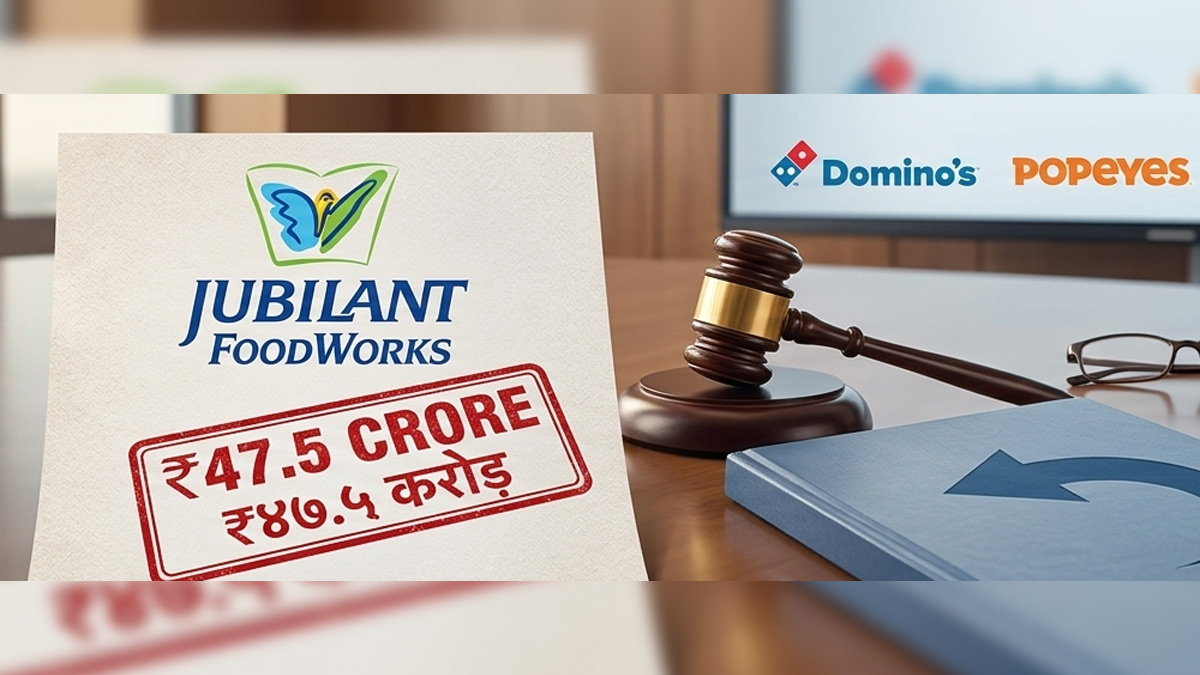
MUMBAI: Jubilant FoodWorks Limited has landed in a tax tussle after receiving a GST demand of Rs 47.5 crore from the office of the additional commissioner of CGST and central excise in Thane, Maharashtra.
The order, issued under the provisions of the Central Goods and Services Tax Act, 2017, relates to an alleged incorrect classification of certain services under the category of restaurant services. According to the tax authorities, this classification resulted in a short payment of goods and services tax for the period between the financial years 2019-20 and 2021-22.
The demand includes Rs 47.5 crore in GST along with an equal amount as penalty, in addition to applicable interest. The order was received by the company on March 13, 2026.
In a regulatory filing to the BSE Limited and the National Stock Exchange of India Limited, the company said it disagrees with the order and believes its arguments were not adequately considered.
The company is preparing to challenge the decision and plans to file an appeal. It added that once the redressal process is complete, the demand is likely to be dropped.
Despite the sizeable figure attached to the notice, the company said it does not expect any material impact on its financials, operations or other activities.
The disclosure was signed by Suman Hegde, EVP and chief financial officer, who confirmed that the company received the order at 19:06 IST on March 13 and has already initiated steps to contest it.
The development places the quick service restaurant major in the middle of a tax debate that could hinge on how certain restaurant-linked services are classified under GST rules. For now, the company appears ready to take the matter from the tax office to the appeals desk.