MAM
CAMM Summit ’22: Adtech is a gamechanger for publishing industry, say experts

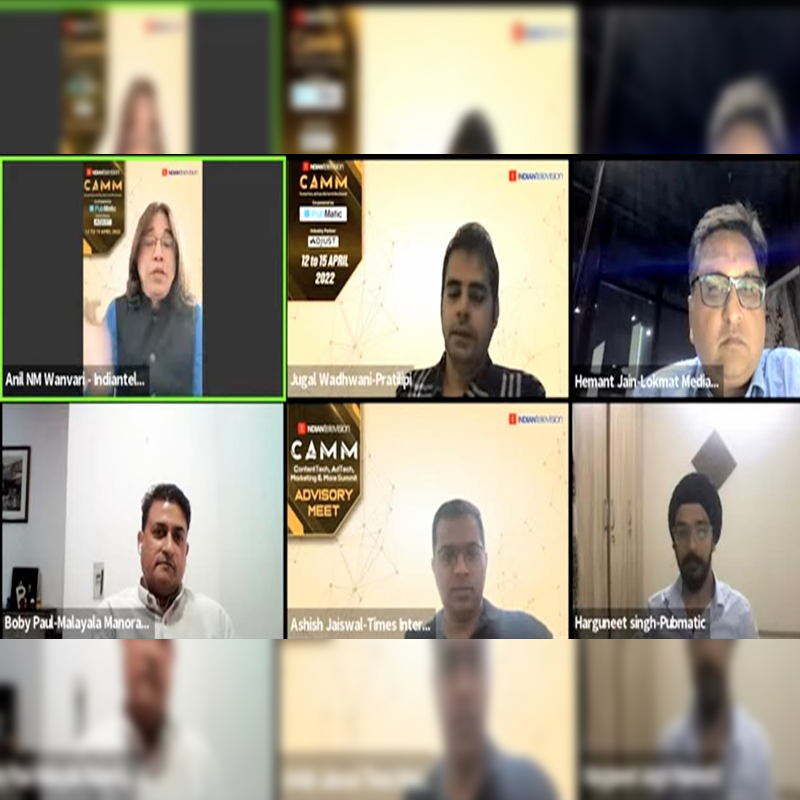
Mumbai: Advertising and technology have undoubtedly made great strides over the last few years. And to discuss the various cutting-edge innovations in this dynamic space, IndianTelevision.com has organised ContentTech, Adtech, Martech and More (CAMM) Summit and Exhibition 2022. The virtual event took off on Tuesday with a panel discussion on ‘Adtech Landscape: A Gamechanger for Publishing Industry,’ which put the spotlight on how adtech is emerging as a niche that helps publishers efficiently maximise the value of their content or ad inventory.
Moderated by IndianTelevision.com founder, CEO and editor-in-chief Anil Wanvari, the guests on the panel were Times Internet chief technology officer Ashish Jaiswal, Pratilipi business and content head Jugal Wadhwani, Malayala Manorama general manager – marketing Boby Paul, Lokmat Media senior executive vice president and head of digital business Hemant Jain, and PubMatic director Harguneet Singh.
The CAMM Summit saw a conversation that is perhaps the most crucial in the age of changing advertising technologies.

Challenges ahead of publishing industry and the possible ways to overcome
Opening the discussion, Wanvari highlighted the increasing fragmentation of audiences between the own platforms of publishers as well as the third-party platforms is becoming a common phenomenon.
“In terms of trying to drive advertising revenue, what are the challenges that publishers are facing?” he asked the panel.
Agreeing with his thoughts, Times Internet’s Jaiswal said fragmentation is clearly happening and the same content being available across platforms is a major challenge for publishers. But being a publisher, he also shared how they are overcoming the challenge.
“What we are doing on our side to overcome these challenges is to stay connected with our audiences across all the platforms. We do not just publish and leave, we ensure that there’s a clear connection between us and our audiences across all platforms,” stated Jaiswal.
Taking ahead the conversation, Lokmat Media’s Jain said, “What demonetisation couldn’t do to digital payments, Covid-19 did to digital media.”
With this statement, he hinted at the enormous growth in terms of audience engagement that publishers have witnessed. Coming to the challenges, Jain said optimising content for small screens is another major challenge.
“It is quite difficult to give the right reading or viewing experience to customers while giving enough space to advertisers also,” Jain noted. “The struggle doesn’t end here. Lack of a large inventory, audience fragmentation and ensuring that the consumer ends up on your platform at the end are also making it difficult for publishers to maintain their growth.”
However, Jain feels that while there are so many challenges, it also keeps you pushing to develop and looking for newer opportunities.
Coming to the opportunities, he suggested that today focusing on one platform is not enough, publishers need to have an open mind and need to create a holistic approach to the business. “At the same time, it is important to have a highly optimised platform that meets users’ and advertisers’ expectations,” he remarked.
He feels that publishers have to accept the fact that the audience who is consuming content on Facebook doesn’t necessarily come to your website too because the content we put on Facebook is already customised in a way that people would love to watch it on that platform only. “If you work hard, each of these platforms will help you revenues apart from your direct sales from the website.”
However, Malayala Manorama’s Boby Paul feels audience fragmentation is a choice. “It happens because you want to put your content out to more and more people. So all you need to do is to keep a close eye on the aggregator platforms and understand which platform is providing you benefits and strategise accordingly,” Paul said. “When you have an audience coming to your aggregator platforms, you should design strategy in a way so that you can entice them to come to your own platform.”
Taking note of the challenges and the possible solutions suggested by the experts, Wanvari asked Paul to highlight the challenges of technology as far as marketing is concerned.
Speaking about the marketing and monetisation part, Paul said that digital publishing platforms are facing major challenges because most of the digital platforms are free to air. “There’s no set framework. But as adtech is evolving, there seems a hope,” he asserted.
Adtech and programmatic: The way forward for publishers
While all the publishers highlighted the challenges and opportunities, PubMatic provides a solution to all these concerns. Harguneet Singh acknowledged the challenges highlighted by the panel and explained how adtech platform like PubMatic comes into the picture and helps the publishers.
“While the challenges are quite evident, adtech platforms like PubMatic come in the picture as a savior to the publishers,” he affirmed.
Suggesting some adtech based solutions, he said that publishers have provided a lot of control to the users in the name of free content which they need to take back immediately. He feels that adtech and programmatic are the key tools for this.
“While adtech platforms enable advertisers, ad publishers, and advertising agencies to create, run, and optimize ad campaigns with minimal human involvement, programmatic advertising uses artificial intelligence and real-time bidding to automate and streamline the ad buying process,” Singh said, adding that, “With the right use of adtech and programmatic, publishers can significantly grow their business and increase CPMs.”
What do users want?
Amid the emergence of adtech and programmatic, it is crucial to understand what users want? Pratilipi’s business and content head Jugal Wadhwani, who closely works with individual publishers, explained that initially all people wanted was social recognition, the concept of revenue was not there really. “But presently, generating revenue is equally important for individual publishers too,” he added.
However, Wadhwani feels that once the publishing platform becomes a hit, distribution is not that big of a challenge, it is the discovery that they are actually looking for and platforms like Pratilipi come into the picture to help individual publishers.
On being asked how things are working on the audio side, Wadhwani said that audio advertising is very low right now in India. “The numbers are rising, but there is no significant development on the audio front so far.”
Coming to the subscription models and how paywalls work, Wanvari asked how conventional news publishers ensure that users buy their subscription instead of just reading the free version.
Lokmat’s Jain explained that India is a ‘sachet-driven country,’ so they need to come up with small offerings. “If publishers really need to sell high valued subscriptions, they need to build high-quality unique content rather than a generic piece,” he remarked.
“Over the last 10-years, journalism in India has evolved and produced unique content which helped the subscription model to become common. One of the most successful players in this field is The Hindu, which has built a very robust subscriber base,” noted Jain.
How will the removal of cookies impact the publishers?
Google announced it will not build alternate tracking identifiers with similar cross-site tracking abilities after phasing out third-party cookies. This change will be made by Google in late 2023. While this announcement may not have come as a surprise, many advertisers find themselves confused about how to manage the situation.
“How will publishers collect user data without cookies which is crucial for audience profiling?” Wanvari asked.
Jain thinks that with the removal of cookies, profiling or identifying customers, which is extremely important for running a digital publishing business, would become difficult. “With this, targeting customers offsite will become impossible.”
Suggesting a way for publishers after the removal of cookies, Jain said that in such a situation, targeting users on-site seems one possible solution. “To target them on-site, publishers really need to come up with relevant content.”
Times Internet’s Jaiswal thinks that in a cookie-less world, trust-building will become crucial. “Publishers will have to ask users to fill out forms to manually provide their data, maybe we can call this idea a ‘profiling paywall.’ But to ensure that they really fill out the form, provide their email address and mobile number, publishers need to work a lot on trust-building.”
Jaiswal suggested that publishers can win trust with unique content.
Adding to the conversation, PubMatic’s Singh said adtech will play a really important role here. “Right technology and the right technology partner who has good sense will have great opportunities to work with publishers,” he averred.
Concluding the discussion, all panelists agreed that adtech provides tools for both publishers of content and advertisers to efficiently navigate the appropriate price points and trading techniques to connect inventory with digital ad buyers.






MAM
Dettol launches new emotional campaign for Antiseptic Liquid
Heartfelt film celebrates mother’s instinct with the tagline “Nothing protects like Mom & Dettol.”
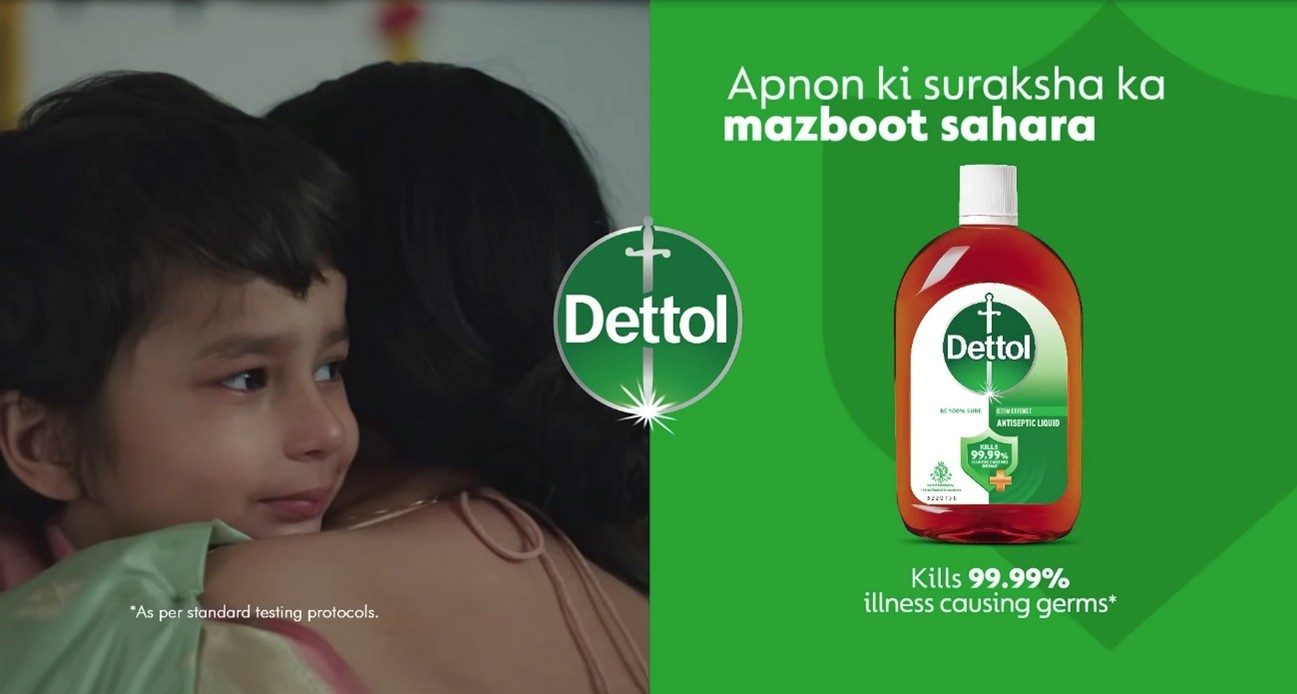
MUMBAI: Dettol has found the perfect formula for its latest campaign, a generous mix of maternal love and antiseptic care that’s sure to tug at every Indian heartstring. The iconic germ protection brand has rolled out a touching new campaign for Dettol Antiseptic Liquid built around the universal truth of a mother’s instinctive care. The film brings to life the simple yet powerful idea: “Nothing protects like Mom & Dettol.”
Set against the lively chaos of a shaadi ka ghar, the story follows a young boy who hurts himself but puts on a brave face to hide his pain. The moment he reaches his mother, she instinctively senses something is wrong. As she gently tends to his wound with Dettol Antiseptic Liquid, his guard drops, leading to a tender role reversal where the child ends up comforting his mother. The film ends with the poignant line, “Apnon ki suraksha ka mazboot sahara.”
The campaign reinforces Dettol’s timeless place in Indian homes as a reassuring companion in moments of vulnerability. It was conceptualised and written by Prasoon Joshi
, with an original track composed by Vishal Khurana K, sung by Javed Ali, and lyrics by Prasoon Joshi. Amit Sharma directed the film.
Reckitt EVP regional director for South Asia Gaurav Jain said the campaign captures the deep emotional bond between a mother’s instinct and Dettol’s protection. “This campaign encapsulates that delicate, human truth, a mother senses hurt even before it is spoken, and Dettol strengthens her ability to respond with care and confidence,” he noted.
Prasoon Joshi added, “When a child is hurt, the first instinct is to reach for their mother, their ultimate safe space. And in that moment, the mother turns to Dettol, something she trusts to protect what matters most.”
As the flagship product in the Dettol portfolio, the Antiseptic Liquid continues to offer unmatched protection for cuts and wounds, standing shoulder to shoulder with mothers through life’s small scrapes and bigger worries.
In a world full of flashy advertisements, Dettol has quietly reminded us once again that the strongest protection often comes wrapped in the simplest, most heartfelt moments, the kind only a mother and a trusted bottle of Dettol can provide.






