Brands
Branded content is the new blockbuster, but marketers demand proof beyond the pitch


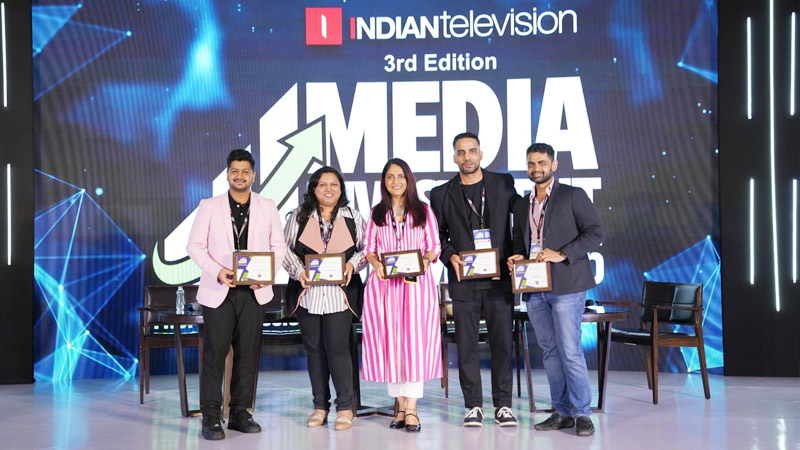
MUMBAI: Some ideas are made in boardrooms. Others, like the “dream room experiment”, are made in hotels. At Indiantelevision.com’s Media Investment Summit 2025, a session titled ‘The Rise of Branded Content and Its Future in India’ sparked both nostalgia and next-gen debate, as industry leaders unpacked what content means in today’s fragmented, ad-skipping world.
Moderated by Madison Loop VP Kosal Malladi the panel featured Suruchi Mahatpurkar Kore (Bajaj Group), Bhavin Devpuria (Triumph International), Megha Desai (Connect NXT), and Shetanshu Dikshit (Pernod Ricard India). Together, they questioned the currency of content and who, in this AI-powered era, really wears the crown.
“Content is currently about Rs 10,000 crore, while the entire advertising ecosystem is valued at Rs 100,000 crore. That’s 10 per cent—and growing at 15 per cent YoY”, Malladi opened, drawing parallels to the early days of digital marketing. “We’re at the same inflection point. Questions around effectiveness, measurement, and relatability are piling up”.
Relatable or forgettable? The definition war continues
Each speaker was asked how they define content. Mahatpurkar Kore anchored it in emotional resonance. “It’s ultimately about being relatable. In an age where users skip ads, content needs to integrate into real life”.
Desai added, “Content is anything that feels like daily conversation—whether it’s on a 55-inch screen or a six inch one. Instagram’s endless scroll is today’s biggest content binge”.
For Dikshit, content had a clear distinction, “An ad is transactional. Content is emotional. Ads sell; content touches the heart. That’s the difference”.
Devpuria referenced thumb-stoppers: short content formats designed to halt the scroll reflex. “Our thumbs travel 600 metres a day—content must work hard to make them stop”, he said, citing a five second content brief that forced creativity within constraints.
Desai warned against oversimplification, “Good content isn’t always subtle. The Samay Raina campaign from Zomato worked because it was shock value wrapped in narrative. That punch leaves a dent”.
Panelists discussed the thorny issue of content measurement. Kore highlighted a project with a rural brand targeting farmers, “We used AI to translate content into nine languages, focusing on emotional connect. The brand wasn’t chasing a big spike—it wanted long-term trust”.
Desai offered a pragmatic breakdown. “If it’s a media reach film, I’ll measure it on impressions. If it’s a drama-driven story, I’ll pay the premium, push through creators, and measure shares—not cost-per-view”.
For Devpuria, campaign objectives determine platforms. “B2B on Instagram isn’t bizarre anymore. Discovery and intent matter more than category stereotypes”.
The panel agreed that AI plays a role—but not a starring one. “We’ve experimented with AI for content generation”, said Dikshit. “But for commercialisation, it still lacks originality and rights clarity”.
Desai found value in AI’s efficiency. “It enhances personalisation, especially for language localisation and cost optimisation”.
Despite the flood of reels and short videos, Devpuria noted, “Content fatigue is real. I can’t remember what I watched yesterday. But Cadbury’s ‘Kuch Khaas Hai’ still lingers”.
The panel concluded that branded content cannot be boiled down to either subtle integrations or shocking reveals. It’s about creating moments of ‘serendipitous recognition’—where the audience doesn’t expect a brand, but welcomes it when it appears.
Dikshit summed it up, “The story has to stay intact. Whether the hero is a farmer, a food delivery boy, or a wine bottle—don’t break the narrative for a logo”.
As branded content muscles into the advertising spotlight, marketers are building the case for substance, not just style. The verdict? Storytelling sells—but only when it sticks.