Brands
Boon’s WaterAI app wins iF Design Award 2026 for intuitive water insights
Award honours platform that turns complex water data into clear insights


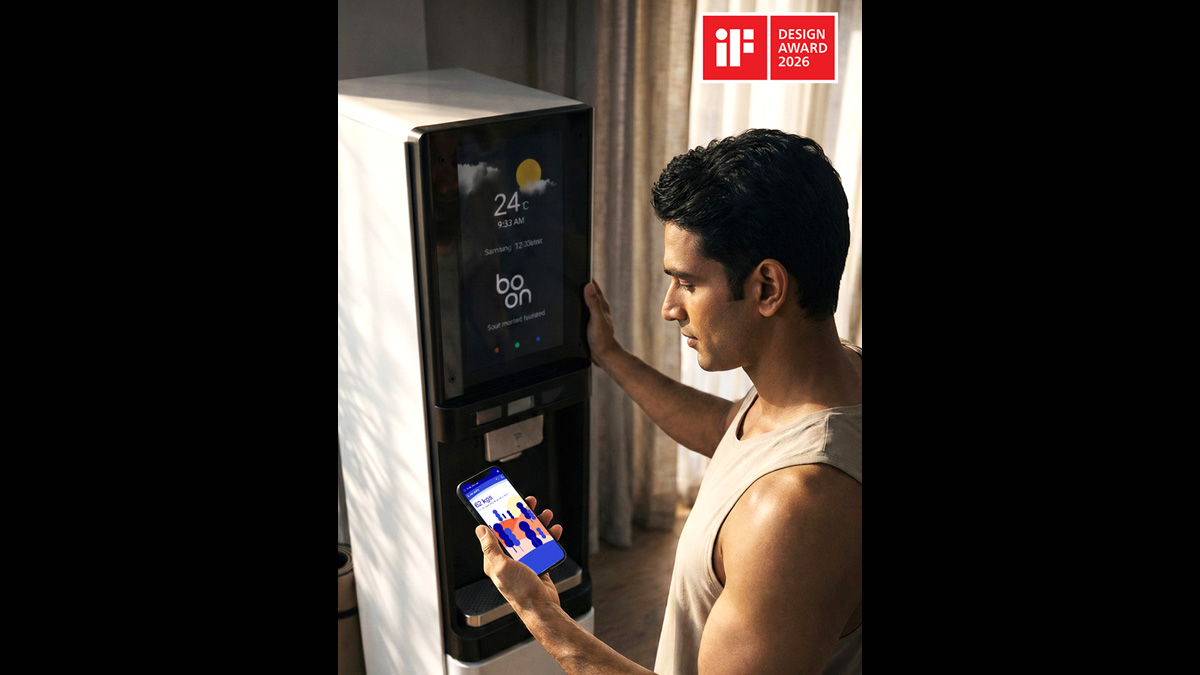
MUMBAI: Water technology company Boon has scooped the prestigious iF Design Award 2026 for its WaterAI mobile application, a platform that transforms complex water quality data into an intuitive digital experience.
The award, given in the Mobile Application category, recognises the app’s ability to translate real time water information into a format that is easy to understand, visually engaging and meaningful for everyday users.
Founded in 1953, the iF Design Award is widely regarded as one of the world’s most respected design honours. The 2026 edition drew more than 10,000 entries from 68 countries. A jury of 129 international design and sustainability experts selected the winners after a detailed evaluation process, making the recognition particularly competitive.
For Boon, the award signals a shift in how water technology is presented to users. Instead of technical dashboards and complex monitoring systems, the WaterAI platform focuses on clarity, storytelling and everyday usability.
The app brings the hidden life of water to the surface by turning real time data on pH levels, total dissolved solids, pressure, temperature, flow and filter health into visual cues and interactive insights. The experience is designed to feel less like monitoring infrastructure and more like keeping an eye on daily wellbeing.
Built around Boon’s signature blue and orange design palette with green accents, the platform blends advanced monitoring technology with a clean, human centred interface. Users can track system performance, observe water quality trends and receive alerts when attention is required.
Boon founder and chief executive Advait Kumar, said the recognition validates the company’s belief that technology and design should work hand in hand.
“Winning the iF Design Award 2026 is a proud milestone for us. Water technology has traditionally been built around anxiety, contamination alerts and complex compliance dashboards. With WaterAI, we wanted to make the invisible visible and turn complex water data into something people can understand and engage with every day,” he said.
Launched in 2025, the WaterAI platform is already used by industry stakeholders across Africa, Asia and Europe. It forms part of Boon’s broader ecosystem that combines filtration technology, IoT monitoring and premium product design.
Today, the company’s technology is used by more than 400 corporates and hospitality properties across 11 countries, helping organisations track and maintain safer water systems in workplaces, hotels and public spaces.
The winners of the iF Design Award 2026 will be honoured at an official ceremony in Berlin on 27 April, where designers and innovators from around the world will gather to celebrate this year’s standout ideas.