Brands
BMW drives engagement with interactive CTV ads


MUMBAI: BMW India is shifting gears in advertising. In partnership with Interactive Avenues and VDO.AI, the luxury carmaker has launched interactive connected TV (CTV) campaigns, bringing its flagship models: the BMW 2 Series Gran Coupé and BMW X3, to life in viewers’ living rooms.
Moving beyond conventional video ads, the campaigns allowed audiences to engage directly through their TV remotes. The 2 Series Gran Coupé offered an interactive carousel experience, while the X3 campaign layered dynamic backdrops with clickable elements, creating an immersive storytelling journey.
Powered by VDO.AI’s proprietary CTV technology, the campaigns reached high-intent, premium households and encouraged deeper exploration in high-attention environments. BMW’s marketing director Vitesh Barar said, “This collaboration with VDO.AI has redefined how we approach awareness campaigns. By making them more interactive and intuitive, we’ve been able to connect with audiences in meaningful new ways. As CTV cements its role in luxury content consumption, this platform enables BMW to continue leading the way.”

VDO.AI co-founder and CTO Arjit Sachdeva added, “Partnering with a forward-thinking brand like BMW has been a truly rewarding experience. Together, we’ve redefined what CTV can deliver in India, elevating viewing into discovery and transforming campaigns into immersive, memorable brand journeys through our interactive technology.”
Interactive Avenues associate vice president Anjani Sankhyan said, “With CTV rapidly establishing itself as the new prime-time for sophisticated audiences, this campaign successfully captured attention, fostered memorability, and elevated BMW’s digital presence.”
Executed across select premium platforms, the campaigns have set a new benchmark in interactive automotive storytelling, combining luxury, design, and technology for a connected future.






Brands
KKR sixes to power EV charger rollout under VIDA campaign
Cricket meets clean mobility as big hits spark India’s charging growth
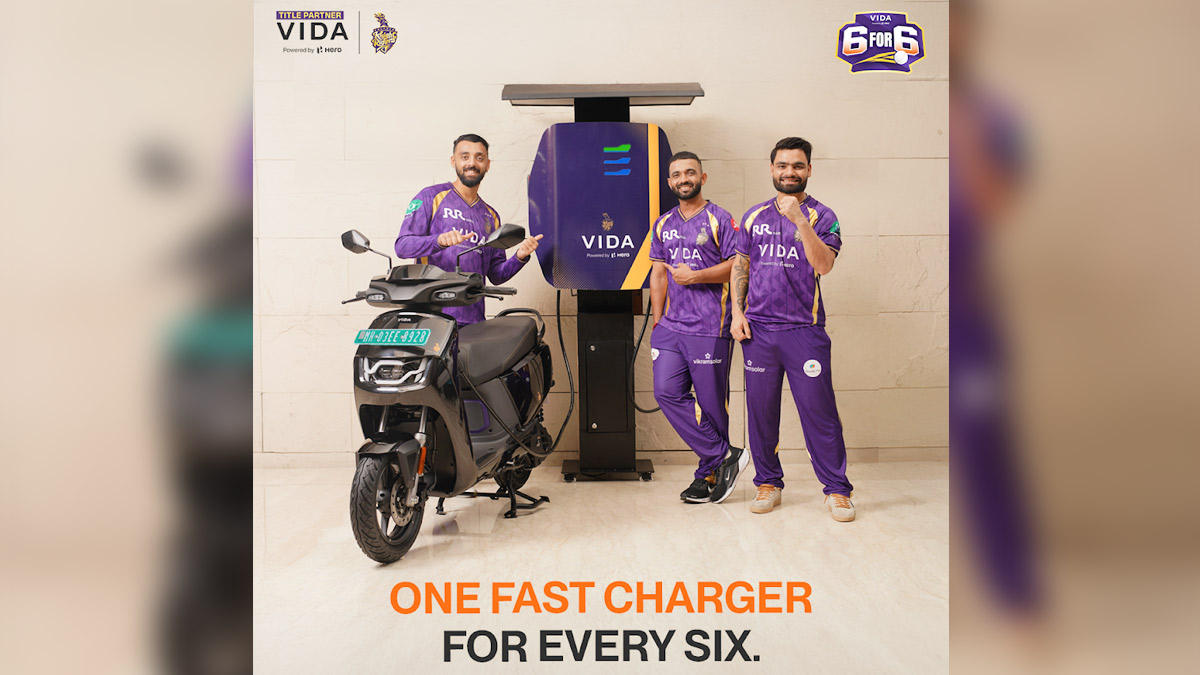
NEW DELHI: VIDA, the electric mobility arm of Hero MotoCorp, has teamed up with Kolkata Knight Riders to launch a campaign that turns cricketing flair into real-world impact.
Titled ‘6 for 6’, the initiative promises to install a 6kW fast EV charger for every six hit by KKR during the ongoing Indian Premier League season. The idea is simple but powerful, as each big hit on the field contributes directly to expanding India’s fast-charging infrastructure.
The campaign builds on VIDA’s growing network, which already spans over 5,300 fast-charging points across more than 430 cities. With EV adoption gaining pace, the brand is using cricket’s mass appeal to accelerate both awareness and infrastructure growth.
Explaining the thinking behind the move, Hero MotoCorp emerging mobility business unit chief business officer Kausalya Nandakumar said, “Cricket has an incredible ability to unite and inspire millions across the country. With the ‘6 for 6’ campaign, we are turning every big hit on the field into a step towards a cleaner and a more accessible mobility future.”
She added that VIDA’s expanding fast-charging network and removable battery technology are designed to make EV ownership more convenient and practical for everyday users.
From the franchise’s side, the campaign is also about giving on-field moments a larger purpose. Kolkata Knight Riders chief executive officer Venky Mysore said, “The ‘6 for 6’ campaign exemplifies the potential of sport as a platform for meaningful, real-world impact. By linking every six to the expansion of EV charging infrastructure, this partnership transforms fan excitement into tangible progress.”
As part of the rollout, VIDA has introduced co-branded charging stations in KKR’s signature colours, with a flagship installation unveiled alongside team players. The chargers are designed for quick top-ups, powering VIDA scooters from zero to 80 percent in about an hour, while also being positioned along key highways to support longer journeys.
The initiative also taps into VIDA’s removable battery system, which allows users to charge using standard household plug points, adding flexibility to the charging ecosystem.
By blending the thrill of cricket with the urgency of clean mobility, VIDA and KKR have found a neat way to make every six count twice, once on the scoreboard and again on India’s road to an electric future.








