MAM
Bingo! brings the fun to Zepto’s great Indian fake shaadi bash

MUMBAI: It had all the trimmings of a big, fat Delhi wedding glittering lehengas, baraatis doing bhangra like their lives depended on it, fairy lights dripping off trees, and dhol beats echoing into the night. But here’s the catch no one was actually getting married. Welcome to The Great Indian Fake Shaadi powered by Zepto, where the pheras were fake, but the fun was frighteningly real.
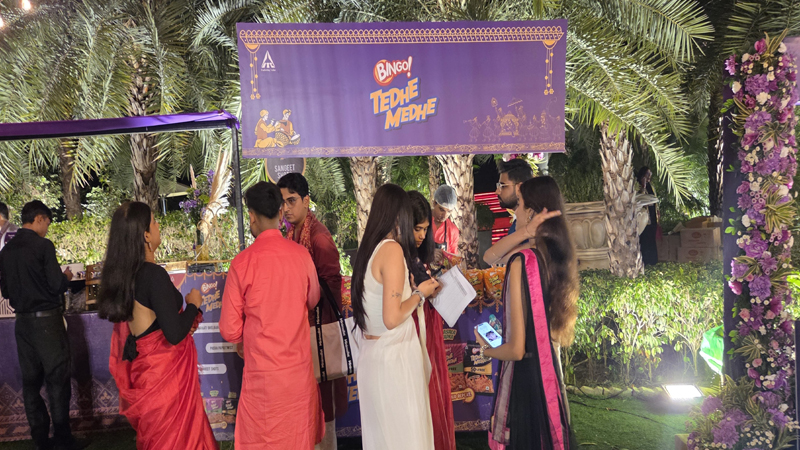
Held on 31 October at Chhatarpur Farms, the event looked straight out of a Bollywood wedding blockbuster mehndi corners, sangeet lights, selfie-ready dulha-dulhan setups, and food stalls that could put a five-star buffet to shame. Except this wasn’t your typical shaadi. This was India’s newest social trend, the Fake Shaadi, a Gen Z-fuelled, ticketed celebration where friends, creators, and influencers come together for a no-strings-attached wedding experience.
And if you thought the baraatis were the stars of the night, think again. Bingo! Tedhe Medhe gate-crashed the fake wedding and instantly became its life and soul. Staying true to its Tedha DNA, the brand rolled out the Tedhe Medhe Chaat Stall, a desi snacking fantasia that had guests queuing up for quirky creations like Baraati Bhelbarood, Phera Papri Twist, and Sangeet Shots. It was the kind of “wedding menu” Delhi didn’t know it needed.
When the dhols dropped and the night heated up, the viral Tedhe Medhe anthem sparked a full-blown dance-off. Creators, influencers, and snack lovers joined in spontaneous baraat flash mobs, turning the event into a content carnival of twirls, reels, and hashtags.
“The Zepto Great Indian Fake Shaadi brought together brands, creators, and communities in a truly engaging format,” said Zepto chief brand officer Chandan Mendiratta. “Our collaboration with Bingo! Tedhe Medhe added a playful, flavourful twist to the celebration, a perfect example of how brands can creatively connect with audiences through culture-driven experiences.”
ITC Ltd., VP & head of marketing (snacks, noodles & pasta) for foods division Suresh Chand added, “At Bingo! we’ve always believed that snacking is more than just food, it’s an emotion. Partnering with Zepto’s Fake Shaadi allowed us to bring that emotion to life in the most entertaining way possible. It perfectly captured our brand’s quirky, spontaneous spirit.”
The Fake Shaadi trend has been sweeping social media, fuelled by India’s young audience who crave collective joy over conventional celebrations. It’s weddings without the stress, baraats without the budget, and full-blown chaos without the commitment. And Bingo! Tedhe Medhe couldn’t have found a more fitting dance floor for its offbeat brand personality, spontaneous, funny, and gloriously unpredictable.
With dhol beats replaced by DJ drops and pheras swapped for photo booths, Delhi’s “wedding of the year” proved that the shaadi scene has officially gone Tedha. From #SabkaJawaabTedheMedhe to the Fake Shaadi Baraat, Bingo! continues to show that it doesn’t just follow trends, it snacks on them.
Because when life gets Tedha, you don’t wait for the pheras, you just dance, munch, and say, “Sorry Shaktimaan… I mean, Shaadi Shaktimaan!”
After all, in this wedding that wasn’t, the only real thing was the fun and the Tedhe Medhe crunch.