MAM
BARC assures that its TV rating system will be credible

MUMBAI: Television ratings agencies seem to be the flavour of the season. On the one hand, Kantar Research, one of TAM Media’s major shareholders, has moved the Delhi HC against the Union Government’s new guidelines on cross holding restrictions. While on the other, up-and-coming ratings agency Broadcaster Audience Research Council (BARC), slated for a 1 October launch, has announced a tieup with France-based Mediametrie for technology services and licensing of a TV metering system.
BARC CEO Partho Dasgupta and BARC Technology Committee member Paritosh Joshi spoke to CNBC TV18 about what to expect in the new set up.

“The ratings agency is the one which will own the data and put it out – which is BARC in our case. So there will be ways of getting the information such as technology, panel etc. but it will all be owned and put out by BARC,” said Dasgupta, implying that the final agency will have to be free of cross ownership although its suppliers could have any type of ownership.
Joshi revealed that two big chunks of work had already been completed – that is assessing panel homes and technology within them. “The panel will emerge out of the Indian Readership Survey (IRS), which is out now. The people meter devices will be built on retail hardware that can be bought from Mumbai’s Lamington road and not proprietary equipment. Now, we only need a panel management agency,” said he, pointing out they had already received offers for the same.
Asked about the credibility of BARC, Dasgupta said they have an adequate system in place. “We have broken the piece up into panel management people, who know homes but don’t have the visibility of data that comes through GSM lines straight to our servers. We have technology people, who have visibility to data but they don’t know the homes, just the ID. What we are trying to achieve is that the right hand does not know what the left hand is doing. From the integrity point of view, we are not taking any chance,” he clarified.
However, BARC has not yet got a system to address the issues of niche channels. “The World over niche channels have not been measured like we do it here. But we may do it differently,” said Dasgupta ambiguously in the interview to CNBC TV18.
As things stand, the industry has been yelping and running for cover fearing a ratings’ blackout. But Information and Broadcasting Minister Manish Tewari says that a ratings-dark period should not be a cause for alarm.
“This isn’t the first time that ratings have been suspended. Even before, it has happened because the industry wanted it,” said the minister candidly when probed on this during an interview to CNBC TV 18.
He pointed out that one of the main reasons for digitisation was to reduce dependency on advertising revenue and increase subscription revenue. “With the technology now, the STBs have the capability. A little engineering is needed and then you can reach 15 crore homes by putting a small chip that will let you know who is watching what in real time; be it satellite, IPTV, DTH or terrestrial,” he informed.
Tewari was also critical of the way TAM has been operating. “The way the arrangement was working – where you are the advertiser as well as the broadcaster and you are also taking out ratings. This conflict needed to be addressed,” he stressed.






Brands
Tessolve lands a semiconductor veteran to drive its next big push
Ravi Kumar Chirugudu, who started his career at ISRO and has spent 35 years building chips and companies, joins the Bengaluru-based firm as president and chief operating officer
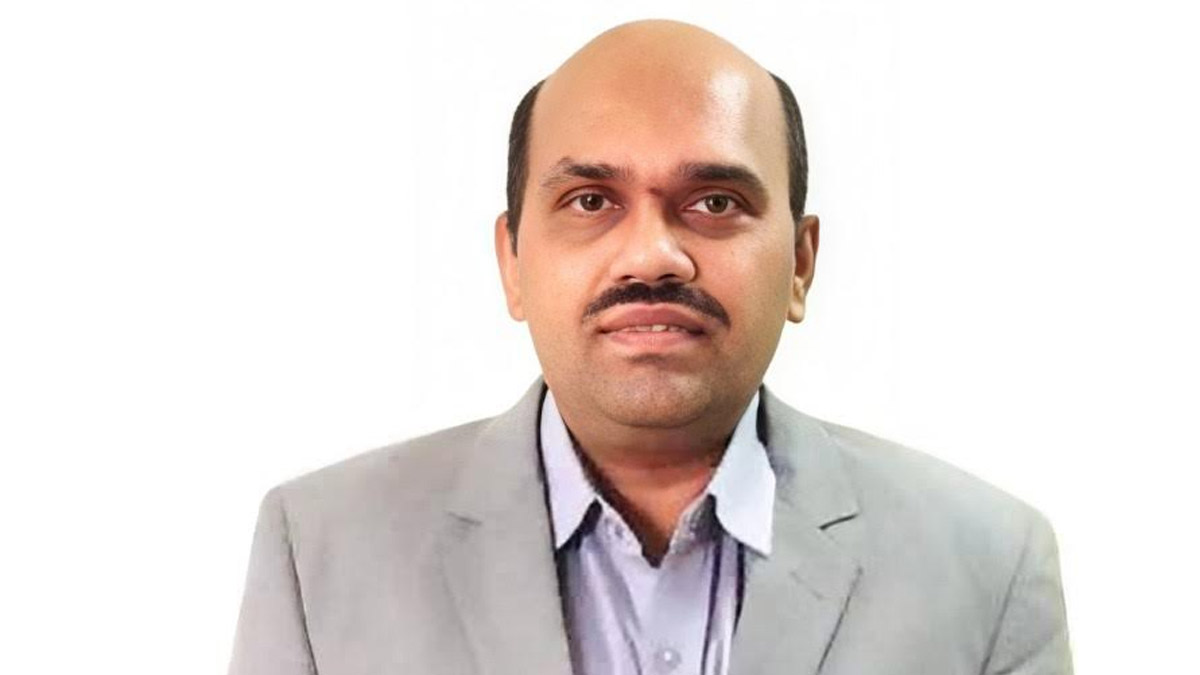
BENGALURU: Tessolve has never been shy about its ambitions. The Bengaluru-based engineering services firm already counts 18 of the world’s top 20 semiconductor companies among its clients, employs more than 3,500 engineers across 12 countries, and last year pocketed a $150m investment from TPG. Now it has hired the executive it believes can turn those assets into something bigger. Ravi Kumar Chirugudu, a 35-year semiconductor veteran who once built satellite payloads for ISRO and has since scaled engineering organisations across three continents, joins as president and chief operating officer, effective immediately.
THE MAN AND THE MANDATE
The appointment is, by any measure, a serious hire. Ravi Kumar Chirugudu comes to Tessolve after senior leadership stints at HCL Technologies, Altran and Wipro, where he managed large profit-and-loss portfolios and oversaw cross-regional teams. Over the course of his career, he has been instrumental in bringing more than 1,000 new products to market across the high-tech, energy and manufacturing verticals. Before the private sector claimed him, he began his working life as a scientist at the Indian Space Research Organisation, contributing to research and development in charge-coupled device technology and satellite payloads, a foundation that shaped everything that followed.
In his new role, he will lead Tessolve’s global growth strategy: expanding its engineering capabilities, deepening customer relationships and accelerating innovation across semiconductor and high-performance computing domains. The brief is broad, but the context is specific. Tessolve operates in the $550 billion global semiconductor market, and its recent moves, the acquisition of Germany’s Dream Chip Technologies and the TPG funding round, have sharpened both its reach and its expectations.
Srini Chinamilli, co-founder and chief executive of Tessolve, is characteristically direct about why Ravi Kumar Chirugudu was the choice:
“As we scale our global semiconductor and system engineering capabilities, Ravi’s appointment marks an important step forward. As global semiconductor demand continues to accelerate across industries, it is creating significant opportunities across the semiconductor lifecycle, from design, packaging, validation and systems integration. Ravi’s deep knowledge and leadership in this ecosystem brings the right mix of industry expertise, customer connect and execution capability, which will play a key role in strengthening our position as a trusted global engineering partner and reinforcing our market leadership.”
THE NEW ARRIVAL SPEAKS
Ravi Kumar Chirugudu, for his part, frames the move in terms of timing and culture, two factors that veteran executives tend to weigh as heavily as title or compensation:
“I am happy to join Tessolve at a time when the industry is rapidly evolving towards more complex, AI-driven systems. What stands out to me is its strong people-first culture and its commitment to bringing value to its customers. The strength of its global team, combined with its deep expertise in semiconductor innovation and next-generation product engineering, creates a solid foundation to build differentiated, scalable solutions. I look forward to working closely with the team to drive strategic growth and strengthen its role in shaping the global semiconductor ecosystem.”
The reference to AI-driven systems is not incidental. The semiconductor industry is in the midst of a structural reshaping, driven by the insatiable compute demands of artificial intelligence. For engineering services firms like Tessolve, which offers end-to-end capabilities from silicon design to packaged parts and invests in high-performance computing, high-speed interfaces, photonics and 5G, the moment is both an opportunity and a test. The company says it is well positioned to capture the next wave of industry growth. Ravi Kumar Chirugudu is now the person who has to prove it.
He came in from outer space, literally, and spent three decades learning how the semiconductor industry works from the inside out. Now Tessolve is betting that accumulated knowledge can help it cross the next frontier. In the $550 billion global chip market, the gap between ambition and execution is measured in engineering hours and leadership quality. Tessolve has just gone shopping for both.






