
AD Agencies
ASCI finds 98% of summer ad claims needed correction
Watchdog’s ‘The heat is on’ report reviews 40 seasonal campaigns and flags sunscreen, tan-removal and cooling-appliance claims for lacking evidence


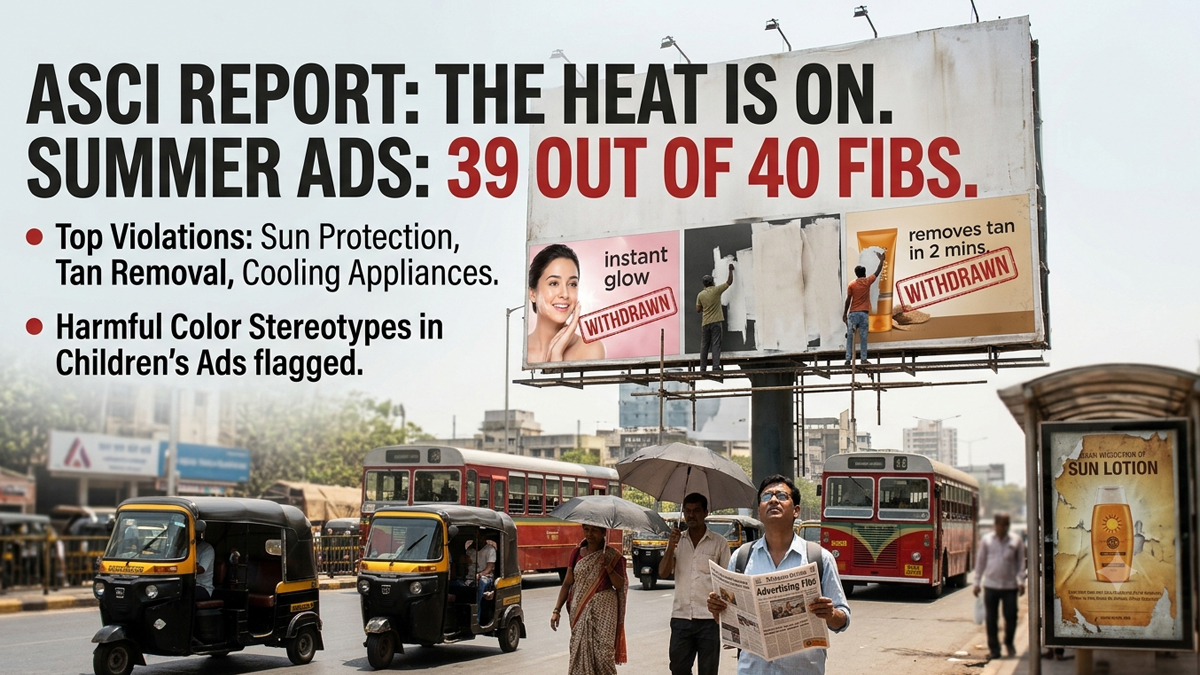
MUMBAI: Summer in India brings heat, monsoon anticipation, and, it turns out, a rather spectacular amount of advertising fibbing. The Advertising Standards Council of India has just published a report with the pithy title ‘The Heat Is On’, and the findings are eye watering: of 40 advertisements examined across personal care, cooling appliances, air purifiers, sunscreens, wearables and travel products, 39 needed some form of correction. Only one advertisement, out of forty, managed to substantiate its claims cleanly.
The breakdown is worth dwelling on. Of the 39 flagged, 21 advertisers modified or withdrew their claims voluntarily, without contesting ASCI’s intervention, a reasonably encouraging sign that the industry, when caught, tends to fold rather than fight. The remaining 18 were formally found in violation of the code by ASCI’s Consumer Complaints Council, the tougher outcome reserved for advertisers who pushed back and lost anyway.
Sun protection and tan removal products topped the violation charts, trailed by home appliances and furnishings marketed around cooling, air purification and indoor comfort. The instant transformation genre proved particularly rich territory for exaggeration, with campaigns promising results such as de-tan and glow in 30 seconds, a visible difference in five days, or removing stubborn tan in two minutes, claims that read more like magic tricks than skincare science, and which advertisers duly struggled to back up.
The report’s most pointed finding, though, concerns products aimed at babies and children. Fourteen advertisements for skin-brightening and tan-removal products targeted at the very young were found to reinforce harmful colour-based stereotypes, leaning on parental anxieties around tanning and complexion rather than on evidence. ASCI also flagged a broader trend of sunscreen jackets, cooling apparel, air conditioners and air purifiers being pitched as health and protection solutions, complete with sweeping claims about UV protection and defence against pollutants, allergens and bacteria, much of it unsupported by adequate science.
Across the upheld cases, ASCI identified a consistent pattern of failure: claims going live before the supporting evidence existed, advertisers simply not responding when asked to substantiate, leadership and performance claims running well ahead of what the data could support, and influencer or celebrity endorsements made without adequate due diligence, each chipping away at consumer trust in its own way.
Manisha Kapoor, chief executive officer and secretary general at ASCI, put it plainly, noting that while innovation in seasonal advertising is welcome, the claims backing it must be credible, and that the review found too many advertisements leaning on broad or exaggerated claims that could not be substantiated, some of which reinforced harmful stereotypes in the process.
There is a genuinely positive story buried in these numbers, even if the headline figure looks damning. The fact that a majority of flagged advertisers corrected course without a fight suggests self-regulation is doing real work rather than merely issuing toothless slaps on the wrist, and ASCI’s willingness to name specific harms, particularly around children’s skin-brightening products, signals a watchdog sharpening its teeth precisely where it matters most. For an advertising industry that leans harder on seasonal urgency every year, that kind of scrutiny looks less like a nuisance and more like a necessary check.






