MAM
Amagi eyes 50% y-o-y growth after business model restructuring


MUMBAI: Deepakjit Singh’s reign as CEO Amagi has seen the cloud-broadcast technology company undergo a period of business model restructuring. The high-risk strategy seems to have paid off, vindicating the vision of its new leader. Amagi adopted a tech-share model in favour of a cost-based, which had been the norm until then.
Deepakjit describes the process as removing the conflict in the business. Amagi negotiated a new deal with its partners wherein they pay the former a share of the revenues instead of an upfront fee. According to industry sources, Amagi’s percentage share stands in the region of 20 per cent.
“If my team and the channel's ad sales team both are selling ads, there is a conflict. So everybody loses in some shape or form,” he points out.

The resounding success of the company’s bold decision to alter its business model is centred on three factors. The company didn’t lose any clients, there was no dip in revenues and the balance sheet showed profits.
Riding on the back of this win, Deepakjit now eyes a 50 percent year-on-year growth for the next four years. In the last 10 months, Amagi has acquired 28 new customers across the globe. Taking the Indian business model global is the ethos behind the company’s ambitious expansion plans.
Amagi (http://www.indiantelevision.com/keyword/amagi-2) has identified a couple of trends that are bound to benefit them going forward.
"We are looking at 2-3 things for the next 24 months. One is, as soon as the localisation and target marketing becomes more known to people, the market will boom because globally that’s what is happening. Second is the change that will happen from the cost model to the revenue model. And as CTOs and purchase departments get used to that, there is going to come a tipping point where the market will change dramatically,” the veteran executive highlights.
According to Deepakjit, his biggest challenge in the next 24 months is bound to be his company’s ability to meet the tremendous demand that’s going to arise in all the markets they operate in.
Amagi has recently ventured into the US, parts of Europe, Indonesia, and the Philippines. Back home, the company has hired ad sales professionals in tier 2 and 3 cities for selling ad spots as it feels there is a definite growth opportunity in these regions.
Amagi aims to go full steam in the next 24 months. So, what will be the parameters for success at the end of this two-year period?
“I will make it a brand with a global presence and get a reasonable cheer at the global market,” he concludes.





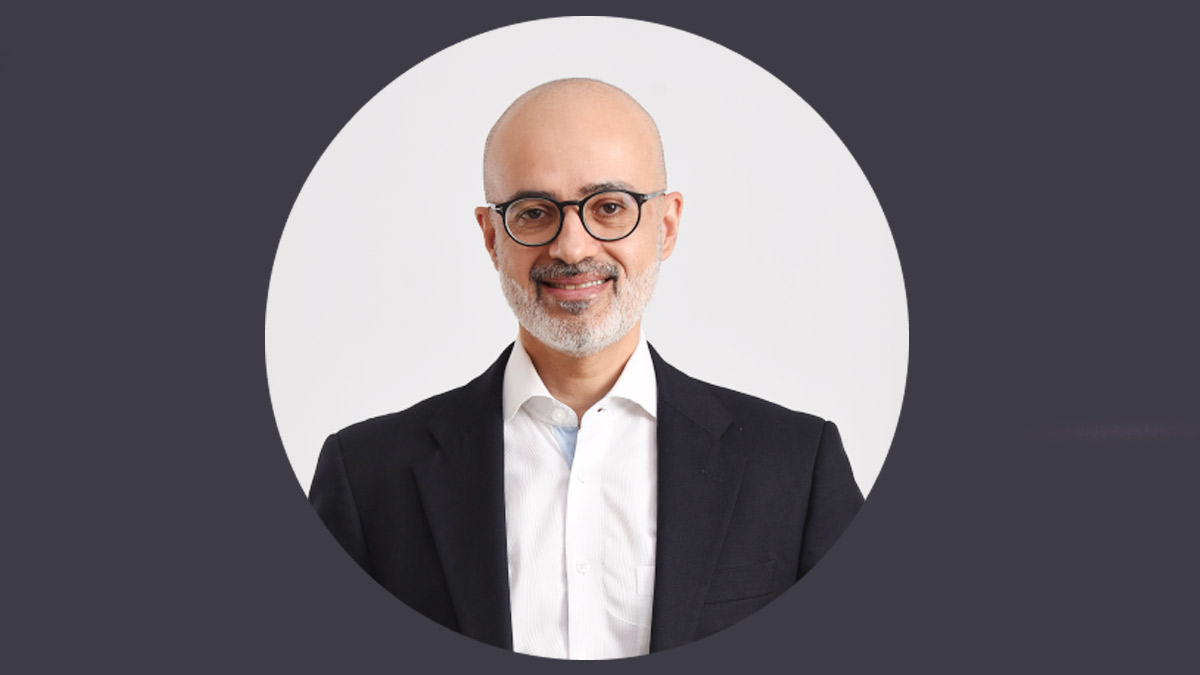
MUMBAI: In India’s fast-moving payments race, Visa has just swiped in a new leader. The company has named Suresh Sethi as its India country head, marking a key leadership shift as it sharpens its focus on digital payments growth in the market. Sethi steps into the role following his recent exit from Protean eGov Technologies, where he served as chief executive officer. He succeeds Sandeep Ghosh, who has moved on after more than four years at Visa to pursue an external opportunity.
The appointment comes at a time when Visa is doubling down on its expansion strategy across India and the wider region, deepening partnerships and accelerating adoption in an increasingly competitive digital payments ecosystem.
Sethi brings with him a broad, cross-market perspective shaped by decades of experience across corporate banking, retail financial services, mobile money and large-scale government technology initiatives. He began his career at Citigroup, where he spent 14 years working across India, Africa, South America and the United States, focusing on transaction banking services within the corporate bank.
His appointment signals a blend of institutional experience and market familiarity qualities that could prove critical as Visa navigates a landscape where fintech innovation, regulatory evolution and consumer adoption are all accelerating at once.
As digital payments in India continue to scale rapidly, the leadership change underscores a simple reality, in a market where every tap, scan and swipe counts, who leads the charge can matter just as much as the technology itself.







