MAM
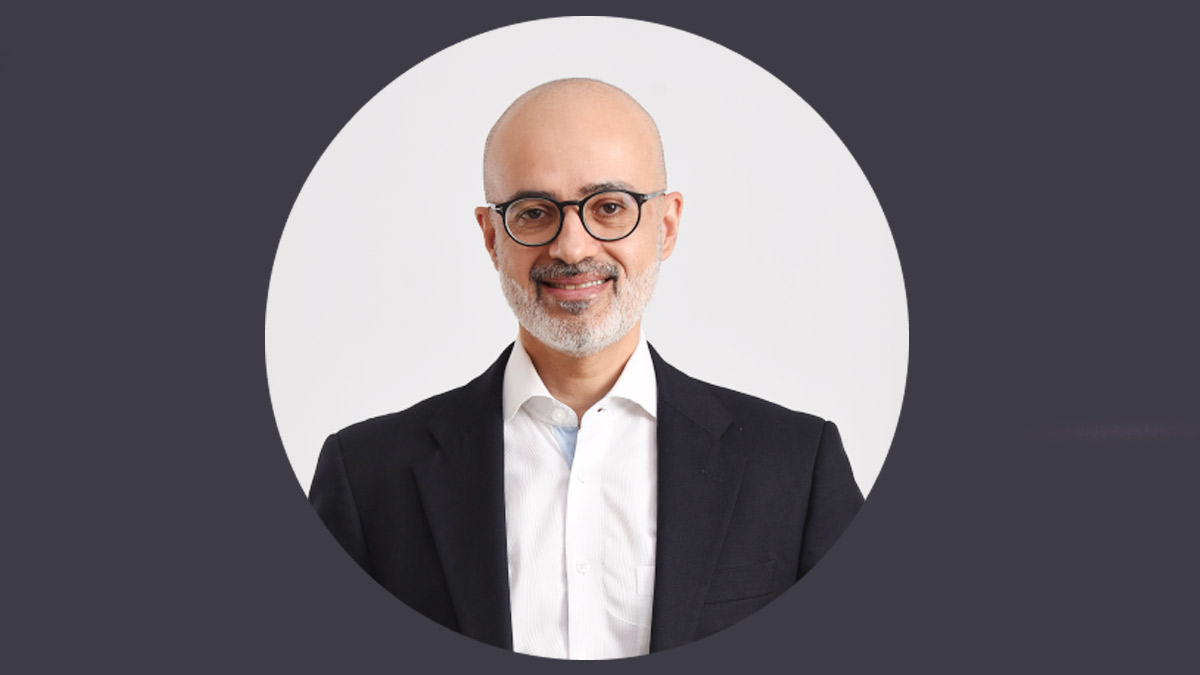
Visa appoints Suresh Sethi as India country head
MUMBAI: In India’s fast-moving payments race, Visa has just swiped in a new leader. The company has named Suresh Sethi as its India country head, marking a key leadership shift as it sharpens its focus on digital payments growth in the market. Sethi steps into the role following his recent exit from Protean eGov Technologies, where he served as chief executive officer. He succeeds Sandeep Ghosh, who has moved on after more than four years at Visa to pursue an external opportunity.
The appointment comes at a time when Visa is doubling down on its expansion strategy across India and the wider region, deepening partnerships and accelerating adoption in an increasingly competitive digital payments ecosystem.
Sethi brings with him a broad, cross-market perspective shaped by decades of experience across corporate banking, retail financial services, mobile money and large-scale government technology initiatives. He began his career at Citigroup, where he spent 14 years working across India, Africa, South America and the United States, focusing on transaction banking services within the corporate bank.
His appointment signals a blend of institutional experience and market familiarity qualities that could prove critical as Visa navigates a landscape where fintech innovation, regulatory evolution and consumer adoption are all accelerating at once.
As digital payments in India continue to scale rapidly, the leadership change underscores a simple reality, in a market where every tap, scan and swipe counts, who leads the charge can matter just as much as the technology itself.

MAM
Google Pay launches Pocket Money feature for teen UPI access
New UPI Circle feature lets teens pay via parents with oversight.
MUMBAI: Pocket money just got a digital upgrade and it now comes with parental controls built in. Google Pay has rolled out a new campaign to spotlight ‘Google Pay Pocket Money’, a feature designed to bring teenagers into India’s fast-evolving digital payments ecosystem. Built on UPI Circle in partnership with the National Payments Corporation of India, the feature allows teenagers to create UPI IDs linked directly to their parents’ bank accounts. The hook is simple: young users can transact independently, while parents retain real-time visibility and control over spending.
The campaign, conceptualised by TBWA\Lintas, plays out through a series of slice-of-life films featuring teenagers navigating everyday scenarios from grabbing snacks to handling small expenses without the usual payment friction. The insight is sharp: teens today may be confident in most aspects of life, but payments still come with a dependency clause.
Fronting the films is Vaibhav Sooryavanshi, the 15-year-old cricket prodigy whose rise across domestic and international circuits mirrors the campaign’s central theme early independence backed by structure. His presence adds a layer of credibility, positioning financial autonomy as a natural extension of growing up.
The storytelling leans on relatability rather than product heavy messaging, framing the feature as a bridge between freedom and responsibility. It subtly pitches Pocket Money not just as a payment tool, but as an entry point into financial literacy, one that lets teenagers learn by doing, without stepping outside parental guardrails.
The rollout spans television, digital and social platforms, with high visibility during the ongoing Indian Premier League 2026 season, a strategic placement aimed at capturing both young audiences and family viewership.
At a time when UPI has become second nature to Indian consumers, Google Pay’s latest move signals the next frontier, onboarding the next generation of users earlier, but with a safety net. Because in the world of digital money, independence may be earned but oversight, it seems, is here to stay.