AD Agencies
AI will become a necessity, not a choice: WPP Media’s Parveen Sheik on the future of advertising
WPP Media’s head of business intelligence outlines why the real disruption lies in discovery, not just creativity

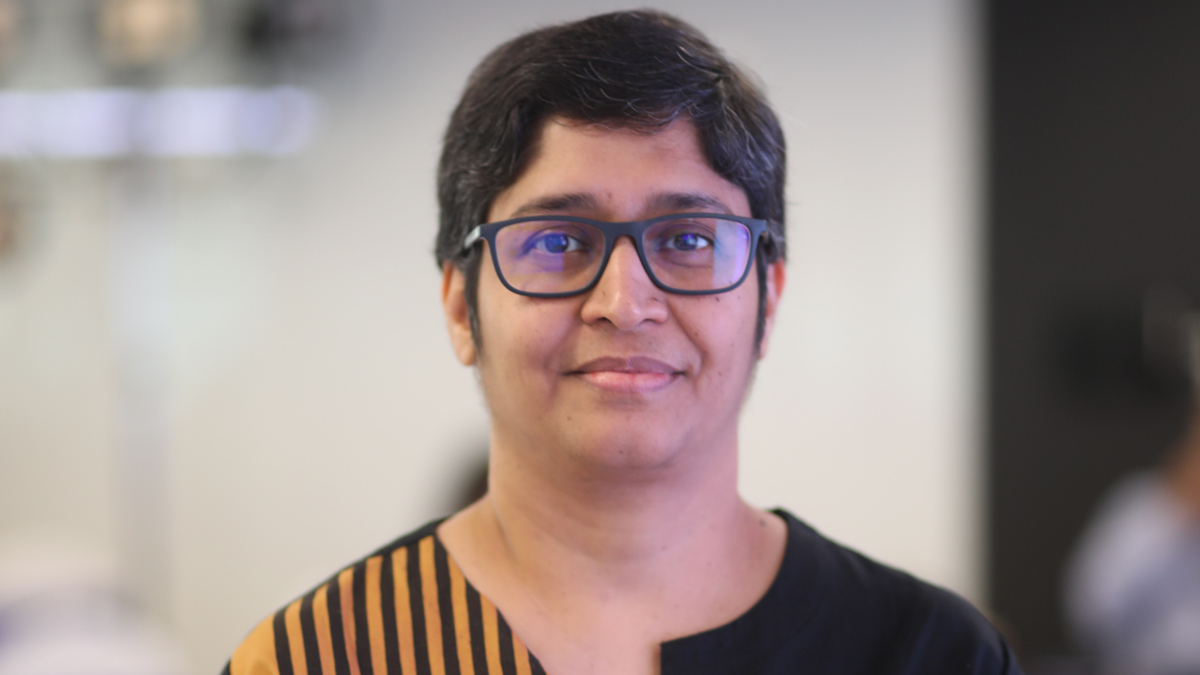
MUMBAI: Artificial intelligence is no longer a futuristic add-on in advertising; it is steadily embedding itself into the very mechanics of how consumers discover brands. According to Parveen Sheik, head of business intelligence at WPP Media, the industry’s conversation around AI needs clearer distinctions, particularly between AI-led creative and AI-powered media and discovery.
Addressing concerns around AI-generated campaigns, Sheik drew a clear distinction between AI-led creative and AI-powered media. Referring to the Coca-Cola example mentioned during the discussion, she noted that such cases relate to AI being used within creative execution. She emphasised that WPP Media’s approach is different. The focus is not on creating advertisements through AI, but on integrating AI into search behaviour, media placements and brand discovery journeys.
However, she argues that this is only one dimension of AI’s role in advertising.

“The lens we are approaching from is not about creating the advertisement itself,” she explains. “It is about how AI integrates into media and discovery.”
Rather than focusing on AI as a content creator, Sheik highlights its growing influence in search behaviour and brand discovery. As AI-powered search experiences become more common, such as AI overviews in tools like Google Gemini, advertising is expected to blend seamlessly into these environments. Brands will increasingly surface in AI-driven search results in ways that feel organic rather than intrusive.
“This is about infusing AI into general search behaviour so that it does not feel like AI,” she says. “Soon, you will not be able to differentiate between AI-generated and human-created content.”
The convergence is already visible in commerce. Sheik points to the integration of AI within quick commerce platforms, citing Blinkit’s partnership with OpenAI as an example of how AI is being embedded into product discovery journeys. In such ecosystems, AI-generated prompts and suggestions will support users as they search for products, guiding them from discovery to checkout.
From a brand perspective, she describes this as AI-enabled advertising at the discovery stage rather than creative storytelling. The objective is not to push products aggressively but to ease decision-making.
“When I go on to a platform, I am seeking information,” she notes. “AI is making that discovery easier. It is easing you into the decision-making process, not forcing you.”
Concerns around accuracy and reliability, she acknowledges, are natural in any technological shift. Initial glitches are inevitable. Yet Sheik draws a parallel with Microsoft Excel, once a specialised tool, now an everyday necessity. In her view, AI will follow a similar trajectory within the next two to three years.
“It will become part of your daily routine,” she says. “It will be a necessity rather than something we question whether we should use.”
The employment debate surrounding AI is equally complex. Sheik frames it less as a binary threat and more as a question of relevance. “If we are not relevant, we stop being in the game,” she observes.
Recent developments, such as Anthropic releasing AI coding tools and the resulting jitters in the IT services sector, illustrate the disruption underway. Yet she also points to collaboration, such as partnerships between Infosys and Anthropic, as evidence that adaptation and opportunity coexist alongside risk.
“You will have pluses and minuses happening side by side. That is inevitable,” she says.
On the broader advertising outlook, Sheik suggests that the current year may not look dramatically different from the last unless a significant technological inflection point occurs. Growth trends are likely to hover within incremental percentage shifts unless a major platform transformation reshapes media allocation.
For instance, if OpenAI were to formally open advertising in markets like India after expanding in the US, it could significantly alter search growth projections. However, such gains would not necessarily represent new money entering the system.
“Advertisers have limited budgets,” she explains. “If one channel gains, another will lose out. It is not as though brands will suddenly put more money on the table.”
A genuine expansion in advertising expenditure would depend on broader economic growth, enabling brands to increase overall budgets rather than simply redistribute them.
Ultimately, Sheik sees AI not as a disruptive outsider but as an inevitable layer across the advertising ecosystem, shaping search, commerce, media planning and consumer journeys. The real transformation, she suggests, lies not in flashy AI-generated campaigns, but in the quiet, seamless integration of intelligence into everyday brand discovery.





AD Agencies
Advertising Rocks Season 4 returns to Goafest 2026 with musical flair
Industry talent takes centre stage as music meets creativity at Goafest
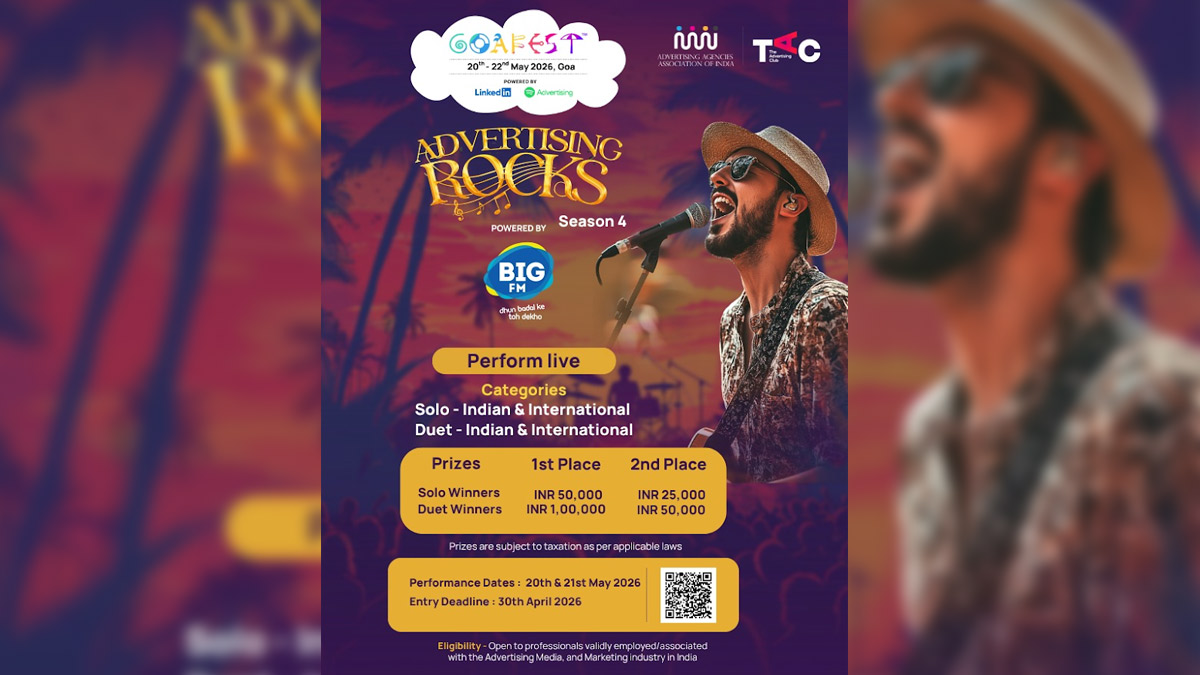
MUMBAI: The spotlight is back on music and marketing as Advertising Rocks Season 4 gears up for a high-energy return at Goafest 2026, promising a louder and more vibrant celebration of creative talent within the industry.
Now in its fourth edition, the platform continues to carve a niche as a space where professionals from advertising, media and marketing step beyond boardrooms to showcase their musical side. Open to solo and duet performers, the competition will unfold across multiple rounds before culminating in a live finale at the festival. Shortlisted participants will also receive complimentary access to Goafest, adding to the appeal.
Each category will feature four finalists, with winners decided through a mix of jury evaluation and audience votes, making the experience interactive as well as competitive. The stakes are equally compelling, with cash prizes ranging from Rs 25,000 to Rs 1,00,000 across categories.
Reflecting on the journey so far, BBH former CEO Subhash Kamath said, “This will be the 4th edition of Advertising Rocks and every year, it’s become better and better. We have some amazing musical talent in our industry and what better stage to perform than at Goafest. I hope we get more entries this time and I’m really looking forward to hearing some fabulous talent.”
Echoing the sentiment, Havas Media Network India chief executive officer Mohit Joshi said, “Season 4 of Advertising Rocks perfectly captures the spirit of our industry, where creativity doesn’t end at the workplace, it finds expression in many forms. At Goafest 2026, we are excited to bring back Season 4, bigger and more vibrant, giving professionals a platform to showcase their musical talent.”
Registrations for the competition are currently open, with entries accepted until April 30. Participants are invited to submit their performances and take a shot at the stage.
Co-hosted by the Advertising Agencies Association of India and The Advertising Club, Goafest 2026 will be held from May 20 to 22 in Goa. With Advertising Rocks returning to the lineup, the festival is set to strike a chord that goes well beyond advertising, blending ideas with rhythm and a touch of showmanship.






